
For a first visit to Verona, begin with five places: the Arena, Piazza delle Erbe, Ponte Pietra, Castelvecchio and San Pietro hill. Together they reveal Roman and medieval layers, market spaces and the Adige’s banks without turning the city into a sequence of reservations.
The main decision is how much time to give interiors. This guide proposes a flexible walk and identifies admission choices and elevation changes that affect it. Every place has its own documentary archive photograph; opening arrangements and services should be checked for your chosen date.
Before you pack
- Selection
- 5 places in the centre and on San Pietro hill
- Route
- Walk squares and bridges; optional ascent
- Sources
- Consulted on 5 November 2026
1. Verona Arena: the amphitheatre and Piazza Bra
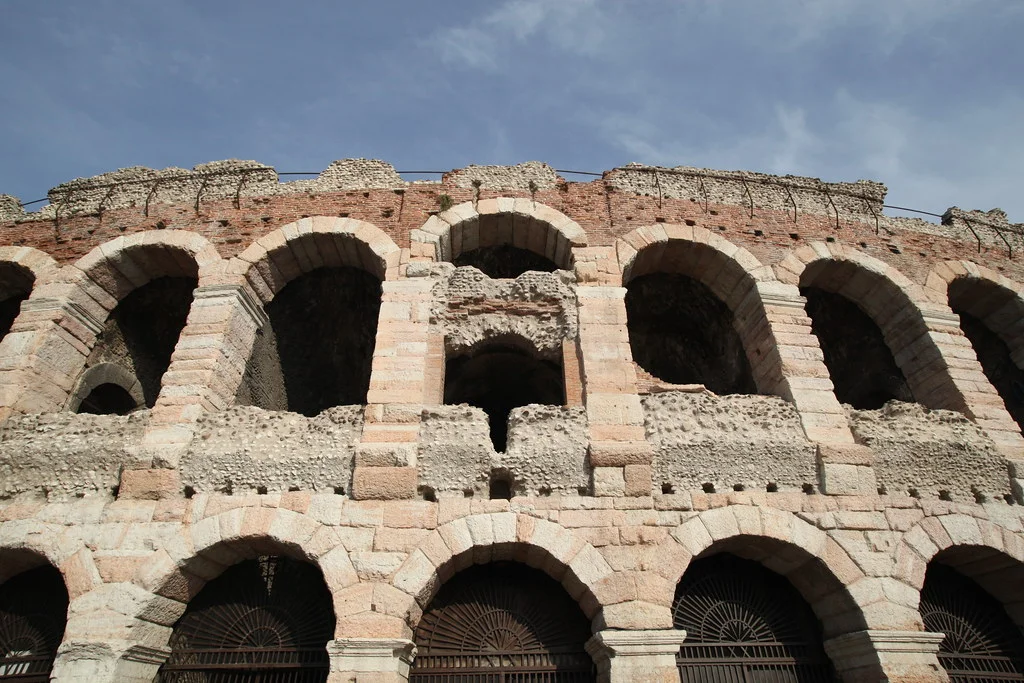
The Arena is a straightforward starting point for understanding Roman Verona. Its stone mass, arches and relationship with Piazza Bra reward an exterior look before deciding whether to enter. Italy’s Ministry of Culture describes an amphitheatre built for spectacles, with a central arena and surrounding seating. It was not originally an opera house, despite that familiar modern association.
Separate three plans: viewing the facade, visiting the monument and attending a performance. They have different admission arrangements and calendars. Visit Verona directs monument visitors to the Civic Museums, while performances have their own programmes. Staging can bring earlier monument closures. Check your particular date before arranging a train arrival or meal that leaves little flexibility. An attractive exterior photograph does not imply that an interior visit or concert is included.
2. Piazza delle Erbe: facades, frescoes and everyday activity
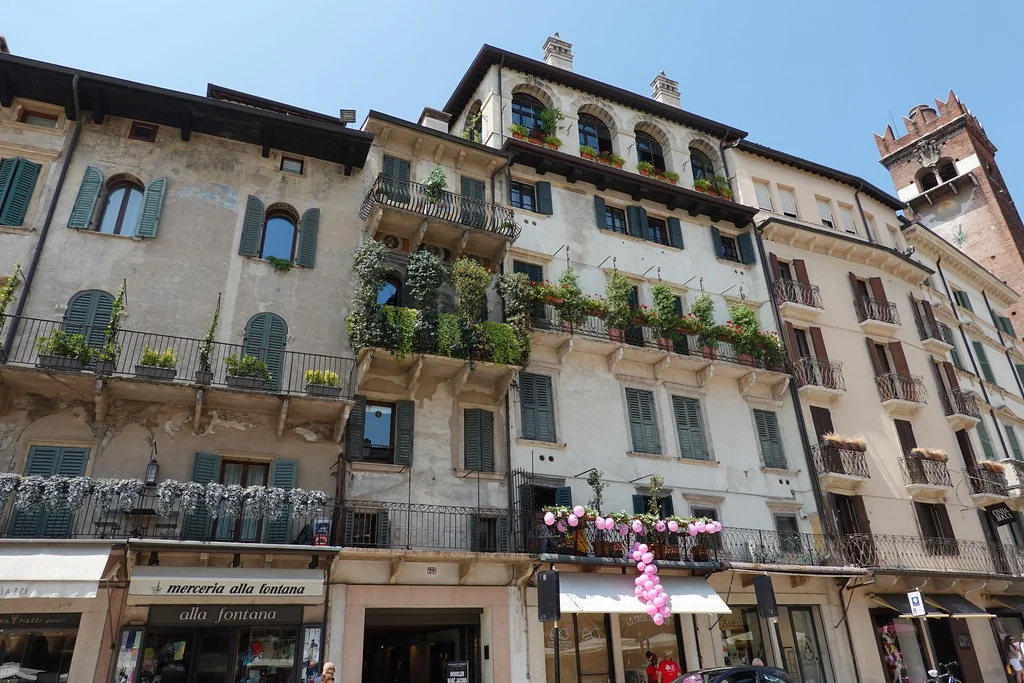
Piazza delle Erbe occupies the site of the ancient Roman forum. Rather than crossing it for one photograph, examine its different sides. The Mazzanti houses retain frescoed facades, and the surrounding buildings represent several periods. The tourism office connects this decoration with Verona’s tradition as a painted city. This guide’s photograph shows buildings beside the square, rather than admission to all their interiors.
Walk here from the Arena area and pause to look above stalls and restaurant terraces. If stopping for food or a drink, check the particular business’s menu and conditions; purchasing a meal is separate from exploring the square. Market activity, businesses and interior attractions need not share opening hours. We do not guarantee a specific stall or tower admission simply because your route passes through the piazza.
3. Ponte Pietra: cross the Adige with context
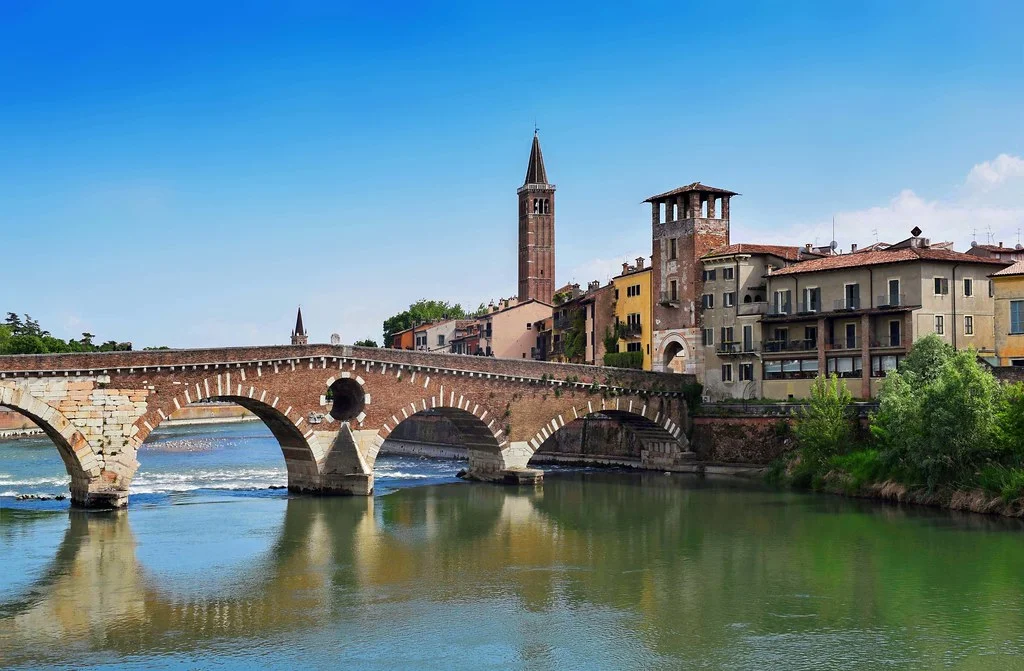
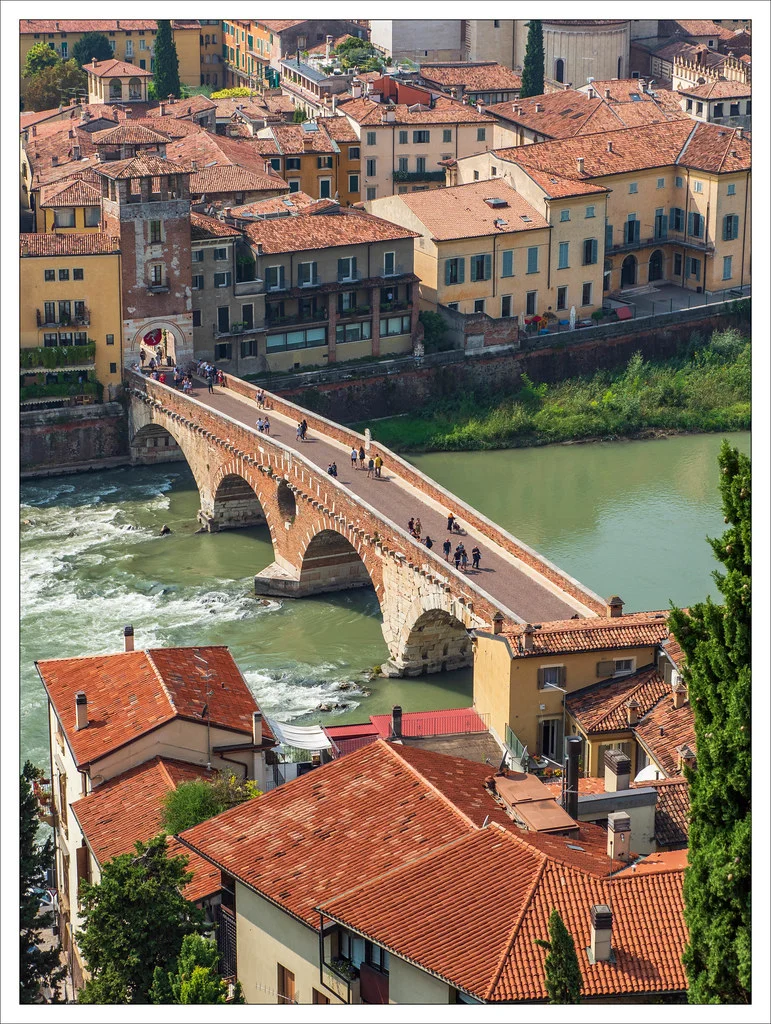
Ponte Pietra links the centre with Veronetta and the San Pietro hillside. Visit Verona identifies it among the early traces of Rome’s presence in the city. Its interest extends beyond standing on the bridge: from the banks, the relationship between river, houses and the slope on the opposite side becomes easier to understand.
Use it as a crossing within your route, keeping the passage clear when taking photographs. If continuing uphill to San Pietro, distinguish the riverside walk from the ascent. Proximity on a map does not remove the elevation change. In rain or intense heat, enjoy the bridge and postpone the hill if appropriate. Decide how to return before moving farther from the centre, especially when your visit depends on a timed reservation or a return train.
4. Castelvecchio and its bridge: architecture or museum
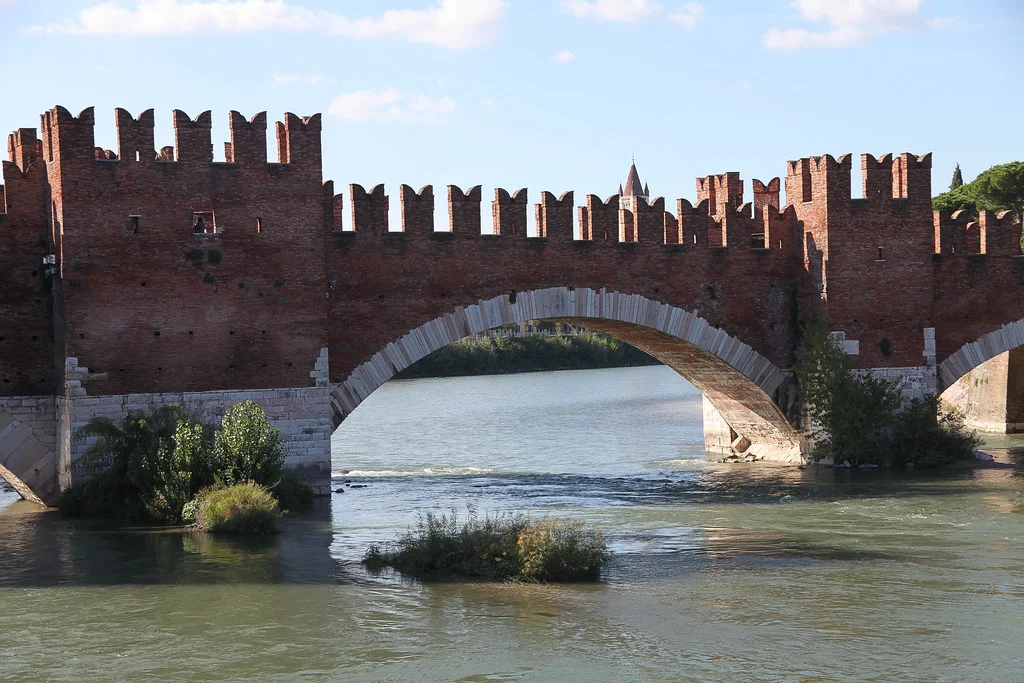
Castelvecchio combines a fortress associated with the Scaligeri and a crenellated bridge across the Adige. The tourism office explains its former defensive role and its use as a route out of the city. From the bridge, examine the battlements, arches and relationship between the castle and the Adige before deciding whether to enter the museum.
Choose the depth of this stop. A walk focused on the bridge and river is different from a museum visit requiring admission, a compatible calendar and time of its own. The museum contains painting, sculpture and other collections. Check current rooms and conditions if those are your priority. Avoid adding interiors automatically. If the Arena already occupies a substantial visiting block, select what you actually want to examine here rather than rushing through another collection.
5. San Pietro hill: the viewpoint involves an ascent
Stairs lead from the Ponte Pietra area towards San Pietro hill beside the Roman Theatre area. The reward is a panoramic reading of the centre and the Adige’s curve. The building known as Castel San Pietro has experienced rebuilding and military uses. This guide recommends the outdoor viewpoint, rather than promising a particular interior visit.
Visit Verona also describes a funicular as an alternative for reaching the upper area. Check its operation, ticket and conditions for your chosen date; we do not treat it as a free service included with any pass. The descent matters when calculating effort and your return. The archive photograph shows the hillside view without promising identical light, vegetation or visibility during your trip. If mobility affects your plans, check the complete approach before committing.
How to organise the walk and admission
Enjoy Verona by distinguishing the central walk from the hillside outing. The list order is optional. Set any timed interior visit first, then connect squares and bridges around it. Castelvecchio and San Pietro occupy different river sections; repeatedly retracing your steps reduces time available for looking at the city.
Official sources were consulted on 5 November 2026. There is no universal trip budget: separate transport, meals, admission and any funicular journey. If comparing Verona Card with individual tickets, consider only the visits you will actually make and their current conditions. A card does not ensure that every venue will be open when you arrive.
A route to get you started
- Central block: start with Piazza Bra and the Arena. If reserving the interior, give it time of its own. Continue towards Piazza delle Erbe to examine the facades and take a break.
- River block: dedicate another section to Castelvecchio and its bridge. Check museum conditions before deciding whether to enter; the exterior route already provides architectural context.
- Panoramic block: combine Ponte Pietra with San Pietro only when the ascent or funicular suits your mobility and return plans. A short trip can stop at the bridge without making your Verona visit incomplete.
Good to know
Does Arena admission include an opera performance?
Visiting the monument and attending a performance involve different tickets and calendars. Check the exact product before purchasing.
Must you climb San Pietro hill?
No. The viewpoint is an optional uphill outing. You can focus on the centre and bridges if avoiding the ascent.
Is Castelvecchio Bridge the same as visiting the museum?
They are different experiences. The bridge reveals the exterior setting, while the museum has its own conditions and needs visiting time.
Does this route require Verona Card?
No. Compare its current conditions with individual tickets for places you actually intend to visit rather than assuming automatic savings.
Choose an interior visit if it interests you and let squares, bridges and scenery complete the route. Verona does not require a hurried checklist or a ticket for every stop.
Sources consulted
To combine this visit with other destinations, see the Italy guide.