
Pisa deserves a route that continues after the Tower. This selection covers five places: Piazza del Duomo, Piazza dei Cavalieri, the Lungarni, Santa Maria della Spina and Giardino Scotto. It combines the familiar monument with civic history, river scenery and a garden within historic walls.
Use it as an exterior walk or add a reserved visit. Distinguishing those options matters: the Tower and cathedral have separate conditions, while squares and facades invite a different pace. The photographs are documentary archive images, rather than promises of current light or visitor numbers.
Before you pack
- Selection
- 5 places in the monument complex and city
- Main reservation
- Tower climb with a date and time
- Mobility
- Walking route; check the climb and individual access separately
1. Piazza del Duomo: the Tower belongs to a larger complex
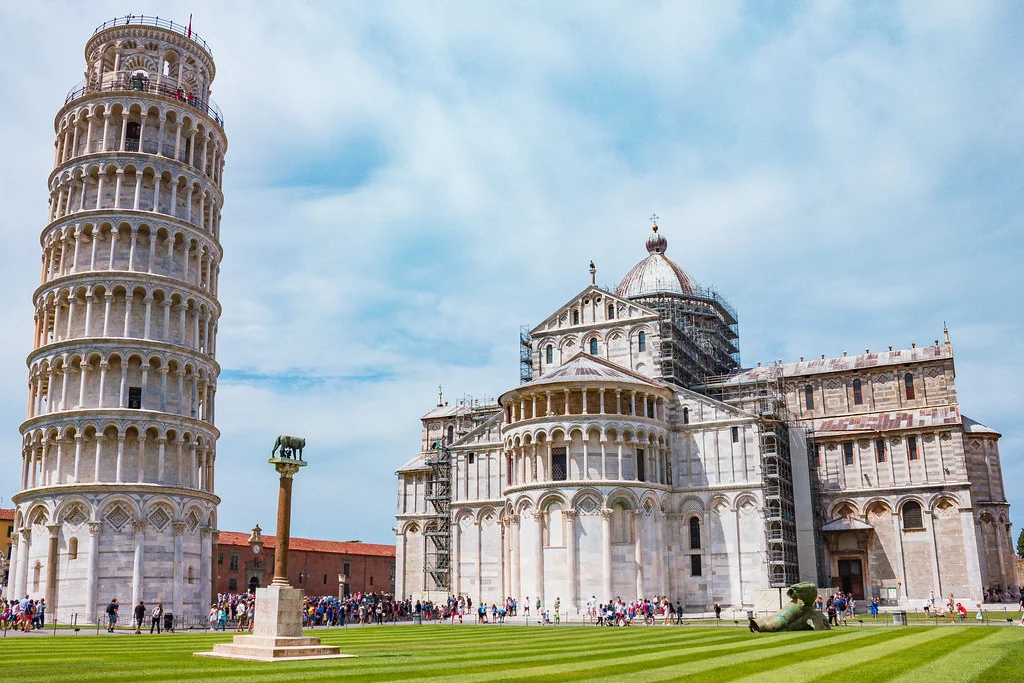
Pisa’s most familiar image is the Leaning Tower, but recognising it as the cathedral’s bell tower changes the visit. Piazza del Duomo brings together several religious monuments, with outdoor space for appreciating their relationship. Begin with the whole setting before deciding which interiors or climb to reserve. The documentary photograph shows the Tower and cathedral, rather than an included combined ticket.
Opera della Primaziale Pisana distinguishes their access arrangements. The Tower climb has a specific date and time and is on foot, with age and luggage conditions. The cathedral uses a free pass, with different rules depending on whether you hold another monument ticket or want only the cathedral. Check official conditions before buying. Free admission does not mean unlimited entry without arrangements, and arriving late for the Tower slot can mean losing the visit.
2. Piazza dei Cavalieri: Pisa’s civic history
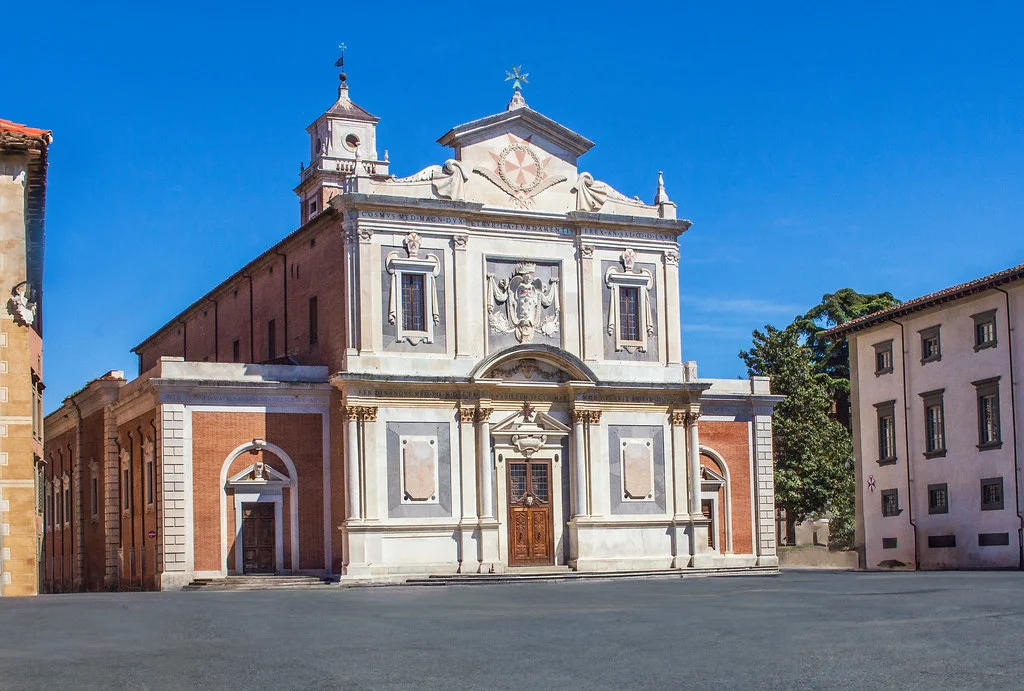
Piazza dei Cavalieri adds a different layer, linked to the city’s political history and the transformation promoted by the Medici. The municipality describes its role as a centre of republican Pisa and its later conversion into a base for the Knights of Santo Stefano. The facade of Santo Stefano dei Cavalieri, photographed here, helps identify that urban setting.
Include the square between the Duomo area and the river without treating it as a single ticketed attraction. Observe facades from public space and check any interior visit separately. Academic or religious buildings do not automatically become open visitor attractions because they feature in a tourism route. This stop works well for looking at the square’s scale and comparing its civic setting with the religious complex around the Tower.
3. The Lungarni: follow the Arno rather than simply crossing it
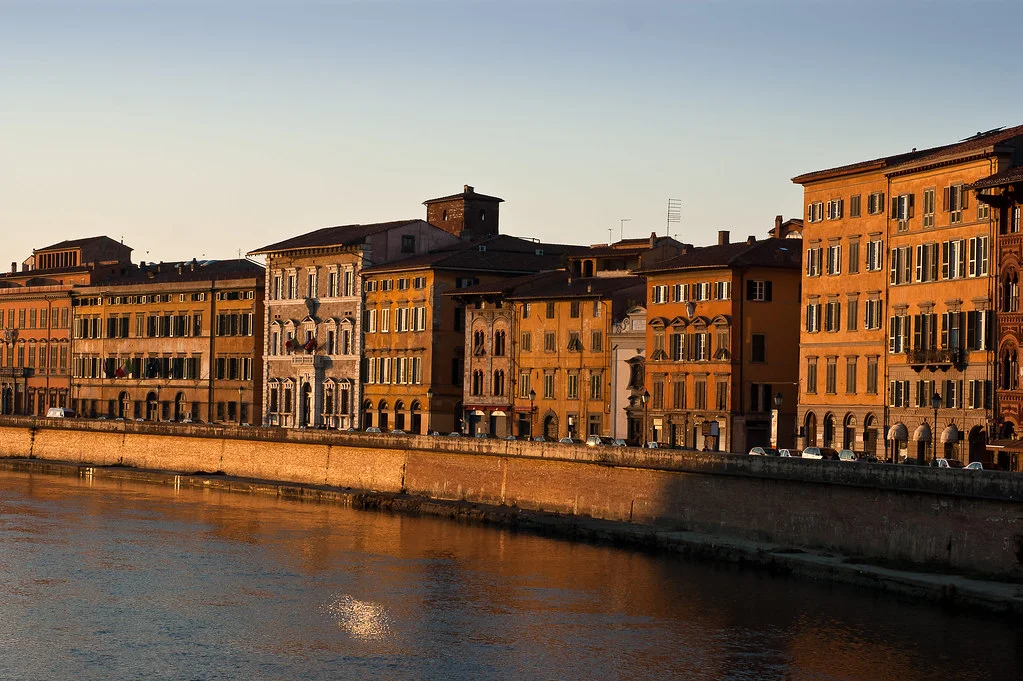
The Lungarni are the streets and building frontages along the Arno. Pisa’s municipal portal presents them as a route through palaces, churches and bridges, revealing a city extending well beyond the Tower photograph. Choose a section of both banks to appreciate how facades and reflections shape the urban landscape.
You need not pursue every building in the municipal catalogue. Use a bridge to change perspective and plan a break according to conditions and energy. An archive photograph’s light cannot promise a particular sunset or identical reflection. If you have a reservation afterwards, identify the crossing and return point before starting. A riverside walk can expand considerably when you have not chosen where to finish, especially if you keep stopping for different views.
4. Santa Maria della Spina: examine the Gothic details
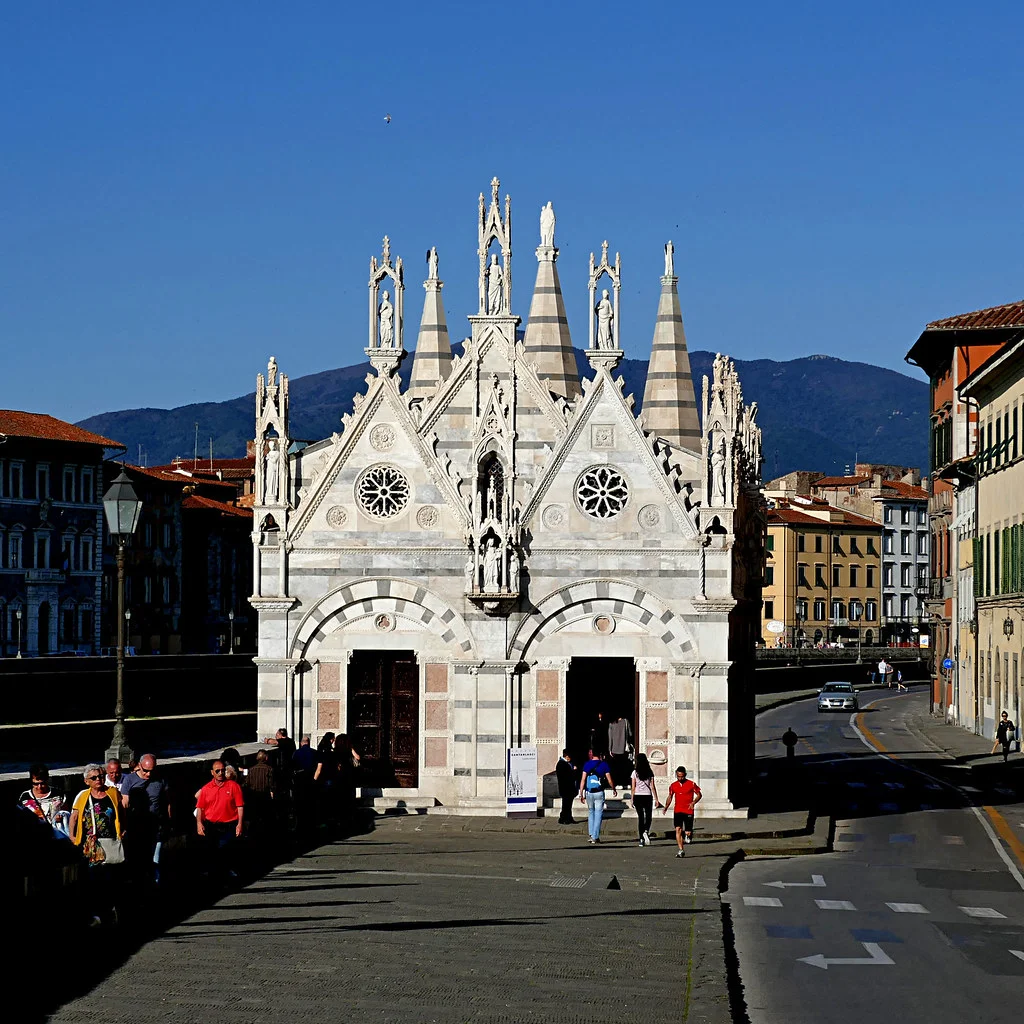
Santa Maria della Spina stands beside the Arno, distinguished by its small scale and Gothic decoration. The municipality describes spires, rose windows and elaborate stonework. It also explains that the building was dismantled and rebuilt higher because of river floods. That history gives its present position more meaning than simply comparing its size with the cathedral.
The straightforward plan is to appreciate the exterior during a Lungarni walk. Pisa’s portal identifies the municipal building as a venue for temporary exhibitions, so check the programme if you want to enter. We do not promise an interior open every day or imply that every visible sculpture is an original retained in its initial position. Keep the pavement clear when photographing and look for an angle showing the building’s relationship with the river.
5. Giardino Scotto: a pause among historic walls
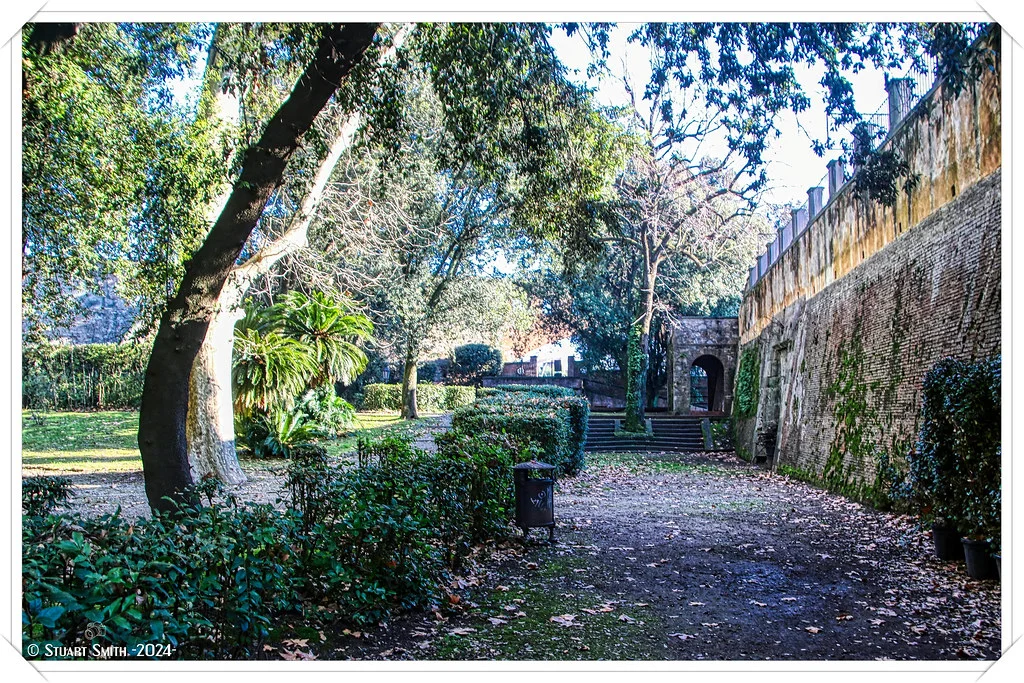
Giardino Scotto lies in the Lungarno Fibonacci area within the setting of the former Cittadella Nuova. Municipal history describes a fortress transformed into a garden, with traces of different periods. Its walls and paths make it more than an interchangeable green break within a sightseeing list.
Choose it to finish a walking section or rest after the river rather than adding activities purely to complete a checklist. Check access notices and possible uses of the space for your date; we do not publish an unverified permanent opening timetable. Shade and vegetation vary by section and season. The archive photograph shows a path beside the walls without promising that every part of the garden has identical conditions. Allow the visit to remain a simple, unhurried stop.
Reservations, luggage and budgeting without confusing tickets
Opera’s website requires bags and luggage to be left at the cloakroom for the Tower climb. It distinguishes the climbing slot from other monuments’ conditions. Before setting the route, check your reserved time and luggage arrangements rather than assuming those steps can always be handled immediately on arrival.
Sources were consulted on 5 November 2026. Compare the current price and inclusions of the product you actually want to reserve. Build your budget around the actual products you intend to purchase, plus journeys and meals. Appreciating squares, riverbanks and facades does not require an interior booking at every stop. Choose a manageable combination and leave time for the arrangements attached to your main reservation.
A route to get you started
- Starting at the Duomo: begin with the monument complex if you have a climbing slot. Then connect Piazza dei Cavalieri with the Arno area, leaving a break and avoiding another interior reservation too close to your booked time.
- Starting at the station: the municipal route describes Corso Italia as a pedestrian link between the central station and the Lungarni. Use it to orient your arrival before continuing towards the centre, allowing your own luggage buffer.
- River section: combine the Lungarni with Santa Maria della Spina and, for a green pause, Giardino Scotto. Choose the end around your return plans rather than treating every listed palace as compulsory.
Good to know
Can you enjoy Pisa without climbing the Tower?
Yes. Piazza del Duomo’s exterior, the squares and the Arno provide a worthwhile walk. Climbing is a separate ticketed choice with specific conditions.
Do the cathedral and Tower have the same admission?
Their arrangements differ. Opera distinguishes the reserved Tower climb from the cathedral’s free pass. Check how to obtain that pass for your intended visit.
Can children climb the Tower?
The operator applies age restrictions and requires adult accompaniment for under-18s. Check the current wording and documentation before booking a family visit.
Is Santa Maria della Spina always open inside?
We do not assume so. The municipality identifies it as a temporary exhibition venue. This guide recommends the exterior and checking the programme before planning an interior visit.
Reserve the visits you actually want and leave room for the city between monuments. In Pisa, the river and squares let the Tower become the beginning of the route rather than its only memory.
Sources consulted
- Opera della Primaziale Pisana: sito ufficiale – Tower —
- Opera della Primaziale Pisana: sito ufficiale – A few words of advice before you buy your ticket —
- Piazza dei Cavalieri / Luoghi / Vivere il Comune / Homepage - Comune di Pisa —
- Lungarni | Comune di Pisa - Turismo —
- Pisa con i cinque sensi | Comune di Pisa - Turismo —
- Fortezza nuova - Giardino scotto / Luoghi / Vivere il Comune / Homepage - Comune di Pisa —
To combine this visit with other destinations, see the Italy guide.