

Mixquic is one way to approach Día de Muertos from Mexico City, but visiting requires a different attitude from attending a performance. The celebration involves families, memories and funerary spaces. The visual appeal of candles and offerings should not obscure the fact that residents welcoming visitors are also carrying out their own acts of remembrance and reunion.
The city’s official guide, reviewed on 30 October 2026, places Mixquic’s principal celebration between 31 October and 2 November and identifies the Alumbrada with the night of 2 November. This distinction prevents a planning mistake: travelling only on 31 October expecting to witness the particular moment associated with the evening of the second.
Before you pack
- Location
- San Andrés Mixquic, Tláhuac borough, Mexico City
- Principal dates
- 31 October–2 November 2026
- Alumbrada
- The official guide places it on the night of 2 November
Mixquic cemetery: observe the Alumbrada without intruding
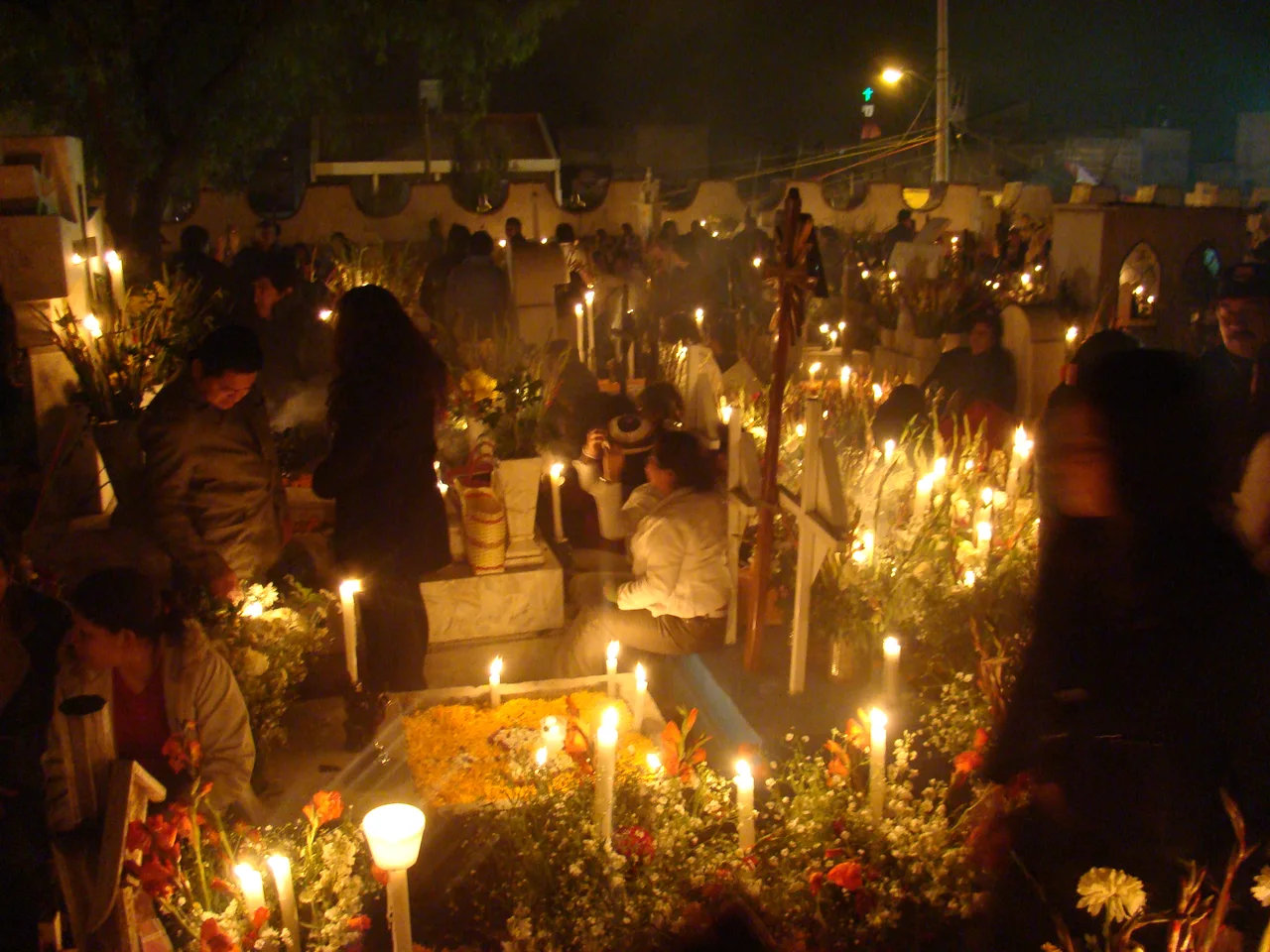
Official information describes the Alumbrada as the culmination of the night of 2 November, with candles over graves, prayers and songs. It is not simply a lighting installation designed for tourists. Graves are family spaces, and the objects accompanying them have particular dedications. Before approaching, observe how people move through the area and follow instructions from those organising access.
Official advice is to arrive several hours ahead because of traffic, ask permission before taking photographs, maintain respectful quiet and avoid sitting or stepping on graves. Make those recommendations the foundation of the plan. If a family occupies a space or someone asks not to be photographed, move away without insisting. Obtaining an image never justifies interrupting a prayer or blocking passage.
The archive photograph in this section belongs to an earlier celebration in Mixquic. It documents the setting and atmosphere but does not predict the arrangement of decorated graves or the 2026 access operation. We do not provide an exact starting hour for the Alumbrada because the consulted source refers to the night without specifying one here. Confirm local announcements before travelling.
The church and its surroundings: take time to understand offerings
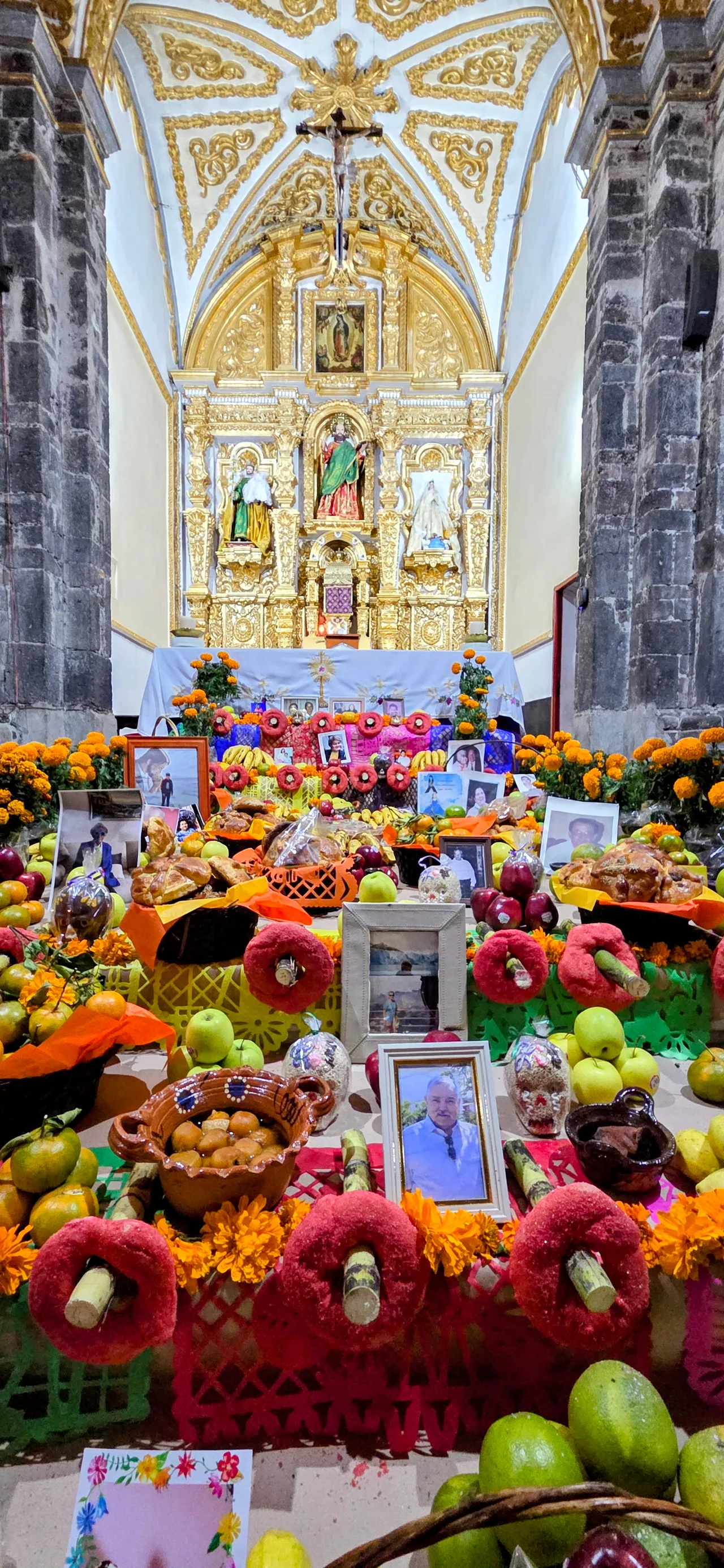
The church setting provides another reference point for understanding the village’s celebration. The accompanying archive image shows a Day of the Dead altar inside Mixquic’s church. Its documented presence does not establish unrestricted opening or mean that the same installation will return in 2026. Read local instructions and respect religious services and any access restrictions in place.
A measured visit allows attention to the relationship between flowers, food, portraits and objects without turning them into a checklist of supposedly identical symbols. UNESCO explains the importance of a temporary return of loved ones within the Indigenous festivity, but communities and families express that connection in their own ways. If someone offers an explanation, listen before drawing conclusions solely from a picture.
Do not treat the surroundings merely as a waiting area before the Alumbrada. They can provide an opportunity to observe the village’s rhythm, purchase food considerately and orient yourself for the return. Avoid blocking entrances with a large group, and do not enter homes by following decorations visible from the street. A private offering does not become a public attraction simply because it is visible through a doorway.

31 October, 1 November and 2 November have different roles
The city guide explains that 31 October welcomes children’s souls with elements including white petals and sweets. On 1 November, adults are remembered with favourite foods and cempasúchil flowers. The night of 2 November centres on the Alumbrada. These are different moments within a cycle, rather than three interchangeable performances of a single show for visitors.
Choose the date according to what you hope to understand and can visit responsibly. If only 31 October is available, do not describe the excursion as attendance at the Alumbrada on the second. Likewise, avoid assuming that a practice described for Mixquic occurs with identical objects and schedules throughout Mexico. Local variation is part of the cultural interest of travelling during the celebration.
Planning arrival and the journey back
The official traffic warning supports arriving well in advance. Save the precise destination, consult mobility announcements and arrange the return before leaving the accommodation. This guide does not promise a fixed journey time from central Mexico City: it depends on the starting point, transport and conditions on that date. A sensible margin is more useful than an optimistic estimate.
If booking an excursion, ask what it includes, where the group is dropped off, how long visitors can remain and how departure is organised. A tour called Day of the Dead does not guarantee access to a particular space or permission to photograph families. Read its conditions and establish that the programme uses the correct Alumbrada date if that is the main purpose of travelling.
Local food and objects that are not souvenirs
The tourism source mentions dishes including mixmole, romeritos and calabaza en tacha within the area’s food culture. Ask about preparation and choose a stall or establishment offering food to the public. Food placed on an offering is different: it is not available to visitors without an explicit invitation from those who prepared it. Do not touch or remove it to arrange a photograph.
The same consideration applies to flowers, candles and decorations. Buy souvenirs from sellers or craftspeople instead of collecting objects from altars or graves. When receiving an invitation, ask how to participate and accept the boundaries explained. Cultural exchange does not require a family to share food, explain every memory or allow a stranger to record a personal moment of grief.
Children, photography and the limits of a visit
Before travelling with children, explain that they will encounter graves, families and acts of remembrance. Agree on simple rules: walk without climbing on graves, speak calmly and stay near the group. Consider the outing’s length and opportunities to rest. For mobility requirements, consult the actual route and local arrangements; this guide does not guarantee accessibility through every passage between graves.
Avoid flash directed at people or equipment occupying space without permission. A discreet camera can still intrude when used during an intimate moment. Ask first, accept a refusal and consider putting the camera away for part of the visit. Leaving when the area becomes too crowded may be more responsible than insisting on reaching a particular viewpoint regardless of other people’s needs.
A route to get you started
- Before travelling: choose the correct date, consult mobility notices and settle the return journey. If the Alumbrada is the objective, organise 2 November with a generous arrival margin and without another evening commitment that would force the group to rush.
- In Mixquic: get your bearings, enter only accessible public spaces and respect religious and family moments. At the cemetery, follow designated movement routes and ask before close photography. End the visit according to the group’s comfort and the conditions encountered.
Good to know
Does the Mixquic Alumbrada take place on 31 October?
The consulted official guide places it on the night of 2 November. The thirty-first belongs to the wider celebration cycle but should not be confused with that particular evening.
Can I freely photograph graves and families?
Official advice is to ask permission, maintain quiet and avoid intruding on graves. Respect refusals and local instructions; a well-known celebration does not remove the privacy of the people participating in it.
How long does the journey from central Mexico City take?
There is no fixed time reliable for every departure. The source warns about traffic and recommends arriving hours ahead. Check transport and notices for your date before establishing the itinerary.
Visiting Mixquic during Día de Muertos means approaching a living tradition as a guest. Choose the date carefully, arrange the journey back and remember that families and their memories take priority over photographs. The Alumbrada is better understood with time, quiet and respect for the shared setting.