

Mexico City lets you move from a Mexica ceremonial centre to murals, historic residences and canals within the same metropolis. The challenge on a first visit is not finding things to do, but organising distances. These ten places are grouped around the historic centre, Chapultepec, Coyoacán and Xochimilco so that you can build coherent days.
Avoid trying every museum or crossing the city repeatedly. Choose a main visit in each area and combine it with walks, meals and breaks. Buildings and collections reveal different periods; understanding what each contributes is more useful than following an unexplained checklist of supposedly essential sights.
Before you pack
- Main areas
- Historic centre, Chapultepec and the south of the city
- Planning approach
- Group nearby places and allow time for transfers
- Check reservations
- Casa Azul, performances and trajinera trips
1. The Zócalo: begin in the historic heart
The Zócalo, or Plaza de la Constitución, is a useful first reference point for understanding the historic centre. From the square, notice how the major buildings relate to the streets leading into neighbouring areas. The official city guide organises walks from this point, making it easier to build a coherent visit instead of repeatedly crossing the entire city.
Begin with the outdoor setting and continue towards the Templo Mayor or the Madero–Bellas Artes area, depending on your chosen indoor visit. Distinguish buildings you want to admire from outside from those you wish to enter: museums, religious spaces and government buildings have different access arrangements. If an event or closure affects the square, adapt your walk through available streets rather than abandoning the whole neighbourhood.
2. Templo Mayor: the city beneath the city
The Templo Mayor archaeological site places Mexico-Tenochtitlán within the modern city. This was a major Mexica religious and political centre, with principal shrines dedicated to Tláloc and Huitzilopochtli. Its position north and east of the Metropolitan Cathedral makes the layering of historical periods particularly clear in this part of the historic centre.
Combine the archaeological route with the museum instead of treating the ruins as a quick exterior photograph. Objects and interpretation help explain the remaining structures. To distinguish this visit from the Anthropology Museum, remember that the focus here is Tenochtitlán and its ceremonial centre, while the other institution presents cultures from several regions. Consider that difference when deciding whether your itinerary should include both.
3. Palacio de Bellas Artes: architecture, murals and performance
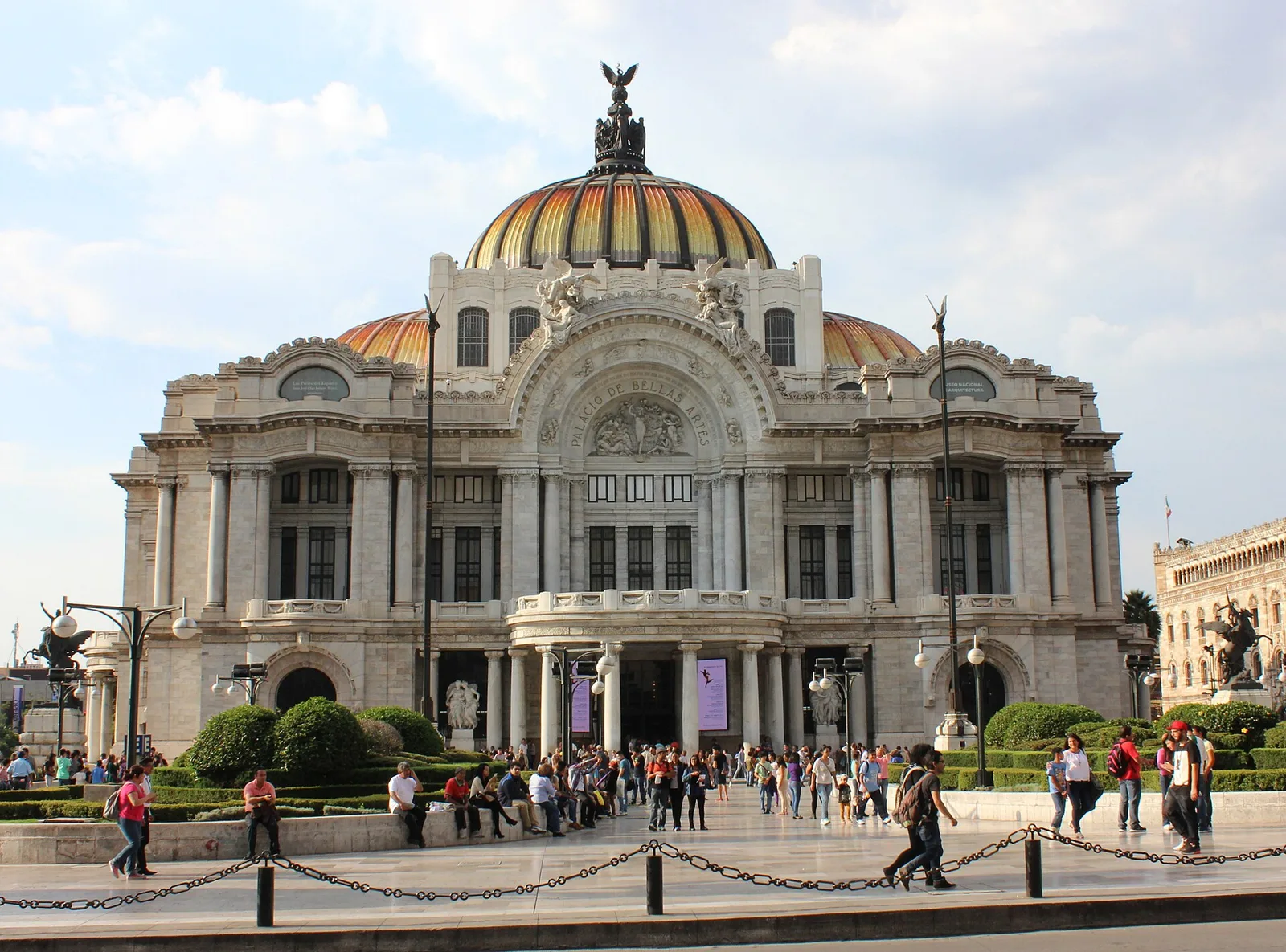
The Palacio de Bellas Artes combines a largely Art Nouveau exterior with an Art Deco interior. That transition rewards close observation beyond the familiar marble façade. The building brings together murals by artists including Diego Rivera, José Clemente Orozco and David Alfaro Siqueiros, alongside spaces for exhibitions and performing arts.
Separate three possible experiences: admiring the exterior, visiting exhibitions, and attending a performance. They do not necessarily share admission or schedules. Consult the programme to choose what fits your interests, and leave time to observe the building before or afterwards. Its position beside Alameda Central makes an outdoor break easy to incorporate without adding another long transfer to your day in the centre.
4. Alameda Central: a pause along the route
Alameda Central gives a historic-centre day a gentler rhythm. It lies beside Bellas Artes and west of the Zócalo, following the official guide’s organisation of local walks. For a first itinerary, its main value is space to pause between indoor visits, watch everyday urban life and decide how to continue without changing neighbourhoods.
Connect your walk with Bellas Artes and the Madero corridor, choosing a distance that suits you. If someone in your group tires easily, make this a genuine break and avoid booking consecutive admissions with no rest. Walking through the park does not require entering every surrounding building. Choose one or two nearby interests and preserve time to notice the streets linking them.
5. National Museum of Anthropology: choose cultures and galleries
The National Museum of Anthropology introduces several cultures of Mexico. The Piedra del Sol is a familiar highlight, but it should not become the sole purpose of your visit. Galleries and the central courtyard, with its monumental umbrella structure, help relate objects to regions, periods and different ways of understanding the world.
Before entering, select a few galleries and a question that interests you: how deities were represented, why particular materials mattered, or how settlements were organised. This gives you a reason to look closely without trying to cover the entire museum. Its address on Paseo de la Reforma places it in the Chapultepec area. Pair it with a nearby walk and save the castle for another time if you want a substantial museum visit.
6. Chapultepec Castle and the National Museum of History
Chapultepec Castle stands on the hill within the park and houses the National Museum of History. The building served as an imperial and presidential residence, so its architecture and collections introduce a different period from the one emphasised at the Anthropology Museum. Paintings, documents, clothing and furnishings offer several ways to explore that history.
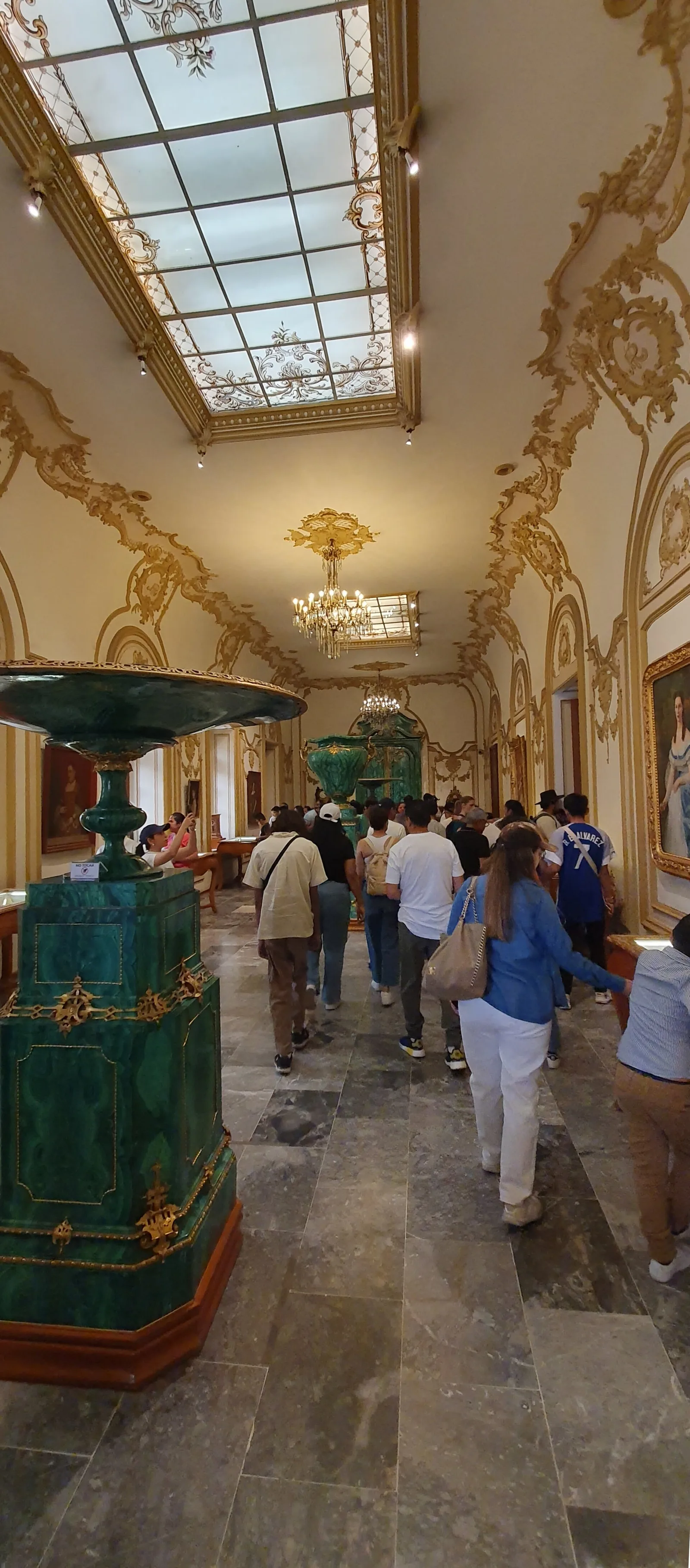
Include the approach to the castle in your visiting time and consult access options for your group’s needs. Once there, alternate galleries with observation of the building and its perspectives over the city. This guide’s interior photograph shows the Malachite Room; individual displays or room access may change. Avoid treating the castle as a hurried extra after another museum has already occupied much of your day.

7. Bosque de Chapultepec: more than a route between museums
Chapultepec is divided into four sections, with many of its best-known attractions in the first. That scale explains why saying somewhere is “in Chapultepec” is not enough: the entrance and section matter. The park can be a destination for walking and resting in its own right, as well as the setting for cultural institutions.
For a first outing, identify your main museum or landmark and design a walk around it. Do not attempt every section simply because they share a name. With children or a group with varied interests, combining outdoor time with one indoor visit often works better than linking three museums. Download a map and check the rules for the particular space you intend to use.
8. Central Coyoacán: gardens, streets and time for a meal
Jardín Hidalgo and Jardín Centenario are useful reference points for exploring central Coyoacán. San Juan Bautista parish forms part of this setting, while Francisco Sosa leads towards Santa Catarina. The appeal lies in the relationship between squares, architecture and everyday life, rather than moving between museums without noticing the streets.
Build a walk that leaves room to eat and sit down. When entering a religious space, respect its activities and distinguish worship access from tourist arrangements. The Casa Azul can fit into the same area, but its admission needs separate planning. Consult a map before walking there: the name Coyoacán does not mean that all its institutions occupy one square.
9. Museo Frida Kahlo: plan ahead for the Casa Azul
The Casa Azul, in Coyoacán’s Colonia del Carmen, introduces Frida Kahlo’s life and creative context through her house and personal objects. This is a different scale of visit from the Anthropology Museum: a domestic setting helps you approach one person and her surroundings. The official address is Londres 247, a useful reference for avoiding confusion with other venues associated with the artist.
Use the ticket channel linked by the museum itself and review visitor rules before arriving. Arrange your Coyoacán walk around the availability you find, leaving enough time for the journey. Do not assume that every activity using Frida’s name includes Casa Azul admission. Inside, look at objects within their context and follow conservation and photography instructions.
10. Xochimilco from Cuemanco: choose your kind of trip
Cuemanco is one of the embarkation points for exploring Xochimilco’s canals by trajinera. Chinampas and the lake landscape reveal a relationship with water very different from the urban centre. The official guide describes routes of different lengths and scope: arriving at a dock does not automatically determine what you will see or how long you will be out.
Before boarding, agree on the route, duration, total price and included services. Food, music or particular stops may cost extra, so clarify these details first. Choose a landscape-focused trip if that is your priority and confirm the exact departure point when planning transport. Give Xochimilco dedicated time; adding it after a crowded museum day usually leaves too little flexibility to enjoy the outing.
Arrange transport around actual entrances
The official city guide covers Metro, Metrobús, light rail and the integrated mobility card. Check the complete route to the entrance you intend to use, rather than only the neighbourhood name. For Cuemanco, for example, settle on the embarkation point before choosing transport; different Xochimilco docks involve different arrivals.
If anyone needs shorter walks or step-free access, check museum and transport arrangements separately. Plan meals near the area you are exploring that day. An itinerary with fewer journeys across the city leaves more time for visits and avoids depending on an exact transfer time that traffic or a service disruption could change.
A route to get you started
- First day: start at the Zócalo, visit the Templo Mayor and continue towards Madero, Bellas Artes and Alameda Central. Choose between a deeper archaeological museum visit and a substantial indoor experience at Bellas Artes; you do not need every admission option to enjoy the historic centre.
- Second day: focus Chapultepec on the Anthropology Museum or the castle, then combine your choice with a walk in the first section. If both institutions matter to you, extend your available time or put them on separate days. Being relatively close does not make their collections smaller.
- Third day: arrange Coyoacán around Casa Azul admission and leave time for gardens, streets and a meal. Give Xochimilco a separate outing if you want an unhurried canal trip. This is a flexible starting point, not a promise of completing all ten places in three days.
Good to know
Do the Templo Mayor and Anthropology Museum offer the same experience?
No. The Templo Mayor focuses on Mexico-Tenochtitlán and its ceremonial centre, with an archaeological site and museum. Anthropology presents cultures from several regions of Mexico. Both can be worthwhile if the subject interests you, but they are not interchangeable visits.
Can I visit the Casa Azul without planning ahead?
The useful first step is to check the official ticket channel and its conditions. Build your Coyoacán walk around available admission and confirm the address at Londres 247. A third-party activity about Frida Kahlo does not necessarily include entry to this museum.
How should I choose a trajinera trip in Xochimilco?
Decide on the dock and type of experience first. Cuemanco offers routes of different lengths; agree on the itinerary, total price and extras before leaving. Also arrange your arrival and return without assuming that all embarkation points function as one place.
Mexico City rewards curiosity and a thoughtfully used map. The historic centre reveals its layers, Chapultepec expands the cultural perspective, and Coyoacán and Xochimilco change the pace. Choose complementary visits, give their differences proper attention, and leave space for the city you encounter between one museum and the next.
Sources consulted
- Ciudad de México: Centro Histórico —
- Ciudad de México: Templo Mayor and archaeological zone —
- Ciudad de México: Palacio de Bellas Artes —
- Ciudad de México: Museo Nacional de Antropología —
- Ciudad de México: Museo Nacional de Historia, Castillo de Chapultepec —
- Ciudad de México: Bosque de Chapultepec —
- Ciudad de México: Coyoacán —
- Museo Frida Kahlo: Casa Azul and visitor information —
- Ciudad de México: Embarcadero de Cuemanco —
- Ciudad de México: official guide and mobility resources —