

Rabat introduces a side of Morocco where a modern capital coexists with historic enclosures, walls and places of memory. For a first two-day stay, this guide selects the Kasbah of the Udayas, Hassan Tower and Chellah. They are not three versions of a medina: each reveals a different aspect of the city and calls for a different pace. The aim is to connect them with enough time to look and arrange transport sensibly.
UNESCO recognises Rabat as both a modern capital and historic city, highlighting relationships between periods of urban development. That perspective helps avoid judging the city only by how many old monuments can be photographed. Journeys between visits also show how different neighbourhoods and functions coexist within one working capital.
Before you pack
- Suggested time
- Two days, adjusted to your pace
- Places in this route
- Three selected places
- Destination
- Rabat
Kasbah of the Udayas: a historic place with everyday life
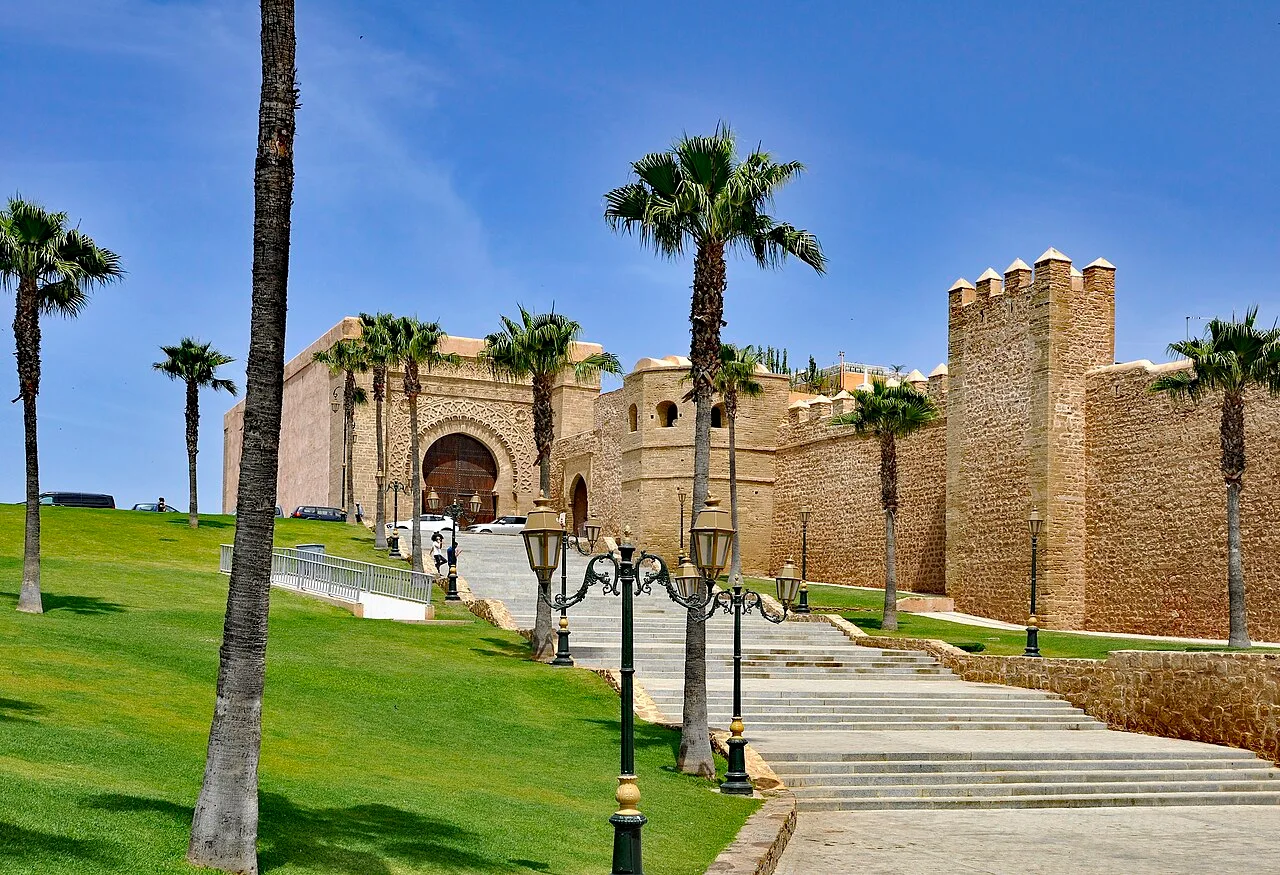
The Kasbah of the Udayas, also written Oudayas, appears among Rabat’s principal places in Morocco’s official tourism information. UNESCO highlights its position above the Bou Regreg landscape and the relationship between traditional neighbourhoods and the modern city. Begin by observing the walls, entrance and change of scale as you move into the street pattern.
Do not treat it as an empty museum. Distinguish public space, gardens and permitted visitor areas from private doors and courtyards. An open door is not an invitation to enter, and a picturesque façade does not turn residents into photography subjects. Walk without blocking passages and ask before taking close portraits of people living or working in the area.
Choose a short route from a clearly identified entrance and extend it only if energy and navigation allow. Narrow streets, gradients and changes in paving affect the effort involved. If you need specific accessibility arrangements, investigate the complete route beforehand. Confirming that a vehicle can approach the enclosure is not enough if the intended walk then presents obstacles for your group.
From public viewpoints, try to connect the kasbah with the river and surrounding city rather than looking only for an attractive wall. A pause helps establish its urban position and provides rest before continuing. Access to every garden or interior is not promised here: check current notices and adapt the walk when conservation or everyday use imposes restrictions.
Hassan Tower: observe the wider monumental setting
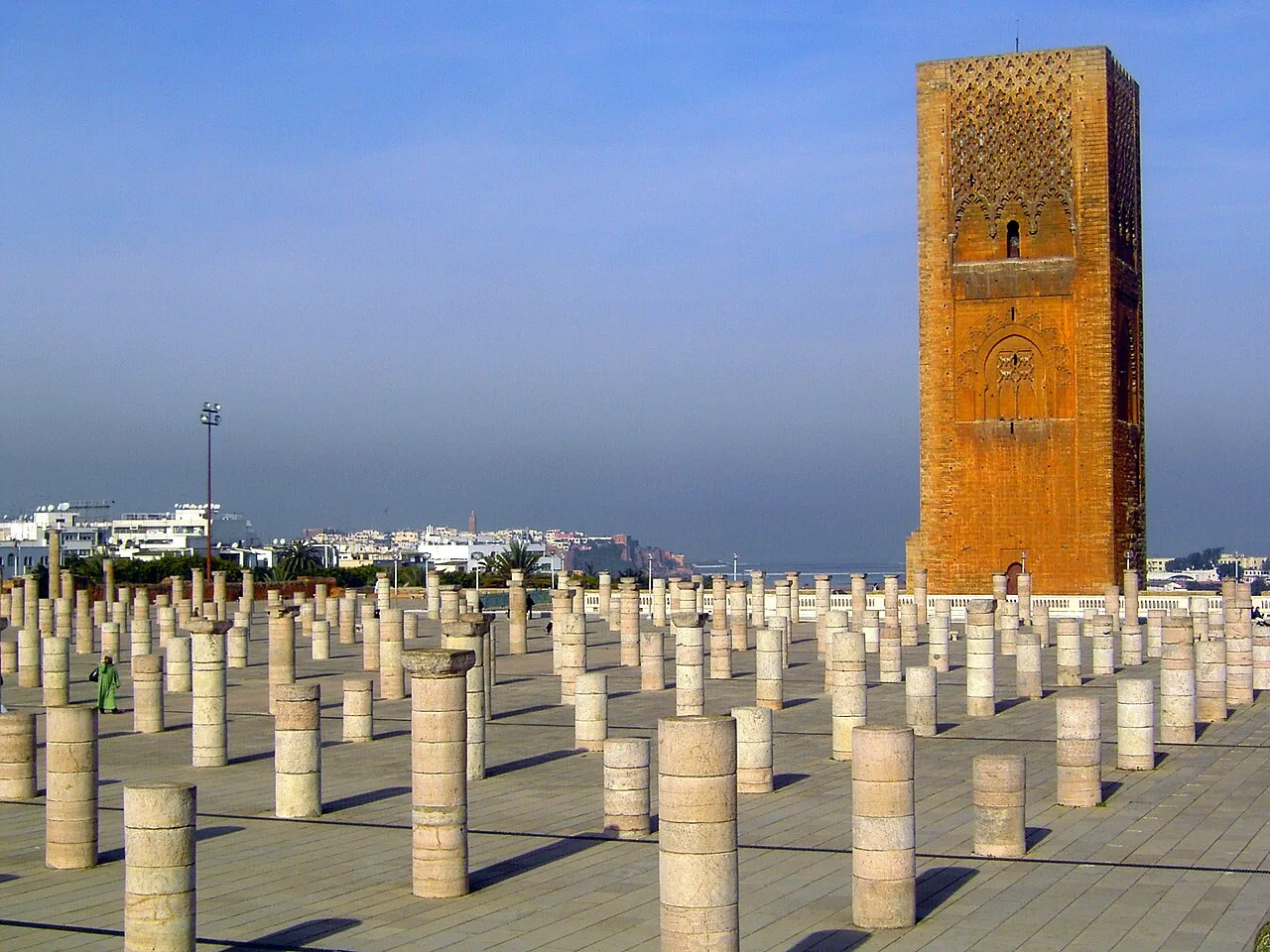
Hassan Tower is best understood within the space of the historic mosque rather than as an isolated object. UNESCO includes Hassan Mosque and other Almohad remains among Rabat’s historic components. The setting of columns and the scale of the ensemble suggest a monumental ambition different from the more enclosed streets of the kasbah. Spend a few minutes noticing that contrast before approaching details.
This guide focuses on the outdoor space and visual relationship between tower and remains. It does not assume a climb inside the tower or automatic entry to every neighbouring building. Confirm permitted routes on arrival and respect checks, signs and ceremonial uses. If a temporary restriction is in place, do not attempt to go around it simply to obtain an anticipated photograph.
For pictures, look for positions that show repeated elements and open space without climbing on structures. Seeing the tower from several distances can be more revealing than standing directly below it. With children, comparing height, shapes and the arrangement of columns supports a short but attentive visit without turning each stop into an extended history lesson.
This exposed setting can feel different with wind, sun and visitor numbers. Bring appropriate protection and allow a pause before moving on. When coming from the kasbah, choose walking or transport according to the actual route and conditions. Two monuments belonging to the same city does not automatically mean the journey between them will be comfortable on foot for everyone.

Chellah: explore remains within a planted landscape
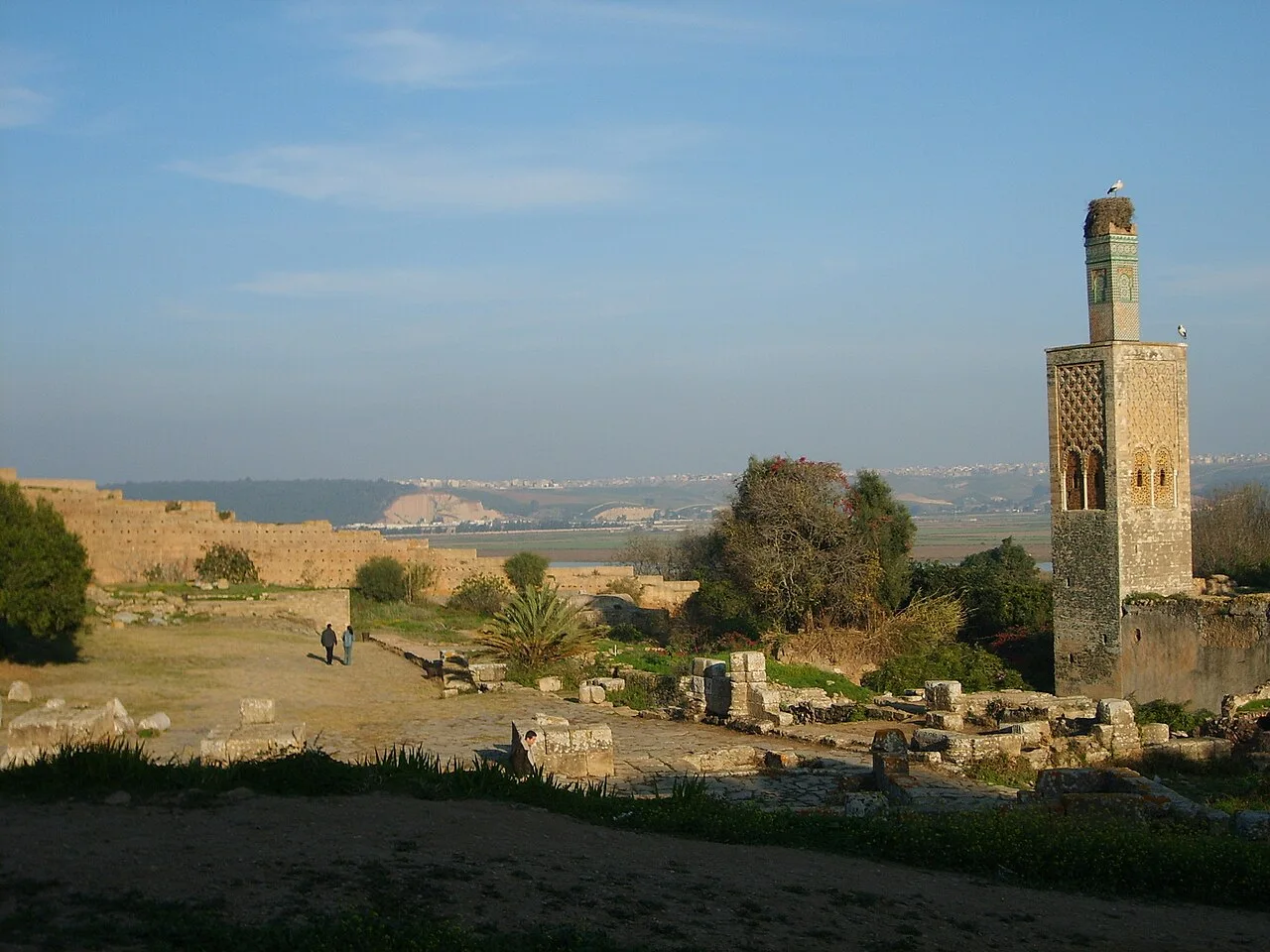
Morocco’s national tourism office presents Chellah as a Merinid-period necropolis with walls, remains and gardens. That character creates a different experience from an urban square. Arrive with time to read interpretation and notice how vegetation and architecture share the site instead of treating each structure as a backdrop to pass through quickly.
Confirm admission arrangements before travelling and calculate time inside separately from the journey there. For a first visit, use the available site map and select a sequence that allows you to read explanations without repeatedly retracing your steps. If booking a visit, establish whether admission and a guide are included and which language is used; these are different services worth clarifying before payment.
Follow permitted paths and avoid climbing walls or crossing closed areas for a closer look. If hiring a guide, ask for explanations that distinguish the periods and functions of structures actually visible rather than presenting every popular story as established history. Signs and on-site information help make sense of an ensemble that need not be complete or immediately easy to interpret.
The tourism portal mentions storks, but their presence during a particular visit should not be guaranteed. If you see birds, keep away from nests and do not make noise to provoke movement. Prepare comfortable footwear and enquire about adapted routes when necessary. Give Chellah its own block: it rewards attention more than a final hurried stop immediately before a train departure.

Connect the visits without overlooking the journeys
The first day can combine the kasbah and Hassan Tower with a break between them; the second gives Chellah space and preserves departure flexibility. Official tourism information describes a capital with trams and modern services, but that does not mean one line reaches every entrance. Check actual connections and the final approach before buying transport tickets or fixing appointments.
Choose accommodation with luggage arrival, rest and the return journey in mind. For clothing and scheduling, consult the Atlantic-coast forecast and the rules of the spaces you plan to enter. Access to a historic enclosure should not be confused with permission to enter any religious building. Asking and following instructions allows appreciation of heritage without interfering with its present uses.
A route to get you started
- Day 1, morning: begin at the Udayas Kasbah with a manageable walk through public areas that can be extended if comfortable. Observe entrances, streets and the river relationship. Take a break before deciding how to reach the next place, using the group’s actual energy rather than the map alone.
- Day 1, afternoon: visit the Hassan Tower setting, respecting permitted areas and current access instructions. View the relationship between tower and columns from different positions. Keep the end of the day flexible for food and an unhurried return instead of adding another distant visit.
- Day 2: give Chellah a substantial block after confirming admission arrangements. Follow authorised paths and read available interpretation. If travelling onwards, calculate the transfer, baggage collection and station arrival separately rather than relying on an ideal departure with no delays.
Good to know
Is Rabat worth a two-day stay?
Two days allow these three visits at a comfortable pace and reveal differences between neighbourhoods and historic enclosures. That does not mean the whole city has been covered. With less time, choose two priorities rather than reducing every visit to a brief photography stop.
Can I climb Hassan Tower?
This itinerary neither includes nor guarantees a climb. The proposed visit observes the ensemble from permitted exterior spaces. Confirm any additional access with the responsible organisation and do not interpret a photograph of the tower as evidence that its interior is open to visitors.
Is Chellah a medina that can be explored freely?
It should not be confused with a residential neighbourhood. Official tourism information presents it as a historic necropolis with remains and gardens, whose access and routes need checking. Treat it as a heritage site with its own conditions rather than a public street open at any hour.
Do I need a guide at every place?
This guide does not make that a requirement. An accredited guide may add context if you want greater depth, but agree on language, duration and subject matter first. Regardless of how you visit, respect signs, private spaces and staff instructions; a paid tour does not authorise restricted access.
Rabat offers a balanced introduction when the kasbah, Hassan Tower and Chellah are approached as different spaces. Two days with clear transport plans and sufficient pauses make room for its heritage while remembering that the capital is also a contemporary city where people continue to live and work.