

A first visit to Cairo and Giza can connect three historical periods without trying to cover every museum and monument in the region. Giza’s pyramids reveal the scale of royal funerary complexes. Saqqara introduces a long-lived necropolis and Djoser’s Step Pyramid. Saladin Citadel brings defensive and religious architecture from Islamic Cairo into the picture.
We suggest three days, with one principal visit each day. Apparent distance on a map does not account for traffic or the time needed inside each complex. In October, continue to plan for sun, water and rest rather than assuming that a seasonal change makes every hour comfortable. The photographs are real, and admission should be checked by site and ticket type before booking.
Before you pack
- Suggested time
- Three days, adjusted to your pace
- Places in this route
- Three selected places
- Destination
- Cairo and Giza
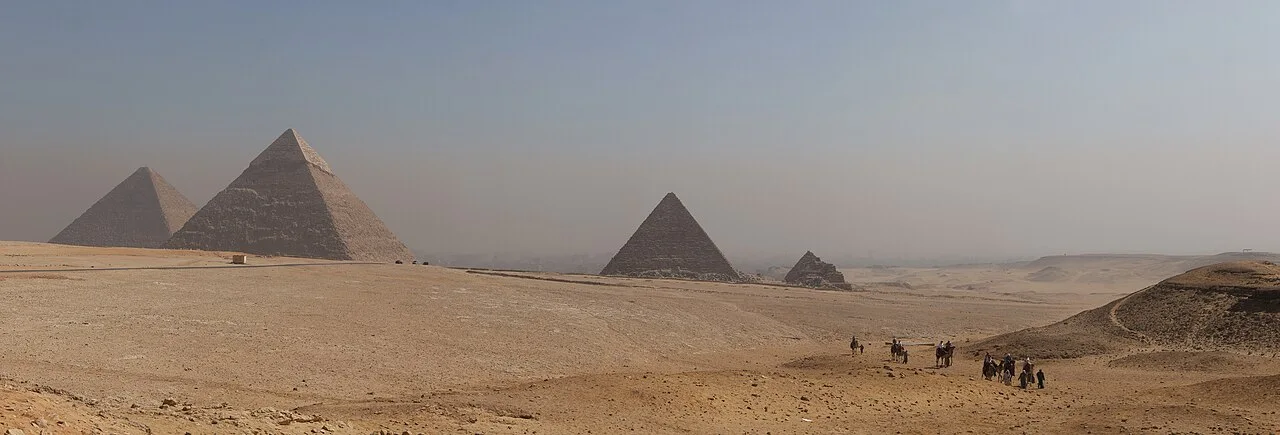
Giza’s pyramids: separate site admission from interiors
The three principal pyramids at Giza belong to Khufu, Khafre and Menkaure, according to Egypt’s Ministry of Tourism and Antiquities. Khufu’s pyramid is the oldest and largest of the three. The ministry explains that each formed part of a wider funerary complex containing temples and associated structures. This context moves the visit beyond the idea of three isolated monuments standing in sand.
For planning, distinguish admission to the archaeological area from entry into particular interiors. Official information specifies that general admission does not automatically cover every pyramid and tomb. Before paying, decide whether you want to explore the exterior setting, enter an available structure or combine both. Do not select a product from its title without reading its inclusions.
The outdoor route already allows you to examine proportions, distances and relationships between structures. Use permitted viewpoints and do not climb the masonry. If considering an interior, investigate the physical conditions of access: this is not equivalent to walking around an open plateau. Anyone with limited mobility, difficulty in confined spaces or restricted energy should assess the specific route before purchasing admission.
Carry water and sun protection, and agree clearly on any extra service before accepting it. Transport, an offered photograph or an activity within the area should not be assumed to be included. Our recommendation is a substantial morning with time to orient yourself and rest, without requiring a second major archaeological visit immediately afterwards.
Saqqara: a necropolis extending beyond one pyramid
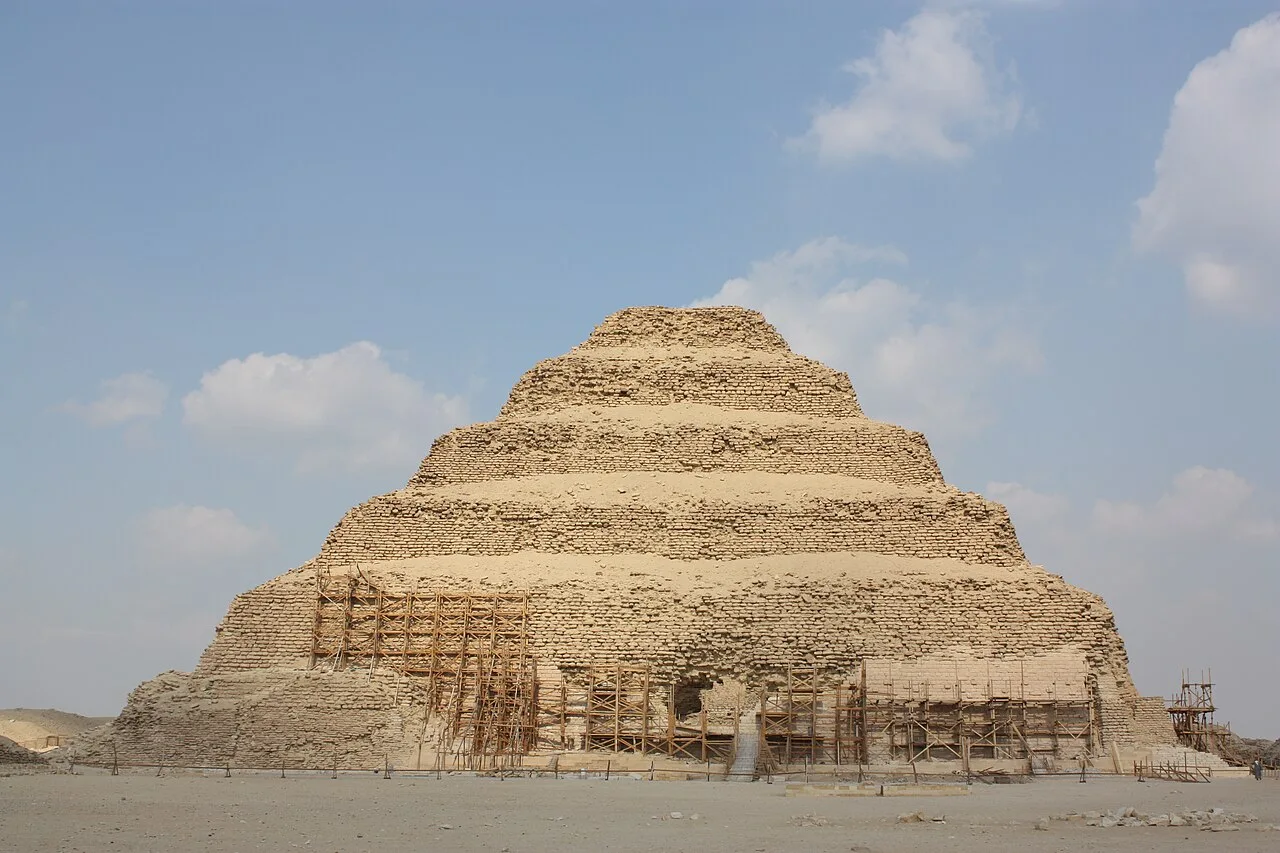
Saqqara changes both the historical scale and the rhythm of the itinerary. The official description identifies Djoser’s Step Pyramid and explains that the necropolis preserves tombs and monuments from different periods. It is not simply another version of Giza. Its interest lies in understanding changes in funerary architecture and the continued use of a landscape over many generations.
The Step Pyramid offers a clear visual starting point. Observe its form from authorised spaces and compare it with the profiles of the pyramids at Giza. That comparison is useful without entering every interior. Restoration and the present condition of the complex belong to the experience. An archive photograph cannot show exactly which scaffolding or entrances will be present on your travel date.
The ministry distinguishes admissions and supplements for particular sectors and tombs. Decide what you want to visit before buying, and verify that the ticket covers it. A term such as comprehensive can have a commercial meaning that does not equal access to absolutely everything. If one tomb is your priority, confirm its opening and current photography conditions.
Give Saqqara its own day rather than making it a rushed stop after Giza. A guide with archaeological knowledge can help interpret differences between periods and scenes in accessible spaces. Travelling independently, use the site’s information and choose a few clear objectives. The value comes from recognising change and function, not collecting tomb names that you cannot distinguish afterwards.

Saladin Citadel: another chapter of Cairo’s history
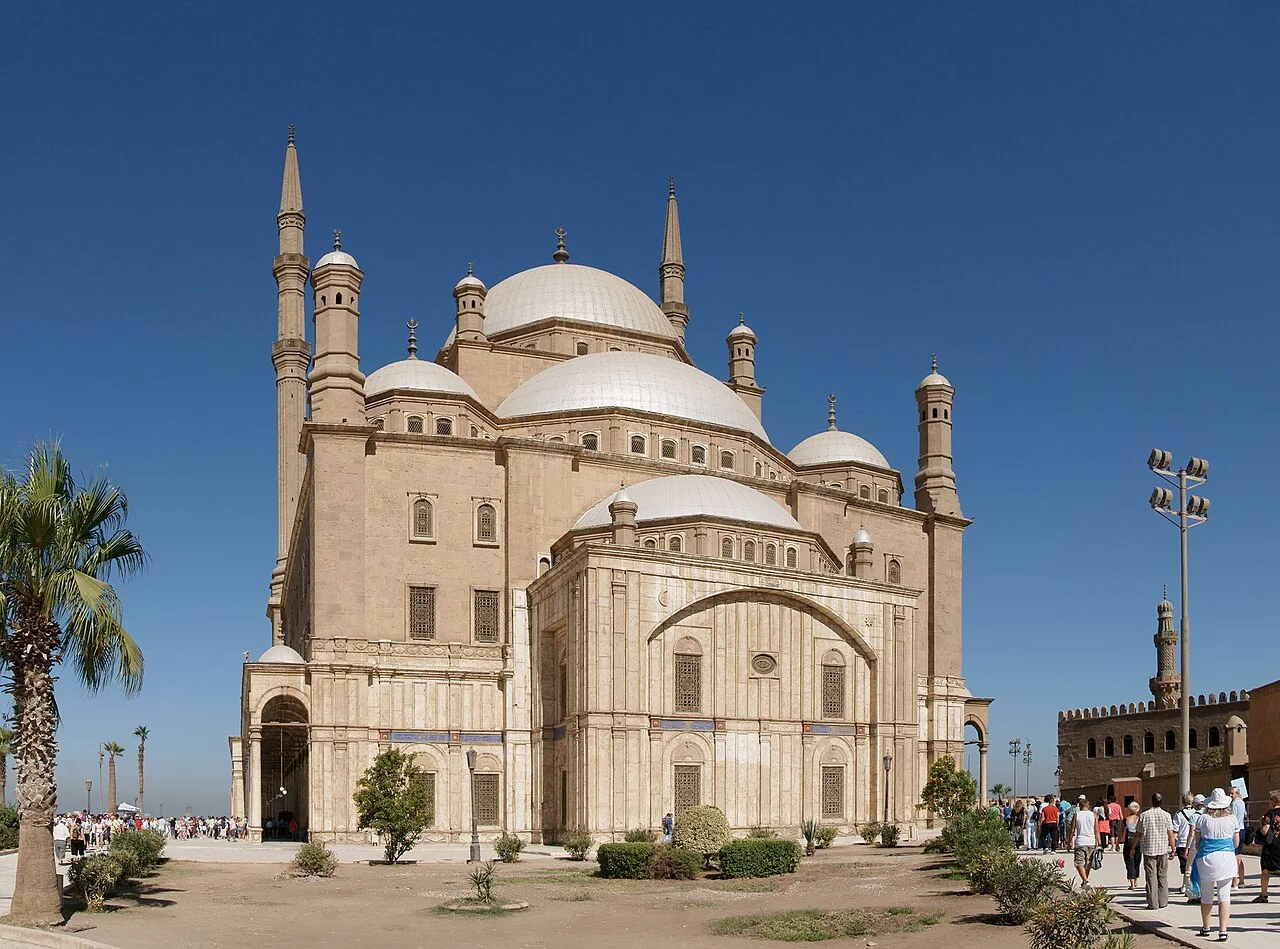
Saladin Citadel occupies an elevated position on the Muqattam Hills. The ministry records that Saladin ordered construction in 1176 and that the complex became the official residence of Egypt’s rulers. Later additions show that the citadel does not belong to one historical moment. Its association with defence and government distinguishes it from the necropolises visited on the previous days.
The Mosque of Muhammad Ali, visible in this section’s photograph, is among the most recognisable parts of the complex. It belongs to this citadel visit rather than adding a separate excursion to our route. Observe the contrast between defensive structures, courtyards and religious architecture. From permitted areas, the elevated setting also helps you understand the scale of the surrounding city.
Check which buildings are open and what current admission includes. The presence of several museums and monuments within the walls does not mean they will all be available during your stay. For religious spaces, wear respectful clothing and follow instructions on footwear, photography and circulation. If a service or closure changes access, adjust the route without attempting to enter restricted areas.
Allow time for the views, while remembering that clear visibility is not guaranteed. Walking between buildings includes outdoor exposure, so keep water and rest breaks in the programme. The citadel provides a balanced conclusion to these three days, moving from ancient funerary complexes to a setting that explains another stage in Cairo’s development.

Transfers, tickets and a workable three day plan
Choose a base with your principal interests and real journeys in mind. No accommodation removes every transfer between Giza, Saqqara and the Citadel. Check likely timings near departure and retain a buffer for traffic and entrance procedures. Do not plan an airport connection around only the most optimistic estimate displayed by a mapping application.
When hiring a vehicle or booking an excursion, agree on the route, waiting arrangements, return journey and included admissions in writing. Confirm the language and duration of any guiding service. Compare equivalent products: a low price covering transport alone is different from admission plus specialist explanation. Shopping stops are not necessary additions to this itinerary.
Separate general admission, optional interiors, guiding, transport and meals in your budget. Charges can depend on visitor category and supporting documents; consult current official information rather than carrying forward an old quoted price. Before travelling, check entry requirements and current official travel advice relevant to your nationality. On the ground, the most useful pace is one that lets you distinguish three historical settings without ending every day exhausted.
A route to get you started
- Day one: visit Giza having decided in advance about exterior routes and interiors. Begin by orienting yourself within the complex and spend time comparing the three pyramids. Keep a substantial break afterwards, rather than adding another necropolis merely because an offer includes it.
- Day two: travel to Saqqara with the route agreed. Use Djoser’s pyramid as a starting point and choose additional sections according to your interests and current access. Leave a buffer for the return trip; the transfer is part of the day too.
- Day three: explore the Citadel and its available buildings, including the Mosque of Muhammad Ali when access permits. Compare its function with the earlier funerary settings. Reserve the final part of the day for rest and preparing any onward connection.
Good to know
Would Giza and Saqqara repeat the same experience?
No. Giza is associated with major Fourth Dynasty royal complexes, while Saqqara contains monuments from different periods, including Djoser’s Step Pyramid. Comparing them with time allows you to recognise changes in form, function and organisation.
Does general Giza admission include every pyramid interior?
No. Official information distinguishes the archaeological area from several interiors and monuments requiring specific admission. Confirm your ticket’s inclusions and whether the interior you want is available on your date before paying for an additional access option.
Should I combine Giza and Saqqara in one day?
It can be arranged, but it requires choices and reduces time for interpretation. This guide separates them to avoid a day dominated by transfers and haste. With less time, prioritise one complex rather than assuming you must see everything.
Is the Citadel just the Mosque of Muhammad Ali?
No. The mosque is a prominent part of a defensive and governmental complex expanded across centuries. Check which buildings are open and understand the ensemble, while respecting the specific conditions that apply within religious spaces.
Giza, Saqqara and the Citadel create a coherent introduction to the Cairo region. Separate days, careful ticket reading and realistic transfer buffers let you compare periods without rushing. The trip gains depth when each complex is understood through its function rather than only its most famous photograph.