

Istanbul’s layers of history become easier to understand when you compare places with different functions. Hagia Sophia introduces a major religious monument, Topkapı shows the organisation of an Ottoman residence and centre of government, and the Basilica Cistern reveals an underground water structure now open to visitors. All three lie on the historic peninsula, so this selection avoids crossing the wider city repeatedly to complete an oversized checklist.
We suggest three relaxed days, although you can redistribute the visits around your accommodation and available tickets. For an October trip, retain flexibility for weather and access changes. We do not quote fixed prices or promise admission without queues: those details depend on your date, selected ticket and the management of each site.
Before you pack
- Suggested time
- Three days, adjusted to your pace
- Places in this route
- Three selected places
- Destination
- Istanbul
Hagia Sophia: appreciate a monument with several historical layers
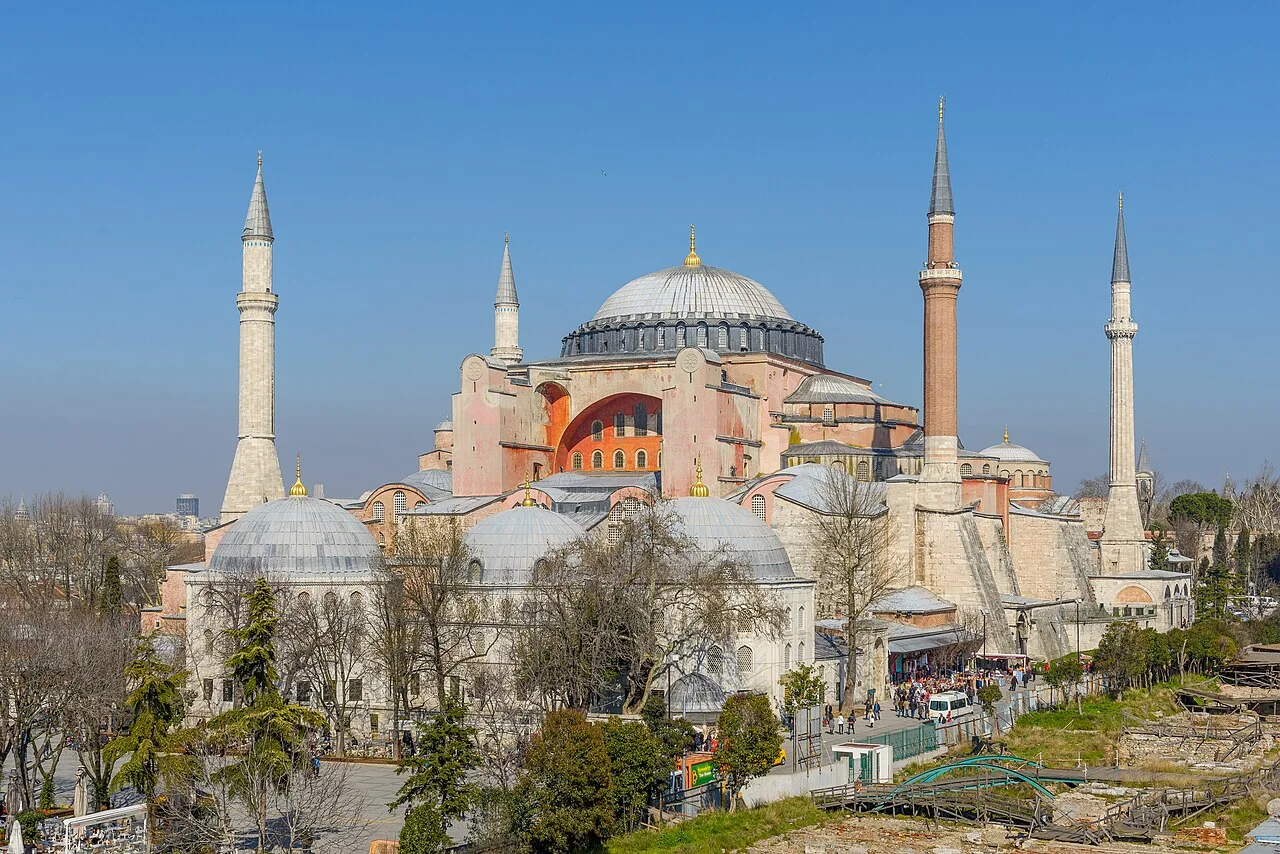
Hagia Sophia is central to UNESCO’s recognition of Istanbul’s historic areas. The organisation dates its Byzantine construction to 532–537 and highlights its subsequent influence on religious architecture. The scale of its dome and the relationship between the building’s volumes help explain that importance before you even enter. You do not need to reduce its history to a single period to appreciate the structure.
Today it is a religious space, making it important to distinguish sightseeing arrangements from access intended for worship. Check the permitted visitor route, appropriate admission and dress requirements before travelling there. An old review is not reliable evidence of free entry or unrestricted access to every area. Visitor arrangements have changed over time and should be checked close to your travel date.
Spend a moment looking at the overall exterior before approaching the entrance. Within the areas open to visitors, notice how light changes your perception of the interior. Follow instructions on photography, quiet behaviour and circulation. A cultural visit does not remove the building’s religious purpose. If temporary restrictions affect access, change the order of your day rather than depending on an exception.
In this route, Hagia Sophia receives a visit of its own without immediately chaining together every major monument nearby. A short distance on a map does not remove security checks, queues or the time needed to look carefully. A less crowded schedule gives you room to understand what you have seen.
Topkapı: a palace of courtyards and pavilions
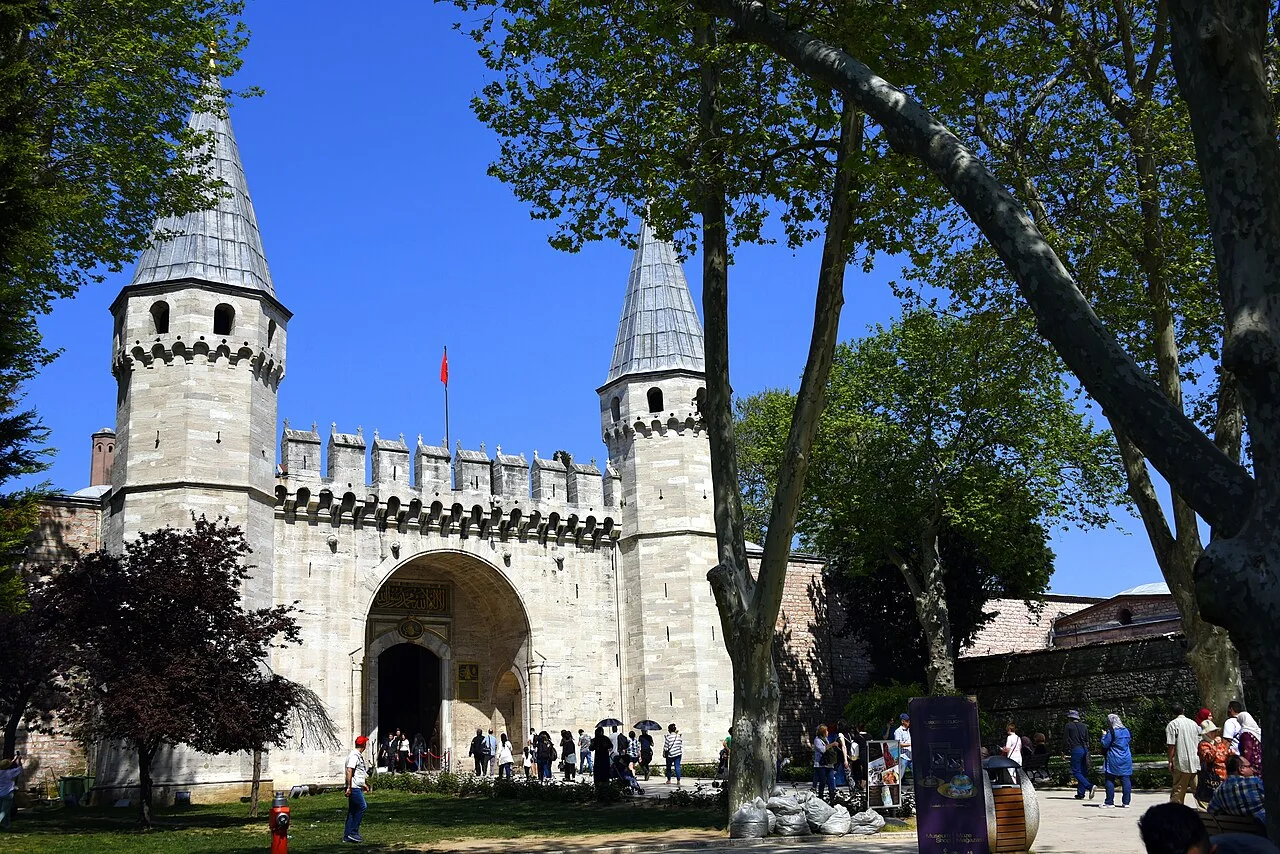
Topkapı shifts the itinerary from religious architecture to the life of the Ottoman court. UNESCO identifies it as an outstanding palace ensemble. Its organisation through courtyards, pavilions and separate functions differs from the familiar image of a palace as one symmetrical block. The interest lies in following the sequence of spaces and understanding how administration and residence related to each other.
Descriptions of the complex identify areas such as kitchens, governmental rooms and the imperial family’s quarters. Understand the Harem within that domestic and ceremonial context rather than through the exotic fantasies that often surround its name. Before booking, read the ticket description and confirm exactly which sections are included. Available combinations and visitor routes can change, and historical descriptions do not establish current admission rules.
Our suggestion is to allow a substantial morning for the palace. Choose several priority areas and use the map to connect them rather than entering every room merely because it is open. Collections can take longer than walking between courtyards. If your travelling companion prefers architecture to objects, agree on the pace before starting so that neither person feels rushed through their main interest.
Check restoration notices and respect the photography restrictions displayed on site. Do not treat a description of a room as a guarantee that it will be accessible during your stay. Leave a meal and rest break afterwards: the size of the complex and time spent standing make it unsuitable as a quick stop squeezed between two tightly timed reservations.

The Basilica Cistern: understand the city beneath the street
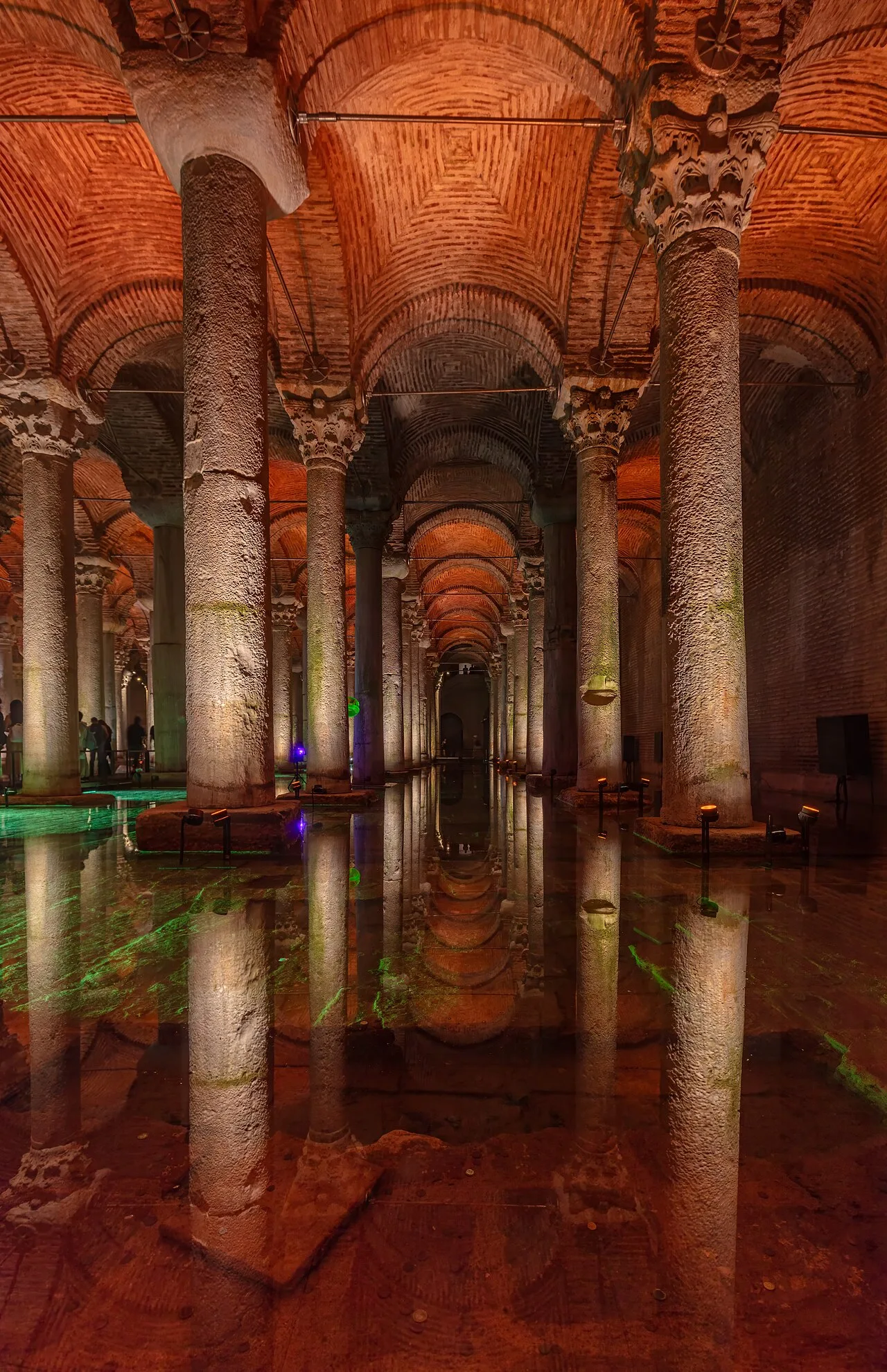
The Basilica Cistern introduces another dimension of Istanbul: water infrastructure beneath the historic peninsula. The municipal tourism office highlights its conservation and recent restoration by İBB Miras. Visitors come for the architecture and atmosphere rather than a conventional sequence of museum rooms. Repeating supports and reflections reveal a scale that is difficult to imagine from street level.
Before descending, check the available admission and route conditions. If you require adapted access, ask the operator about the current arrangement rather than assuming an underground structure offers the same facilities as an open square. Lighting, surfaces and changes in level deserve attention. Stable footwear and a bag that does not inconvenience other visitors are practical choices for the route.
When taking photographs, stop only where you can do so without obstructing movement. Low light may require you to hold a phone carefully, but it does not justify leaning on protected structures or blocking a walkway. Lighting and installations can change from those visible in this guide’s archive photograph. The architectural interest remains even when the visual presentation is not identical.
You can place this visit on a day of unsettled weather, provided opening arrangements are confirmed. However, it is not automatically an immediately available shelter without admission or waiting. Compare its purpose with the other two stops: after a religious monument and a palace, the cistern shows how a major city also depended on structures that were far less visible from the streets.

Planning the historic peninsula in October
These three locations are close on the scale of Istanbul, but each has a different admission rhythm. Select tickets and check opening arrangements before fixing the final order. Separate days give you room for changes. If you need a shorter schedule, combine two stops while keeping the palace as the more substantial visit. Do not calculate the programme only by adding the walking times in a mapping application.
Choose accommodation according to its real connection with this area and the journey from your arrival point. Istanbul extends across two continents, but these visits belong to the historic European side. A crossing between continents is not necessary for this particular route to make sense. A focused programme can be more useful than a tour passing through many districts without time to understand any of them.
Carry clothing suitable for current religious visitor requirements and for changes in temperature. Check the forecast close to departure and keep room for an indoor break. Separate admissions, transport and meals in your budget. Compare passes by their precise inclusions: the words palace, museum and guided visit do not guarantee the same content in every product.
A route to get you started
- Day one: orient yourself on the historic peninsula and visit Hagia Sophia using the current sightseeing route. Allow time for the exterior and admission process without booking a second entrance immediately afterwards. Use the remaining hours to recover from arrival and adjust your plans.
- Day two: devote the main part of the day to Topkapı. Follow a coherent sequence through the courtyards and sections included in your ticket. Take a break afterwards and avoid a distant activity that depends on leaving the palace at an exact time.
- Day three: visit the Basilica Cistern with admission confirmed. Compare the underground space with the settings explored on previous days. Preserve a final buffer for any visit affected by a change in opening arrangements and for organising your onward journey.
Good to know
Are these places on the European or Asian side?
All three are on the historic peninsula on Istanbul’s European side. This guide does not require a transfer to the Asian side. To expand your visit, add another day rather than compressing the experiences already planned.
Can I see all three in one day?
It may be possible depending on admission arrangements, but that is not the pace recommended here. Topkapı needs attention and walking time, and queues elsewhere also count. With just one day, choose priorities and accept leaving a visit for another trip.
Does a Topkapı ticket always include the Harem?
Do not infer that from the product name alone. Check the current description of the ticket or combination you are buying and the sections open to visitors. A historical account of the palace does not guarantee that every room is available on a given date.
What should I bring for Hagia Sophia?
Clothing that meets current religious visitor requirements, a small bag and documentation for the appropriate admission. Check the latest dress and circulation rules before leaving. Sightseeing access and access for worship have different purposes and should not be treated as interchangeable.
Hagia Sophia, Topkapı and the Basilica Cistern provide three ways to understand Istanbul without scattering your itinerary across the whole city. Careful admission choices and space between visits let you connect the religious monument, imperial residence and water infrastructure as parts of the same urban history.