

Athens can feel overwhelming if you try to understand its entire history in a single morning. A first visit works better around three questions: how the city’s great sanctuary developed, where its objects can be studied, and what happened in the spaces of public life. The Acropolis, Acropolis Museum and Ancient Agora answer those questions without repeating the same experience three times.
This guide suggests two days with enough time to pause at each complex. It is a cultural route suited to an October trip, although it also works in other months with adjustments to opening arrangements. Each recommended place has its own real photograph. Advice on duration and sequence is editorial; current admission conditions should be checked with the relevant operators. You do not need a background in mythology to enjoy the route, and you do not need to remember every ancient name.
Before you pack
- Suggested time
- Two days, adjusted to your pace
- Places in this route
- Three selected places
- Destination
- Athens
The Acropolis: understand the ensemble before taking the photograph
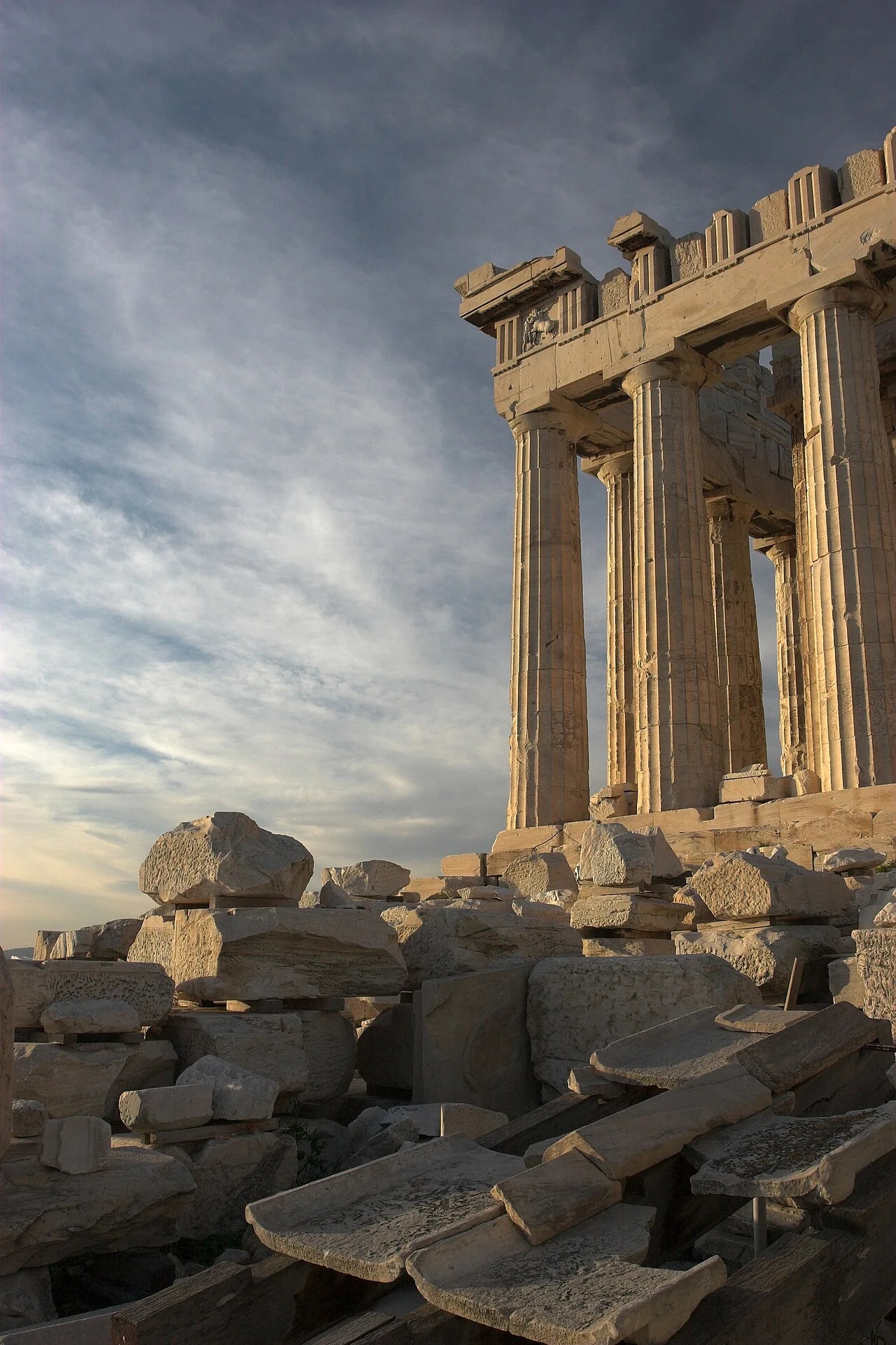
The Acropolis is a monumental hill with several buildings, not simply another name for the Parthenon. UNESCO explains that the major fifth century BCE construction programme included the Parthenon, Erechtheion, Propylaia and Temple of Athena Nike. These are parts of the same recommended complex. Observing how they relate to each other is more useful than trying to memorise a list of disconnected dates while walking.
Before ascending, arrange the admission appropriate for your date and read any current access notices. Do not assume that an Acropolis Museum ticket also admits you to the archaeological site. The hill is an outdoor environment with exposed areas and surfaces that require care. Carry water, sun protection and footwear with a reliable grip. In October it is still sensible to check the actual forecast rather than assuming the change of season removes the possibility of heat or rain.
Once on the hill, take a moment to orient yourself. Identify the positions of the buildings, look at the surrounding city and then examine details visible from permitted visitor routes. Conservation work belongs to the monument’s present reality: scaffolding or a crane does not make the experience a failure. The archive photograph in this guide cannot promise a construction-free view on your travel date.
If you require adapted access, confirm the conditions and availability of the relevant route before booking. Do not transfer assumptions about a modern museum’s accessibility to an archaeological hill. For a first visit, it is better to understand the ensemble and descend with enough energy for the museum than to collect photographs without recognising what they show.
The Acropolis Museum: give context to the hill above
The Acropolis Museum complements the archaeological site with a different experience: objects, sculpture and interpretation presented in a museum setting. Their close conceptual relationship does not turn the two admissions into one. The museum publishes its own opening hours, ticket information and services, which should be consulted independently when you organise the hill visit.
Its official information distinguishes seasonal opening patterns and also explains access to the excavation beneath the building. This is particularly relevant when travelling between late October and early November. Do not automatically transfer one season’s timetable to the next. Confirm both opening hours and last admission; arriving shortly before closing reduces the experience even if you are still allowed through the entrance.
To use your time well, look for specific connections with the Acropolis. Compare displayed objects with the position and function of the buildings you saw and read the explanations that establish their context. You do not need to examine every display case at the same speed. Following a few questions often creates a more memorable visit than racing through every room. With children, choose a small number of shapes or details to identify together.
The official museum information states that general admission covers the exhibition areas and the excavation beneath the museum, subject to access arrangements. Check baggage and photography rules during your visit and follow instructions in each area. Placing a meal or rest break before the museum lets you recover between the outdoor route and close observation of objects. That way the fatigue of the ascent does not decide how much attention the collection receives.


The Ancient Agora: a setting for Athenian public life
The Ancient Agora changes the focus of the itinerary. The American School of Classical Studies at Athens, which has excavated the site since 1931, describes it as the ancient city’s commercial, political and legal centre. It brought together activities that we often distribute among specialised buildings today. Walking through the complex helps you imagine those overlapping functions without mistaking it for another sanctuary on a hilltop.
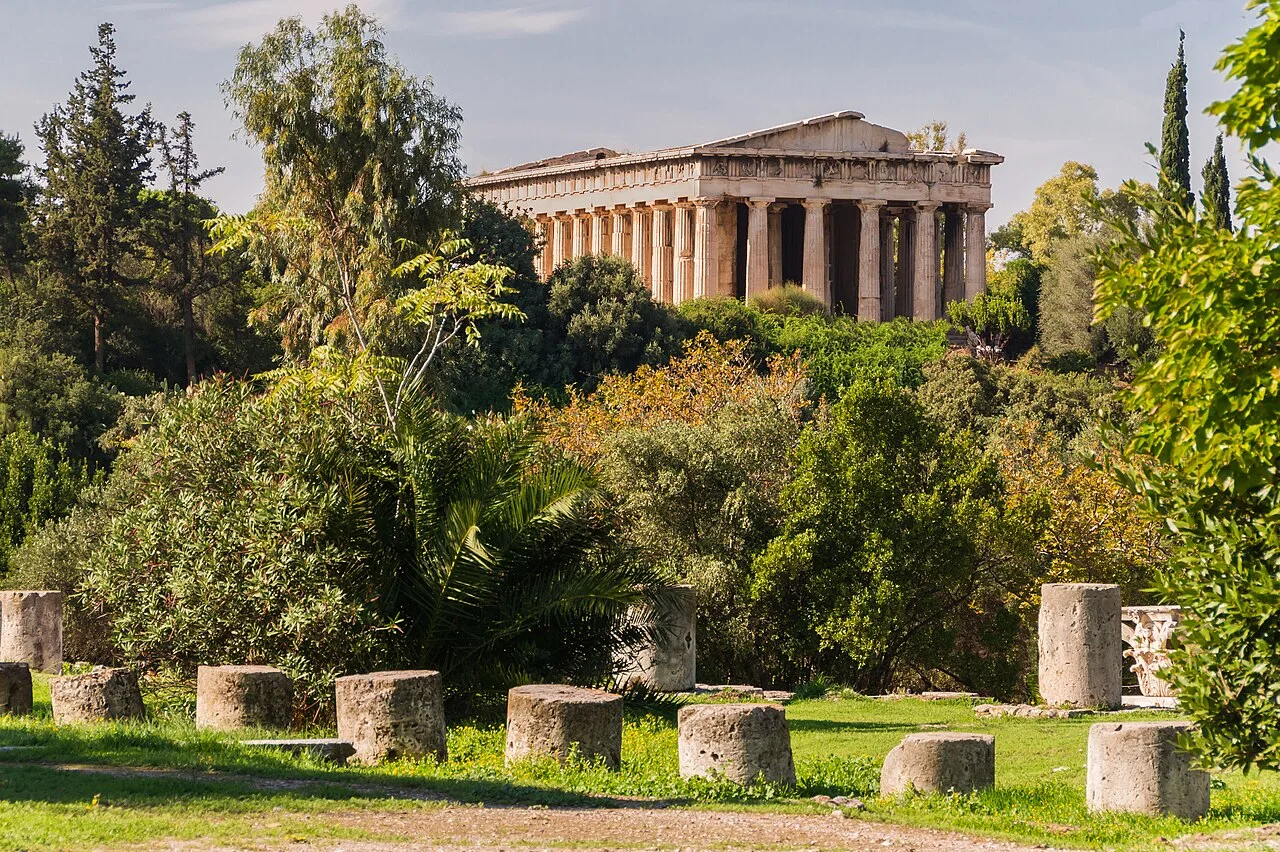
The photograph in this section shows the Temple of Hephaestus within the Agora setting. It is a useful visual reference, but your visit should not stop with that building. Read the site plan, recognise the open spaces and try to understand where different activities took place. Uneven survival requires some imagination; the value of the complex does not depend on every structure retaining complete walls.
The research institution explains that finds and excavation records are housed in the reconstructed Stoa of Attalos. Check current admission and access to the wider site and museum while planning, rather than assuming every section follows identical opening arrangements. The stoa belongs to the archaeological complex discussed here and helps explain the exterior remains; it is not a fourth independent excursion added to the route.
Give the Agora a morning with pauses for reading. A plan and a few carefully selected explanations can be more useful than a long checklist of names. If the sun is strong, adjust your pace and take permitted breaks. Keep the end of the day flexible. After the Acropolis and museum, this site deserves mental space of its own so that religion, government and everyday activity do not blur into one undifferentiated collection of ruins.

Admission, pacing and seasonal changes in Athens
Organise bookings by actual site rather than by the broad name of a sightseeing package. Check what each purchase includes, its valid date and any entry conditions. When using an intermediary, compare the description with the operator’s information. A commercial title mentioning the Acropolis does not by itself prove that the hill, museum and Agora are all included.
For late October, pay particular attention to seasonal transitions and last admission times. Official notices take priority over an itinerary saved months earlier. Avoid placing a substantial visit at the end of the day simply because the map shows a short journey. Checks, breaks and reading interpretive panels all take time beyond the walking distance.
Your budget should include the admissions you selected, transport, meals and water, without relying on unconfirmed free entry. If you need to reduce spending, decide which interiors or guided services matter most to you. This route does not require a guide, although specialist explanation can help if you want greater depth. The important thing is to retain energy for observation rather than to complete the largest possible number of steps.
A route to get you started
- Day one, first part: visit the Acropolis with the appropriate admission and access arrangements. Orient yourself among the buildings and examine their relationships. Allow time to descend without rushing and take a break before moving to an indoor activity.
- Day one, second part: explore the Acropolis Museum after a meal or rest. Connect the displays with what you saw on the hill. If the opening hours on your date do not leave enough room, reverse the order or move the museum to the second day.
- Day two: spend the morning at the Ancient Agora and the available parts of its complex. Use the site plan to understand public functions. Keep the afternoon as a buffer for a displaced visit, an extended break or your onward journey.
Good to know
Are the Acropolis and Parthenon the same thing?
No. The Acropolis is the monumental hilltop complex; the Parthenon is one of its buildings. This distinction helps you plan a better visit because the entrances, other monuments and relationship with the surrounding city also deserve attention.
Does an Acropolis ticket include the museum?
Do not assume so. The museum publishes its own admission conditions. Check every product before paying and confirm exactly which sites are covered, particularly when purchasing a tour or combined package through an intermediary.
Can all three visits fit into one day?
That depends on available hours and your pace, but this guide recommends two days for observation and understanding. Combining all three can leave little room for food, rest and interpretation, especially around seasonal opening changes.
What does the Agora add after the Acropolis?
It shifts the focus from the great sanctuary to commercial, political and legal life. That difference makes it complementary. You are not simply adding more ruins; you are exploring another function of the ancient city.
The Acropolis, its museum and the Ancient Agora provide a coherent introduction to Athens when each receives time and context. Check admissions separately, adapt the sequence to actual opening arrangements and alternate outdoor effort with breaks. You will understand more by connecting these three functions than by collecting unrelated stops.