
Hiroshima rewards a visit that leaves room to understand what you are seeing. The Peace Memorial Museum and Atomic Bomb Dome approach the bombing of 6 August 1945 and the lives of its victims from different perspectives. Shukkeien adds the story of a rebuilt Japanese garden and another part of a city that continued living. Bringing these places together over two days allows learning, walking and time to pause to support one another.
This route concentrates on three places within the city. The first day centres on the park and its places of remembrance; the second gives the garden a separate block, with room for arriving or continuing your journey. A shorter version is possible if you have only one day, but begin with museum availability and the garden’s closing time. The suggested duration is an editorial plan rather than an admission requirement.
Before you pack
- Route
- Two days · three places
- Country
- Japan
- Focus
- An unhurried first visit
Peace Memorial Museum: begin with the people behind the history
The museum explains the consequences of the atomic bombing through belongings left by victims, affected objects, survivors’ testimony and related documents. Together, these materials turn a familiar historical date into the lives that statistics often compress. Allow time to read labels and connect individual objects with their context instead of trying to photograph every display or finish the exhibition as quickly as possible.
The experience can be emotionally demanding. If you are visiting with others, agree a meeting point and allow each person to move at their own pace. Museum services include guides and an audio guide for the permanent exhibition in several languages, including English and Spanish. The official page describes around 70 minutes of audio that can be selected or repeated. That figure refers to the recording, rather than a required visit duration or the full time needed to gain entry.
On 3 November 2026, the operator published a general adult admission of 200 yen and an individual audio-guide rental of 500 yen. These are separate charges: renting the guide does not replace admission. Check the applicable ticket and service before purchasing. Extended opening slots require an online reservation, and the museum warns that crowd levels can lead to restrictions. Even a web ticket does not guarantee entry at precisely the printed time.
Make the museum the main part of a morning and keep the following activity flexible. Review current closure notices and arrangements before travelling; temporary exhibition changes may affect your date. After leaving, a pause in the park’s surroundings allows time to reflect before approaching the Dome. A useful day does not need another booked admission to fill every interval between its principal experiences.
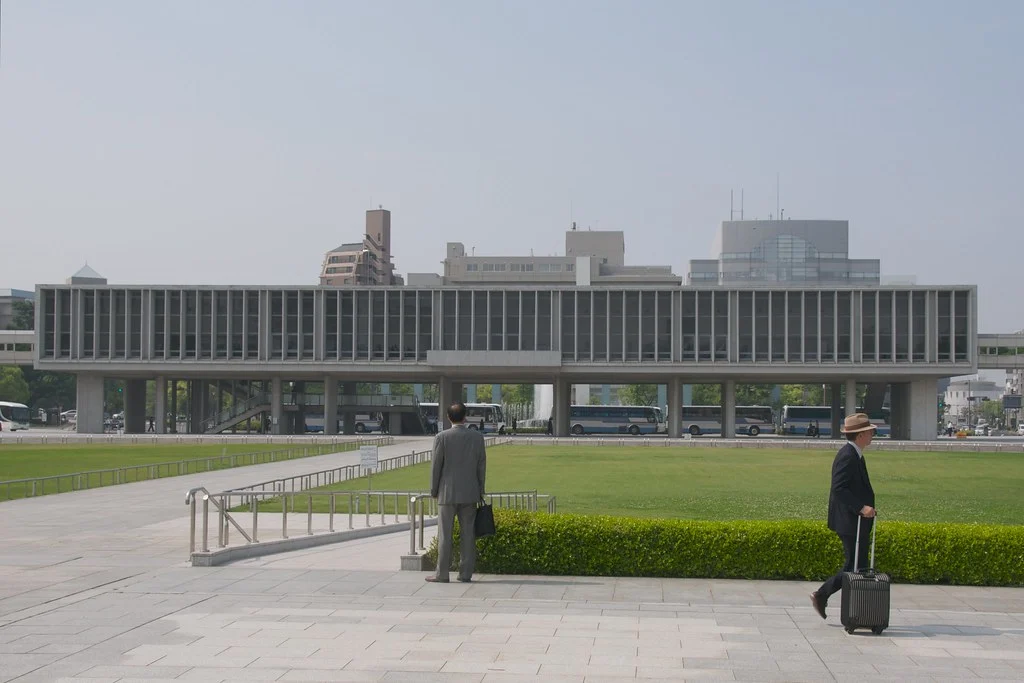
Atomic Bomb Dome: understand a ruin preserved as a memorial
The Genbaku Dome is the surviving ruin of the former prefectural industrial promotion hall. UNESCO inscribed it on the World Heritage List in 1996 and emphasises both its preservation as a ruin and its meaning for peace and the elimination of nuclear weapons. The point is not that a complete building has been reconstructed: the surviving structure makes the destruction, and the subsequent effort to retain its testimony, visible in a real place.
The heritage description explains that the property can be observed from outside its perimeter. Take time to look at the structure and read the information, rather than treating it as scenery for a quick photograph. Changing your viewing position helps reveal the building’s volume, surviving elements and relationship with the surrounding city. The museum provides context; being beside the ruin connects that information with a physical location.
It also helps to separate the names. UNESCO’s inscribed property is the Hiroshima Peace Memorial, identified with the Genbaku Dome; Peace Memorial Park forms part of the surrounding buffer zone. Museum, park and Dome are connected, but they are not three names for a single ticket. Keep those distinctions when planning reservations and mapping the route: purchasing museum admission does not by itself describe every exterior space you may explore.
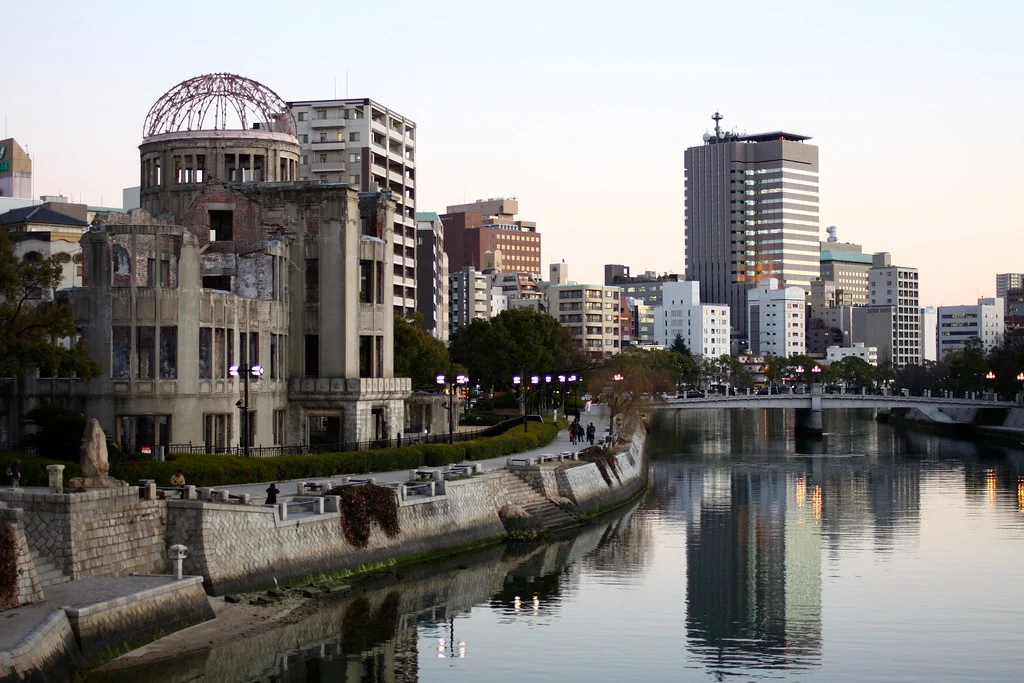
Shukkeien: discover miniature landscapes around a central pond
Official tourism information dates Shukkeien to 1620, when Ueda Soko, also known as a tea master, created it for the Asano clan’s villa. Its design brings landscapes into a garden setting: hills, islands, crossings and small buildings are arranged around a central pond. The experience develops as you walk and discover changing compositions, rather than finding one photograph that explains the entire place at once.
The garden was devastated in 1945 and its features were restored. That history connects it with the wider city while allowing the visit to have its own rhythm. Choose a manageable circuit and look at the relationship between water, bridges and planting. Flowers and foliage change with the season. A spring or autumn photograph illustrates one moment, but the interest of the garden’s layout does not depend on finding exactly those colours during your stay.
The official listing places the garden in Kaminobori-cho and identifies Shukkeien-mae as a tram reference, alongside other approaches. Closing times vary by season, and last admission is earlier than closing. Arrive with a substantial block for walking instead of using it as a last-minute stop between two trains. Check the opening arrangements, entrance you intend to use and any special activity independently before organising the day around them.
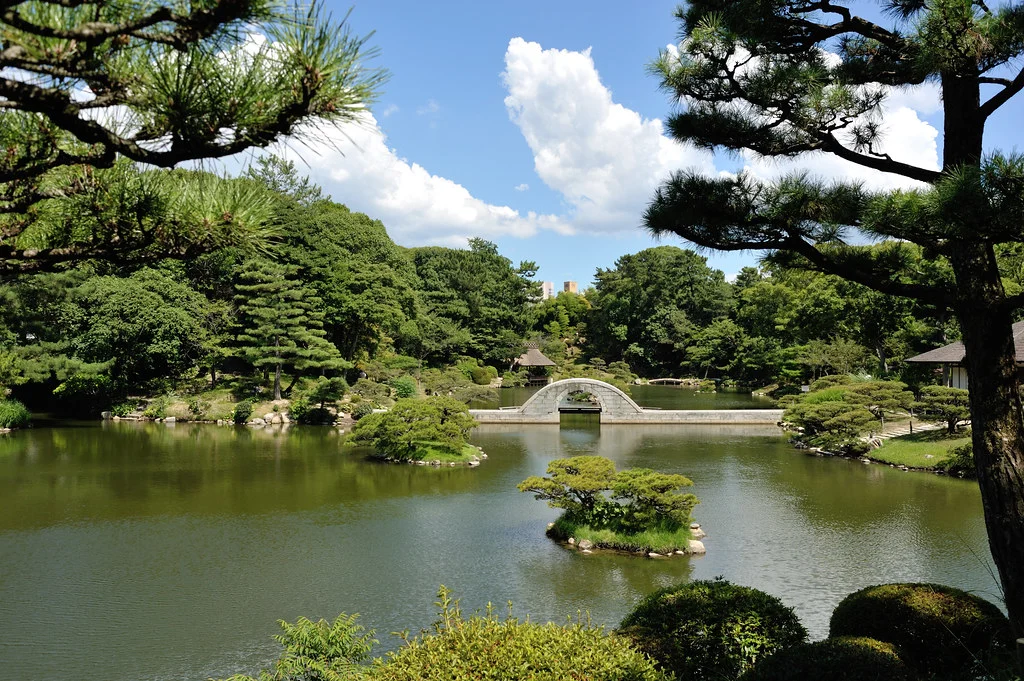
Connect the station, park and garden using the right starting point
The museum’s access page distinguishes arrivals from JR Hiroshima Station, the airport, the bus centre and the port. That matters: saying you arrive in Hiroshima does not identify the same transfer for everyone. From the station, the museum lists buses towards Heiwa kinen koen and tram approaches, including Genbaku Domu Mae for the Dome area. Check the current service from your actual point of departure rather than assuming a general route description settles the whole journey.
For the garden, save Shukkeien-mae and the full address, not just the name of the park visited the previous day. Combine walking and public transport according to your accommodation and energy. If carrying luggage, decide where to leave it before starting: the itinerary becomes easier without moving a suitcase between every area. The museum recommends public transport and states that general visitor parking is not available on site.
Priorities and reservations for a one-day or two-day visit
With two days, place the interior visit that matters most first and build the remaining programme around it. The museum has specific arrangements for certain entry periods, while the garden closes earlier during part of the year. The Dome is experienced as an exterior memorial. Distinguishing those conditions helps distribute admissions and prevents a queue from using up the only block you left for Shukkeien.
With just one day, decide which experience deserves the most depth and accept that the three places may not receive equal time. Booking when required, eating without rushing and leaving a transfer margin often add more value than introducing further activities unrelated to this route. Save confirmations and official sources on your phone so that practical decisions can be checked against the actual arrangements rather than a half-remembered general recommendation.
A route to get you started
- Day 1, morning: reach the Peace Memorial Park area and make the museum the principal block, using the appropriate ticket or reservation. Keep time afterwards free so the final rooms do not become a race against another appointment.
- Day 1, after a break: approach the Genbaku Dome, read its information and observe the exterior from permitted routes. Return to your accommodation or continue through the city according to the group’s energy and interests.
- Day 2: visit Shukkeien within its seasonal hours and allow time for an unhurried circuit. Arrange luggage and onward travel after that block, or reverse the days if reservations and arrival arrangements make that more sensible.
Good to know
Are the museum and Atomic Bomb Dome the same place?
No. The museum presents history through exhibitions, while the Dome is a preserved heritage ruin viewed from outside. Both relate to Peace Memorial Park but involve different visiting and planning decisions rather than a single shared admission.
Should I buy the museum ticket online?
The museum recommends advance web purchase and requires online reservations for specified extended opening periods. Check your date’s conditions. Its own notice explains that crowds may still cause a wait even with a purchased web ticket.
Does the museum offer an English audio guide?
The official services page lists English and Spanish among the available languages. Rental is separate from admission. Groups should consult the particular reservation procedure and availability before making an audio-guide arrangement part of their itinerary.
Can I see all three places in a single day?
A more concentrated version can work if entry, transport and pace align. Prioritise museum arrangements and Shukkeien’s seasonal closing time. Two days give more room to distribute the experiences and include breaks without hurrying through them.
Is Shukkeien only worthwhile when flowers are blooming?
No. The pond, bridges and composition of the strolling garden remain interesting across different seasons. Colours change during the year; investigate any particular illumination, tea event or seasonal activity separately if its date is central to your plans.
Hiroshima is easier to understand when information, place and time to pause work together. The museum introduces human stories, the Dome retains material testimony, and Shukkeien offers another way of moving through the city. With entry arrangements settled and two flexible days, each experience can receive the attention it deserves.