

Kyoto rewards a style of travel that leaves room to look closely. Its temples do not all offer the same experience: a terrace above the city, a rock garden and a torii-lined hillside invite different questions and different rhythms. These ten places combine that variety with a geographical approach that avoids crossing the city after every stop.
The aim is to connect visits over several days, rather than tick off ten sights in a single outing. The itineraries below are flexible editorial suggestions. For tickets, exceptional closures and accessibility, use the official pages linked at the end and confirm arrangements close to your travel date.
Before you pack
- Country
- Japan
- Organisation
- Higashiyama, central Kyoto, northwest and Fushimi
- Suggested time
- Three or four days, depending on pace
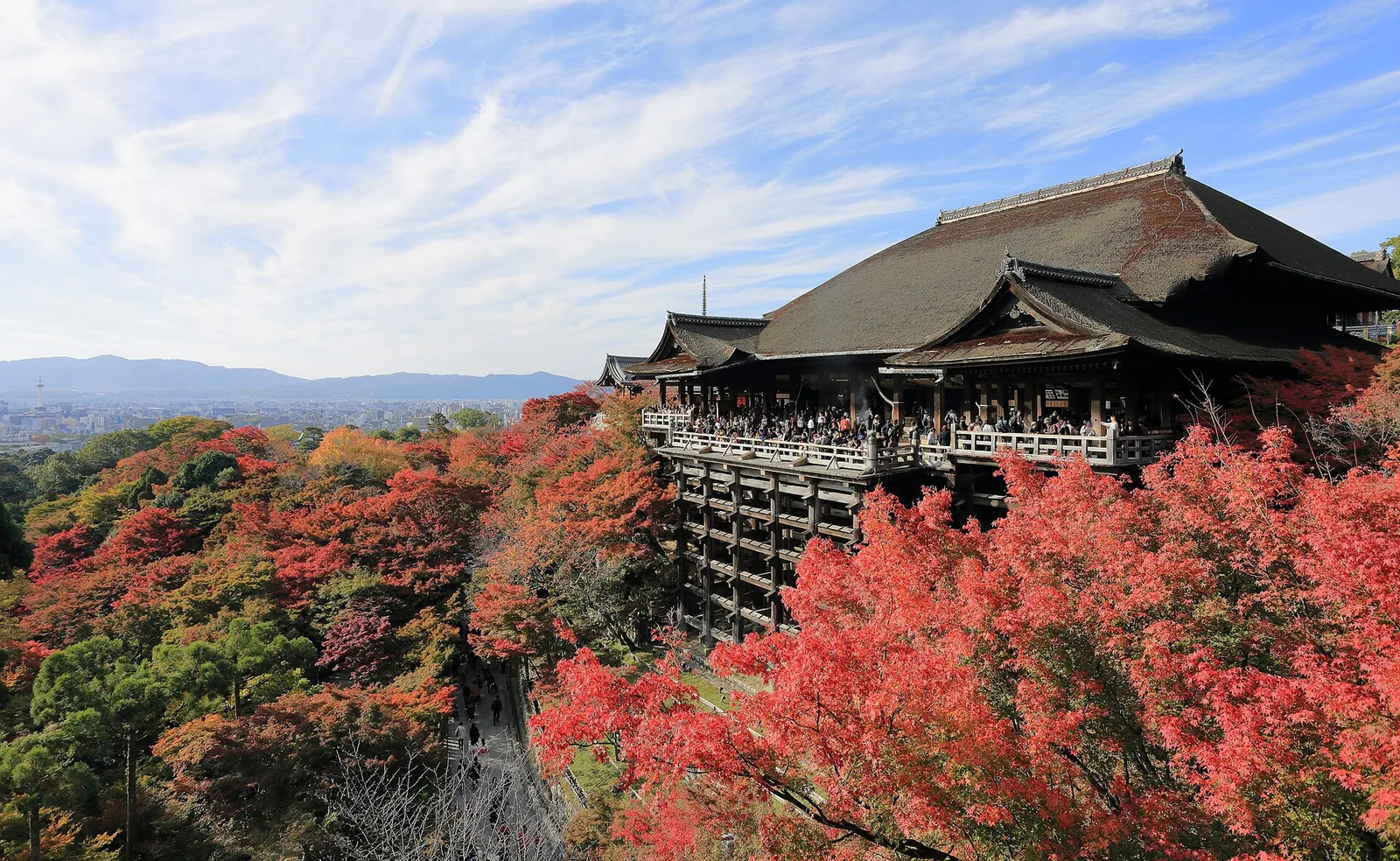
1. Kiyomizu-dera: Kyoto from the wooden terrace
Kiyomizu-dera occupies a hillside in Higashiyama, giving Kyoto an extraordinary architectural introduction. The main hall, its broad roof and the terrace supported on wooden columns sit against the city beyond. Look at the structure from the permitted paths as well as looking out from it: understanding how the building meets the slope is as rewarding as the westward view.
Allow for the approach and changes in level around the grounds. A measured visit leaves room for buildings, viewpoints and breaks instead of turning every stop into a search for the familiar photograph. Combine it with other Higashiyama sights and check the permitted route on arrival. Worship spaces and water features still matter to pilgrims; follow local directions and leave their rituals undisturbed.
2. Fushimi Inari: paths beneath orange torii
Fushimi Inari lies south of central Kyoto, in Fushimi district. Its orange torii form passages that continue into the hills behind the shrine. Fox sculptures are connected with Inari: the city guide identifies them as the deity’s messengers. These smaller details deserve attention alongside the sequence of gates that dominates photographs of the site.
Decide whether you want to explore the lower precincts or spend longer on the upper paths. You do not need to complete the whole climb to appreciate the shrine. Bring water, suitable footwear and a clear return plan; choose your route according to your ability and the weather. Keep narrow passages clear when stopping for photographs, and never mark or damage the bamboo or shrine structures.
3. Nijo Castle: power expressed through architecture
In central Kyoto, Nijo offers a view of a city shaped by the power of the Tokugawa shoguns as well as by religion. Its moat, walls and gates introduce a different scale from the shrines. Within the complex, gardens and decorated palace rooms show how architecture and imagery helped communicate authority to those who came for an audience.
Distinguish entry to the grounds from access to whichever interiors are available, as routes and ticket arrangements can change. Read the official information before booking and respect photography restrictions. Spend time examining painted motifs and the progression between rooms instead of heading straight to the gardens. Nijo works well as a substantial central-city visit without an immediate dash to Kyoto’s opposite edge.
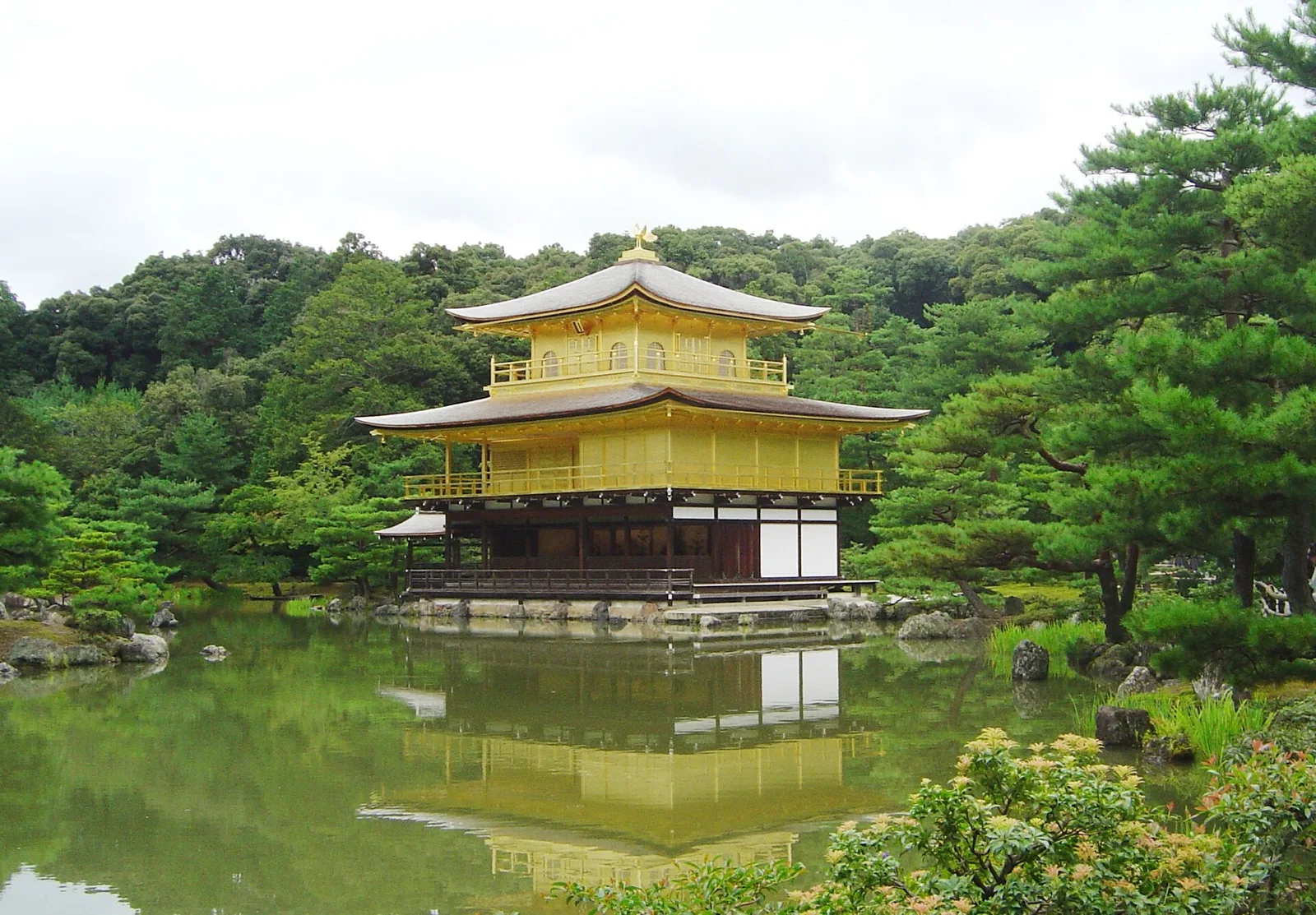
4. Kinkaku-ji: the Golden Pavilion and its pond
Kinkaku-ji, in the Kinugasa and Kitano area, places its gold-leaf pavilion beside Kyokochi pond, rocks and planted islands. The relationship between building and water is the heart of the visit. The present pavilion is a 1955 reconstruction following the fire of 1950; knowing that distinction makes it possible to appreciate the site without assuming every visible structure is original.
Follow the marked route and use permitted viewing areas without holding up the path while waiting for a perfect reflection. Light, wind and other visitors all change the appearance of the pond. You could devote the rest of this outing to Ryoan-ji, also in the northwestern part of Kyoto, but check transport between the two instead of assuming the entire city is comfortably walkable.

5. Ryoan-ji: slow looking in a rock garden
Ryoan-ji offers a more restrained experience: fifteen rocks, raked gravel and an enclosing wall. There is no single proven explanation of the garden’s meaning. The city guide itself acknowledges uncertainty about its design; looking at proportions, empty spaces and viewpoints is more useful than treating one symbolic interpretation as an established truth.
Spend a little time at the viewing platform if visitor flow allows, then explore the greener grounds and Kyoyo-chi pond. That change of setting gives the visit another dimension. Keep voices low and circulation areas clear. If you pair Ryoan-ji with Kinkaku-ji, think of them as distinct experiences: one focuses attention on a pavilion above water, while the other draws your eye to the intervals between stones.
6. Yasaka-jinja: a shrine beside Gion
Yasaka-jinja stands beside Gion and has close connections with the district’s traditions and Gion Matsuri. Its buildings and prayer spaces show a shrine woven into city life. Come prepared to observe: the visit does not depend on attending a festival, and you do not need to seek out a ceremony to understand that the precinct has an everyday religious purpose.
You can connect the shrine with Maruyama Park and Chion-in on an eastern Kyoto walk. Inside, leave room for people praying and read notices before taking photographs. On Gion’s streets, official guidance is clear: do not follow, stop or photograph geiko or maiko without permission. Choose publicly advertised cultural performances if you want to learn about their arts, while respecting the neighbourhood’s working life.
7. Maruyama Park: breathing space between temples
Beside Yasaka-jinja, Maruyama provides strolling gardens and a change of pace after several religious sites. Its weeping cherry tree is a landmark, and spring blossom attracts visitors, although precise flowering dates vary each year. Outside that season, the park remains a useful place to look at the landscape and rest between Higashiyama walks.
Treat it as more than a shortcut: allow a break and find an appropriate place to sit without occupying a path. During busy periods, respect designated areas and maintenance instructions. Carry rubbish away if you cannot find a suitable disposal point. The proximity of Yasaka and Chion-in makes the day flexible; if you are tiring, finishing in the park can be a sensible choice.
8. Chion-in: monumental architecture and devotion
Chion-in stands north of Maruyama Park and Yasaka. Its enormous gate changes the scale of the walk and introduces an important temple of Pure Land Buddhism. Its connection with Honen and this religious tradition helps explain the complex beyond its monumental appearance. Notice how visitor circulation and spaces used by worshippers coexist.
Before going further, check which parts of the grounds are accessible and which routes involve steps or separate admissions. The impressive exterior does not mean you need to visit every area: choose according to your interests and mobility. Avoid pointing a camera at people praying without permission. Include Chion-in while you still have energy to appreciate the gate, courtyards and the religious purpose of the site.
9. Kodai-ji: gardens, teahouses and bamboo
Kodai-ji, also in Higashiyama, brings together a hillside garden, stones, trees, teahouses and a bamboo grove. It is a strong choice if you want to slow down and see how a designed landscape directs your gaze. Buildings and planting work together here; observing their relationship offers more than searching for a single familiar photographic corner.
Stay on the designated paths and pay attention to changes in level. The teahouses are part of the site’s heritage; do not assume admission includes a tea ceremony or a participatory activity. Check the programme if that is your interest. You can place the visit between Kiyomizu-dera and the Yasaka area, leaving room for lunch and rest during your walk through eastern Kyoto.
10. Heian-jingu: colour and gardens in Okazaki
Heian-jingu introduces a different chapter of Kyoto’s history. Built in 1895, its buildings partly evoke the palace of the Heian period. The vermilion gate and main hall contrast with gardens whose appearance changes through the seasons. It is a rewarding comparison with the more compact precincts of Higashiyama, offering broader, ceremonial spaces.
The shrine is in Okazaki: allow a separate walk or transfer rather than treating it as an extension of Yasaka. Distinguish access to the precinct from any garden entry with its own conditions. Choose according to your interests and the day’s weather. A photograph need not replace looking closely at the buildings’ proportions; explore public areas without intruding on ceremonies or other activities.
Planning your visit and respecting the city
Group visits by area: Higashiyama contains several sights in this selection, while Fushimi and the northwest require separate journeys. Use a transport planner from your accommodation’s actual location; a compact-looking map can hide waiting, transfers and substantial walks. For temples, wear comfortable shoes that you can remove when asked, and avoid carrying large luggage.
Spring and autumn are attractive for their changing vegetation, but a photograph of blossom or colourful leaves does not guarantee the same conditions during your trip. Check weather forecasts and local notices. Photography and access rules differ between sites. Kyoto’s responsible travel guidance asks visitors to keep streets clear, stay out of private property, remain quiet in residential areas and protect heritage: follow those principles even when other visitors do not.
A route to get you started
- Day 1: devote the day to Higashiyama. Choose Kiyomizu-dera and Kodai-ji as your main visits, then continue to Yasaka and Maruyama if you have energy. Chion-in can move to another day; do not sacrifice breaks to cover every precinct.
- Day 2: pair Kinkaku-ji and Ryoan-ji in the northwest. Allow time between them and return without rushing. Nijo deserves a substantial visit: add it only if opening arrangements and your energy allow, or save an extra morning.
- Day 3: begin with Fushimi Inari and choose a walking distance that suits you. Use the afternoon for Nijo if still outstanding. Heian-jingu fits a separate outing to Okazaki, or a more relaxed fourth day.
Good to know
Can I see all ten places in one day?
That is not a sensible recommendation for a substantial visit. Distances, approaches and interior routes take time. Choose one area per outing and allow several days if you want to experience the full list without rushing.
Which place should I choose for a single morning?
Choose by interest: Kiyomizu-dera for architecture and views, Fushimi Inari for walking beneath torii, or Nijo for political history. Consider where you are starting and avoid transfers that consume most of the morning.
Can I photograph freely in Gion and the temples?
No. Some areas prohibit photography and others are private. Read signs and ask permission where appropriate. The city specifically asks visitors not to stop or follow geiko and maiko, or photograph them without permission.
The most rewarding Kyoto itinerary is one that lets you distinguish each place. Alternate architecture, gardens and breaks; leave room for travel between areas and treat religious precincts as living spaces. That combination turns a list of ten names into a journey with a clear shape.