

Essaouira makes more sense when you connect three spaces: the medina’s streets, the ramparts of Skala de la Kasbah and the fishing port. They are close in the experience of a first visit, but they serve different purposes. This two-day route alternates urban walking, an understanding of the fortifications and observation of the waterfront without reducing the trip to a succession of shops or hurried photographs.
UNESCO describes the former Mogador as an eighteenth-century fortified town connected with trade between Morocco, its African hinterland and other territories. Its heritage interest is not confined to one façade: it lies in the way the city arranges its streets and relationship with the sea. Two days is a recommendation for unhurried exploration, not a guarantee that every precinct remains continuously accessible or that particular weather conditions will occur.
Before you pack
- Route
- 2 days · three places
- Country
- Morocco
- Focus
- A first visit at your own pace
The medina: find your bearings through its streets
Essaouira’s medina is the core of this visit and a World Heritage property. UNESCO emphasises the combination of European fortification principles with a North African urban setting. The national tourist office also highlights its gateways, streets and mixture of influences. Start with an entrance and a route you can recognise again, instead of leaving every navigation decision to an application you may only consult after you have already become disorientated. Knowing where you began helps make later exploration more relaxed.
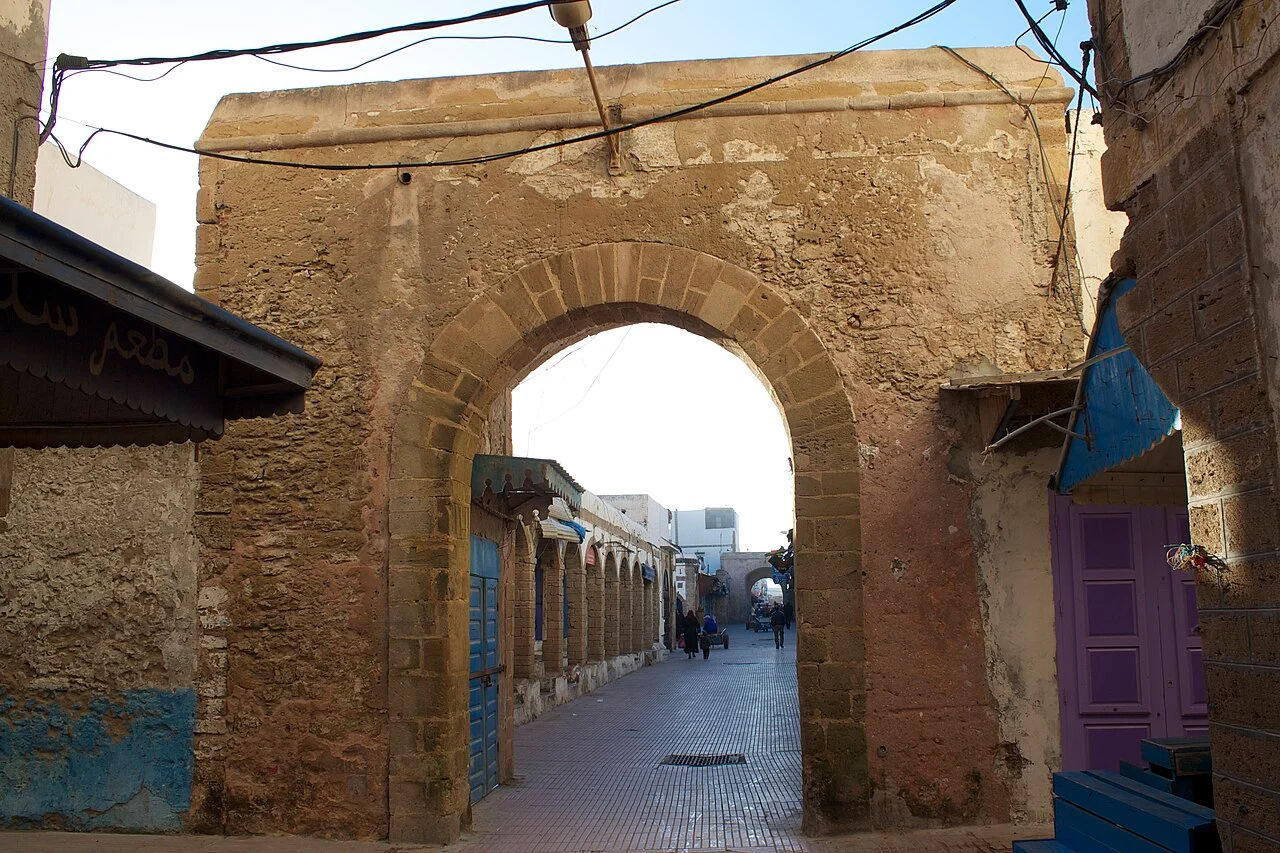
Walking through the urban fabric reveals façades, passages and uses of space that a view from the ramparts cannot fully explain. This guide’s photograph shows an entrance to Souk Jdid within the medina and introduces that everyday scale. It does not imply that all the streets look identical. Choose a short main line, pause, then explore a side section while retaining a clear point of return. You can build a more detailed mental map gradually rather than trying to understand everything at once.
Commerce is part of the city, but looking at a display does not oblige you to buy or enter every business. Establish prices and conditions before commissioning something, and do not infer an object’s authenticity or origin solely from where it is sold. Ask before photographing people or the inside of a shop. Residential spaces do not become public attractions because their doors or decoration are visually appealing. Make room for people using the streets for purposes other than sightseeing.
Think of the medina as somewhere you can return to at different points, rather than a task that must be completed in one attempt. An initial walk helps with orientation; another lets you revisit a street or perspective that interested you. Keep that flexibility when local activity changes the passage through an area. We do not promise entry to every religious building or courtyard. Distinguish public circulation space from precincts with admission arrangements of their own.
Skala de la Kasbah: understand the defences from the ramparts
Skala de la Kasbah offers another level from which to understand the relationship between the medina and Atlantic. The national tourist office expressly distinguishes the Squala of the Kasbah from the Squala of the port: they are not two interchangeable names for a single precinct. That distinction matters when finding an entrance, purchasing a visit or agreeing on a meeting place. Check which fortification the information in front of you actually describes before organising the next part of the route.
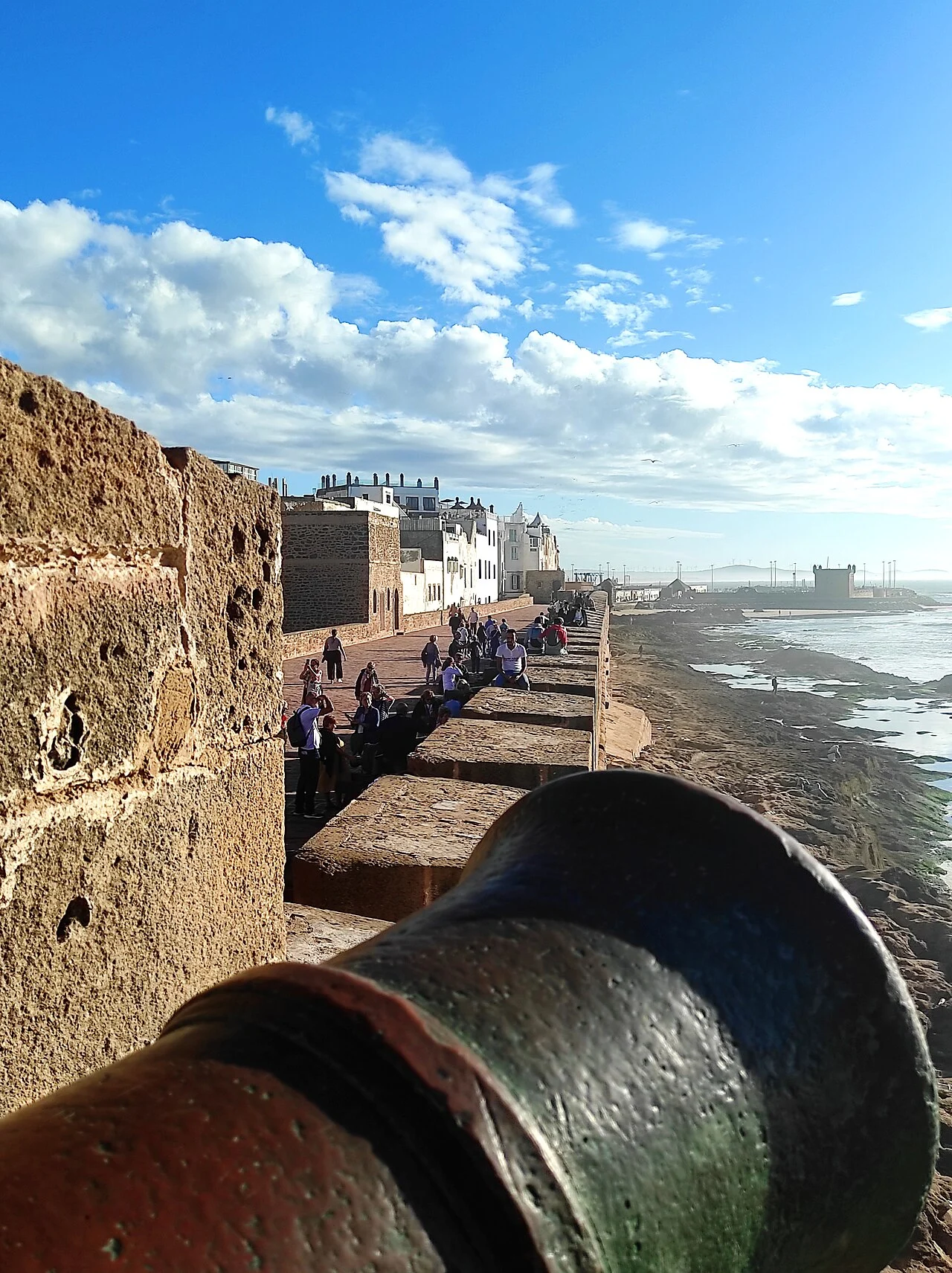
Along the rampart, cannons and the ocean perspective help explain the defensive purpose of the complex. The selected photograph corresponds to Skala de la Ville in the Kasbah sector and shows a cannon on its defences. An attractive viewpoint does not establish permission to climb equipment or parapets. Keep away from protected edges and objects, using only areas authorised for visitors. The view can be appreciated without treating historic material as something to sit on or rearrange for a photograph.
This is a useful place to consider the direction of the defences and compare it with the streets you have just explored. The sea is not merely scenery behind the city: it helps explain the fortifications and trading connections. Take time to notice how an opening frames the coast rather than chasing a fixed number of photographs or occupying narrow passages with equipment. The comparison between enclosed streets and exposed waterfront gives the visit its interest.
Organise the walk around the day’s real conditions. On a waterfront, exposure may feel very different from a sheltered street within the medina. Secure loose belongings and do not improvise access beyond the visitor route in pursuit of a picture of the waves. Before buying admission or assuming a particular area is available, check the monument’s information. Archive photographs establish what was photographed at one moment, rather than guaranteeing present access to every part of the rampart.

Essaouira’s port: observe a place where people work
The port changes the pace of the visit. After streets and ramparts, you reach a place associated with maritime work. UNESCO places the harbour at the centre of Essaouira’s history of international exchange. The Ministry of Culture’s account of Sqala du Port explains the fortification’s relationship with the quay and boat-repair area. That reference helps distinguish the historic defences from the port’s everyday movement, rather than treating every nearby feature as part of the same sightseeing admission.
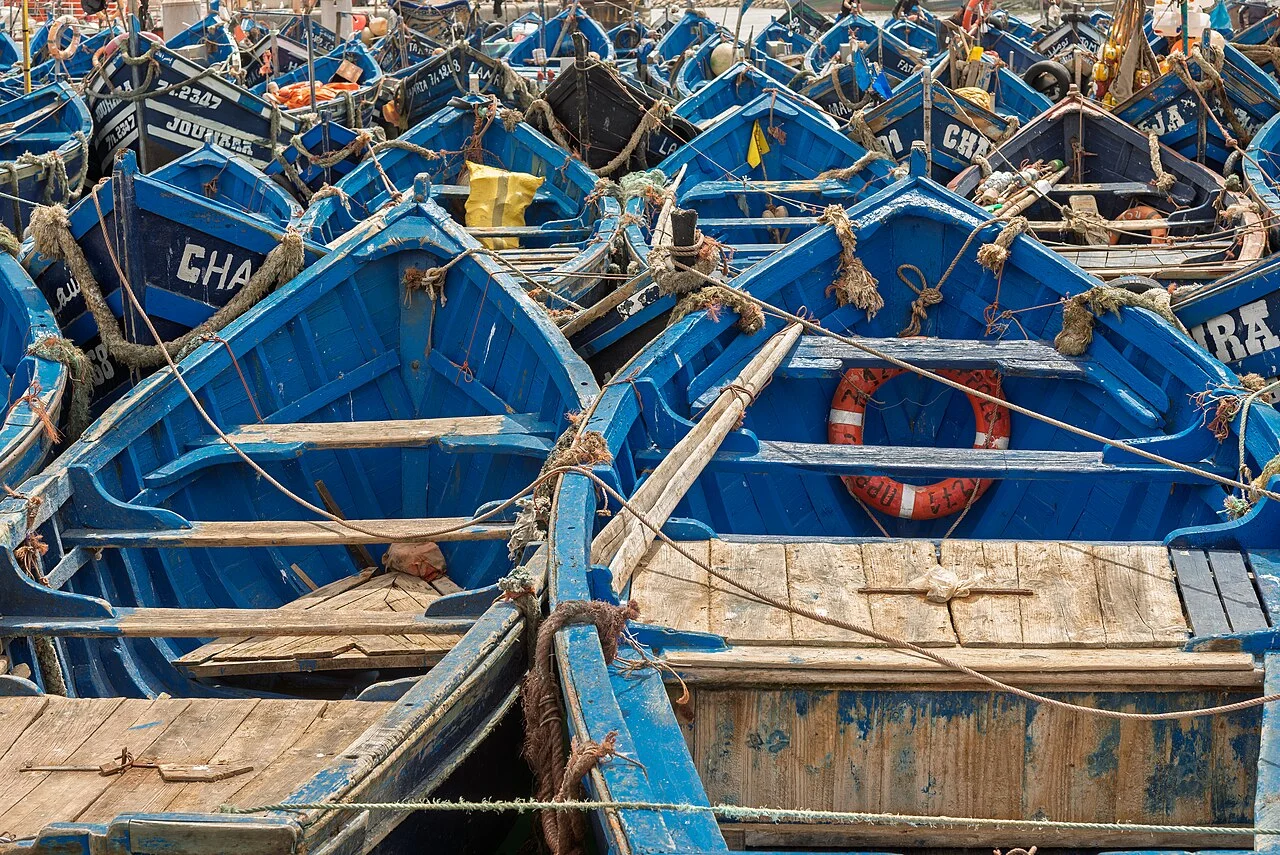
The photograph in this section shows fishing boats in the actual port, not an image assembled to represent the destination. Observe colours, forms and organisation from permitted areas, but remember that boats and equipment are not tourist furniture. Do not climb aboard without permission or cross an operational area to imitate a photograph. Other people appearing to do something similar does not establish public access or show that the activity is accepted. Give those working enough space to continue without your visit becoming an obstacle.
Avoid arranging the visit around an assumed universal time for fishing boats to return. Activity depends on conditions and operations that this guide does not convert into a spectator timetable. Move if operations interrupt a passage or people ask you to keep a distance. Respectful observation can be shorter than planned and still worthwhile. The aim is to understand the space without requiring it to perform for your itinerary or to accommodate a particular camera position.
If you combine the walk with a meal, make the food purchase a separate decision from the heritage visit. Establish the price, inclusions and basis of the order before accepting it; proximity to the sea is not a guarantee of food quality or safety. Visiting Sqala du Port as a monument also requires checking that precinct’s own conditions. Walking through part of the waterfront does not mean you have acquired entry to every enclosed space nearby.

Arrange two days between streets and the coast
Distribute the first day between finding your bearings in the medina and the part of Skala de la Kasbah whose access you have confirmed. Leave the port for a separate block, preferably without rigidly attaching it to another service. You can then adapt if weather, access arrangements or working activity change what is possible. Places that look close together do not necessarily share identical visitor conditions, so build the route around the actual experience you want.
Save your accommodation location and agree on a recognisable meeting point. For a day of urban walking, leaving large luggage at your base and carrying only what you need may be easier than taking everything along. We do not publish intercity transfer times or assume transport to Essaouira is included; those decisions need separate organisation. The value of this route lies in paying attention once you arrive, instead of relying on a stopwatch to visit three different kinds of space.
A route to get you started
- Day one, opening block: enter the medina through a recognisable access and explore one sector before committing to a lengthy route. Identify the return and use early stops to understand how the streets connect.
- Day one, second block: visit the authorised area of Skala de la Kasbah and relate the rampart’s orientation to what you noticed in the medina. If conditions are unsuitable, exchange this section with the following day’s port walk.
- Day two: give the port a separate block, remaining in permitted spaces and avoiding expectations of a staged fishing performance. Afterwards, return to the medina sector that interests you rather than adding another booking simply to fill the day.
Good to know
Are Skala de la Kasbah and Sqala du Port the same place?
No. The national tourist office distinguishes the two fortifications. Check names and locations before organising a visit; a photograph or admission associated with one should not be presented as automatic access to the other.
May I climb into the fishing boats for photographs?
Only with the appropriate permission and where it is allowed. The guide proposes observation from authorised spaces; boats, working quays and fishing equipment are not treated as freely available scenery.
When should I visit to watch fishing boats arrive?
We do not announce a guaranteed time. Port activity is not a tourist show with one universal viewing slot. Adapt to real operations and comply with any restrictions on passage or requests to keep clear.
Must every part of this route be booked?
Conditions depend on the specific precinct and service. An exterior walk is different from monument admission. Confirm the activities or tickets you want to purchase and keep the rest of the route flexible.
Essaouira rewards looking at connections: the streets explain everyday medina life, the ramparts its position facing the ocean, and the port its relationship with maritime work. Two unhurried days let you appreciate those differences and return to a perspective without confusing a living city with a setting arranged specifically for visitors.