

Luxor invites you to look at a landscape in which monuments, the river and the mountains have a historical relationship. For a first visit, this guide brings together three complexes: Karnak, the Valley of the Kings and the temple of Hatshepsut. Each introduces a different aspect of ancient Thebes: worship, the funerary world and the presentation of royal authority. You do not need to memorise dynasties to appreciate them, but arriving with a few questions makes a real difference.
The clearest arrangement separates the banks of the Nile. Give Karnak its own block on the east bank, then place the valley and Hatshepsut’s temple together on a west-bank day. Two days are a suggested pace, not a compulsory duration. Heat, mobility, available admission and your interest in history may justify more time. This route is an introduction to selected places; it does not claim to cover every monument in Luxor or replace a longer archaeological journey.
Before you pack
- Suggested time
- Two days, adjusted to your pace
- Places in this route
- Three selected places
- Destination
- Luxor
Karnak: understand a complex built over centuries
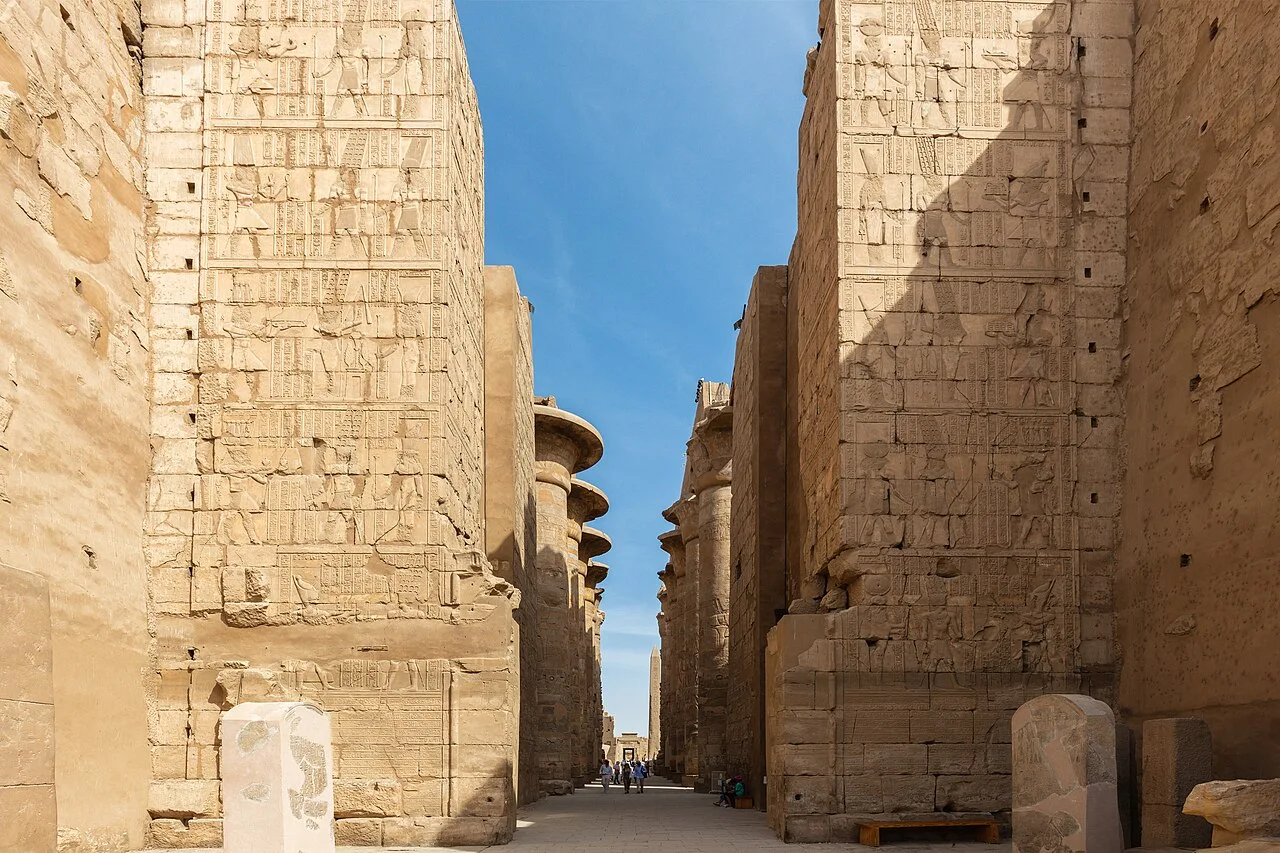
Egypt’s Ministry of Tourism and Antiquities describes Karnak as a landscape of temples, chapels and ritual spaces, with the cult of Amun at its centre. The Great Hypostyle Hall contains 134 columns, a figure that helps convey the scale without replacing the experience of looking at them. Notice the relationship between entrances, courts and roofed spaces, and how light and proportions change as you follow the routes that are open to visitors.
Rather than searching only for a photograph among the columns, choose several places to stop and examine reliefs or construction details. The same official description identifies the sacred lake with the purification of priests. Seeing it after the buildings helps you think about how the complex worked, beyond its impressive façades. Check which areas your chosen admission includes and which are currently accessible. A map or informed explanation makes orientation easier, but you do not need to cover every corner to come away with a coherent and memorable understanding of the site.
Valley of the Kings: enter a funerary landscape
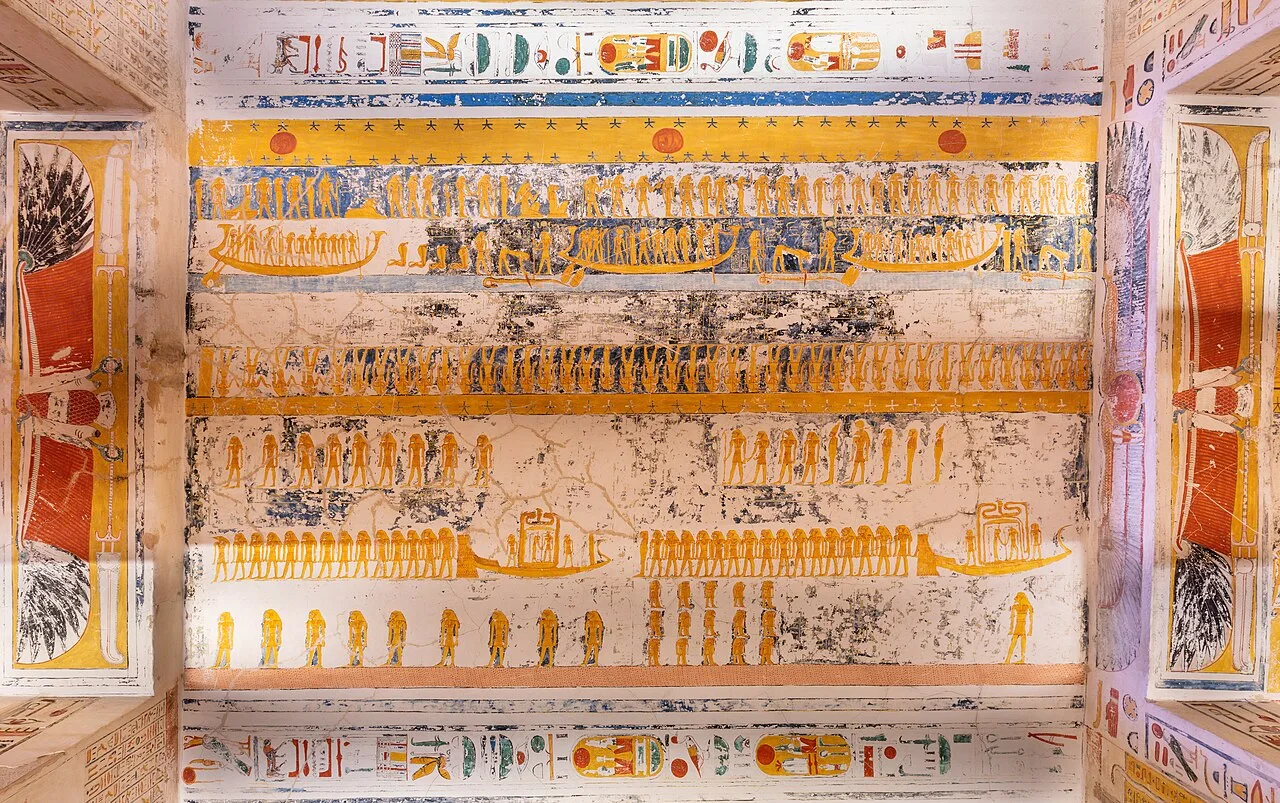
The Valley of the Kings lies on the west bank in a desert landscape across from ancient Thebes. The ministry explains that it served as a burial place for New Kingdom rulers and certain other high-ranking individuals. Rock-cut tombs connect architecture, religious beliefs and representations of the afterlife in ways that cannot be understood simply by looking at an entrance from outside. Comparing the arrangement and decoration of the interiors available to you can make a limited selection more rewarding than a rushed sequence.
Before entering, verify which tombs are open and which your ticket allows you to visit. Do not infer the content of general admission from a photograph of a famous tomb or somebody else’s earlier trip. The photograph in this section shows decoration in the tomb of Ramses V and Ramses VI; it is a real example from the valley, not a promise of included entry. Follow rules on photography, circulation and conservation. If enclosed spaces, gradients or heat are difficult for you, ask about the actual route before committing and select visits that suit your needs.

Hatshepsut’s temple: look at the terraces and mountain together
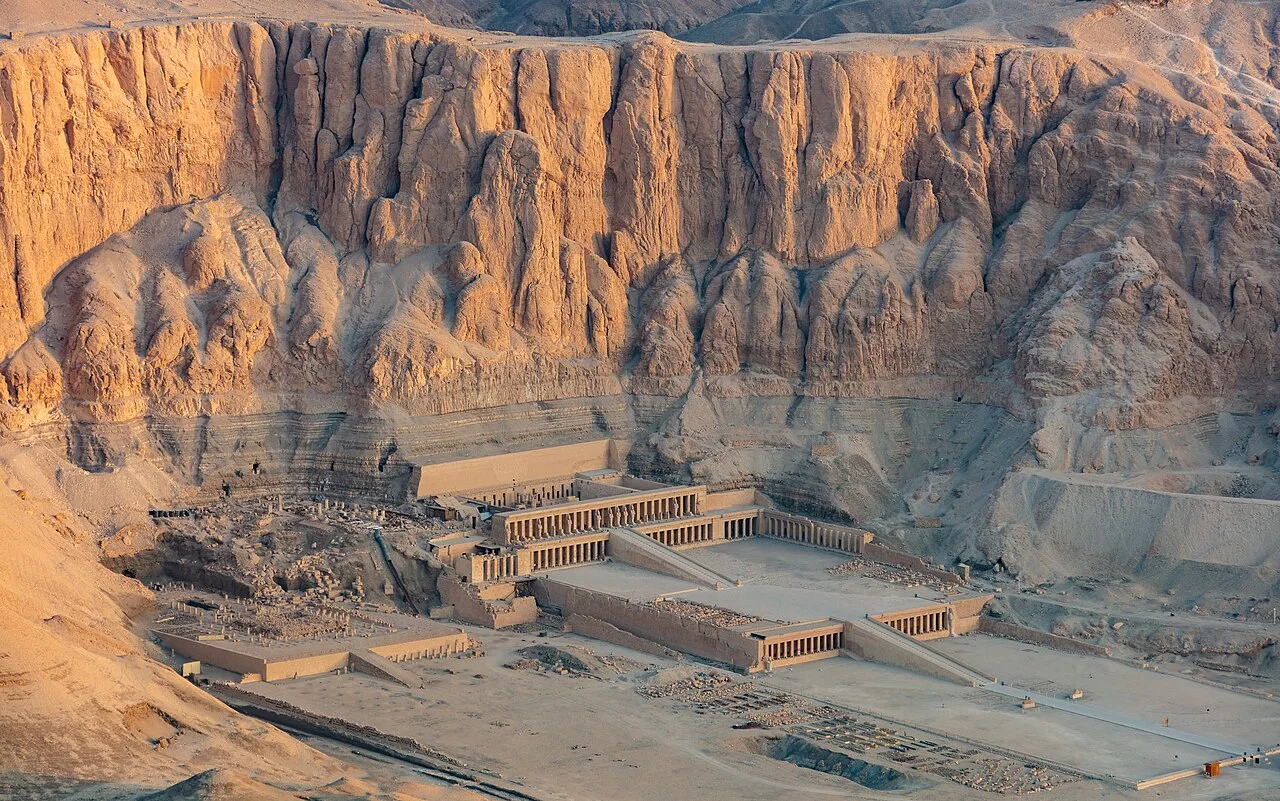
UNESCO highlights Hatshepsut’s funerary temple at Deir el-Bahari for its porticoes, superimposed terraces and relationship with the mountain. That description suggests a useful approach: observe the whole composition first, then concentrate on details accessible during your visit. The architecture does not stand against an incidental scenic backdrop. The rock face and the building’s lines work together in the impression the site creates as you approach it, making the broader view an important part of the experience.
The heritage description also mentions reliefs representing the expedition to the land of Punt. Their interest goes beyond recognising a scene: they show how the building communicated events and legitimacy. A properly contextualised explanation can be more helpful than collecting dates. Check which levels and areas are open on the day, remain on authorised paths and never touch decorated surfaces. Leave time both to view the temple from a distance and to examine an accessible section closely, without assuming that every terrace has the same access arrangements or that all details will be visible.

Transport, heat and what to agree before booking
Dividing the itinerary by riverbank avoids making every change of monument a fresh transport problem. Agree the actual stops, pickup point, waiting time and return arrangements with your provider. Do not assume that a generic west-bank service includes admission or guiding. Driving and archaeological interpretation are different services, even when sold together. Keep a written record of what you book and compare proposals by their content, rather than choosing solely on an advertised headline price that may omit important parts of the day.
For outdoor visits, carry water, sun protection and footwear suitable for uneven surfaces. Check the forecast and distribute physical effort according to your own tolerance of heat. Consult current official travel information before organising journeys in Egypt. If you need assistance or step-free access, ask about each monument individually; proximity does not mean that sites offer identical arrangements. A shorter route with time for explanation may be far more satisfying than following a demanding schedule that leaves little energy for looking at the places you came to see.
A route to get you started
- Day one: give Karnak a substantial block and prepare a short list of questions about the temple, columns and ritual spaces beforehand. Afterwards, protect time for food, rest and making sense of what you have seen. Do not turn the afternoon into a compulsory race through additional monuments. This guide deliberately offers a concentrated introduction, leaving room to extend the trip if your interest and energy support it.
- Day two: arrange a west-bank outing covering the Valley of the Kings and Hatshepsut’s temple. Agree the order according to opening arrangements, conditions and informed local advice. Check the tickets before each visit and preserve room for breaks. Do not add a particular tomb solely because its photograph appears in a guide; consider whether it is open, what it costs and whether its features genuinely interest you.
- With only one day, choose between a substantial introduction to Karnak and a visit focused on the western complexes, or book a route that makes its limitations clear. Crossing between banks and entering several sites requires more organisation than joining pins on a map. For a group needing a gentler pace, reduce the number of interiors before removing the breaks that make the day manageable.
Good to know
Are Karnak and the Valley of the Kings on the same riverbank?
No. In this selection, Karnak is on the east bank and the Valley of the Kings is on the west. Separating those blocks helps both transport planning and understanding of the historic landscape. Confirm pickup and return arrangements when booking a service; a broad description of an excursion does not replace a clear agreement about the actual stops and what is included.
Does a valley ticket allow access to every tomb?
Do not assume that it does. Check the tombs currently open and the precise scope of the admission product available for your date, including any separately ticketed interiors. Access can vary for conservation and management reasons. Photographs show real parts of the complex, but they do not establish that a particular interior will be included or available when you travel.
Do I need a guide to enjoy these monuments?
Specialist interpretation can add valuable context about reliefs, architecture and beliefs, particularly on a first visit. If hiring someone, check their accreditation and agree the language, route, fee and duration. You can also prepare questions using heritage sources. What matters is distinguishing observation from interpretation rather than treating every informal story heard at a site as a verified historical fact.
Karnak, the Valley of the Kings and Hatshepsut’s temple introduce Luxor through three complementary experiences. Good preparation combines historical context with straightforward decisions about transport, admission and physical effort. Separate the riverbanks, check which spaces are open and allow yourself time to observe. Ancient Thebes becomes easier to appreciate when your route offers places to pause, rather than demanding a quick photograph at each entrance before moving immediately to the next.