
A first Osaka visit becomes clearer when you choose three contrasting settings and give them time: the castle park, Dotonbori’s canal and signs, and the religious complex at Shitennoji. This two-day route combines history, urban life and an active temple. It does not try to reproduce a Tokyo checklist or turn Osaka into little more than a place to sleep between excursions elsewhere in Kansai.
Let opening times and your actual interests determine the order. The castle can be an outdoor walk or include its museum; Dotonbori contains independent businesses rather than one attraction with a single closing time; Shitennoji distinguishes different areas and admission conditions. Research uses operators and official tourism organisations. The suggested route leaves room to choose interiors and rest, without publishing transport durations or prices that have not been independently checked.
Before you pack
- Suggested time
- Two days for three contrasting settings
- Core route
- Castle park, Dotonbori and Shitennoji
- Transport
- Check stations and approaches on the current map
Osaka Castle Park: landscape and a history of reconstruction
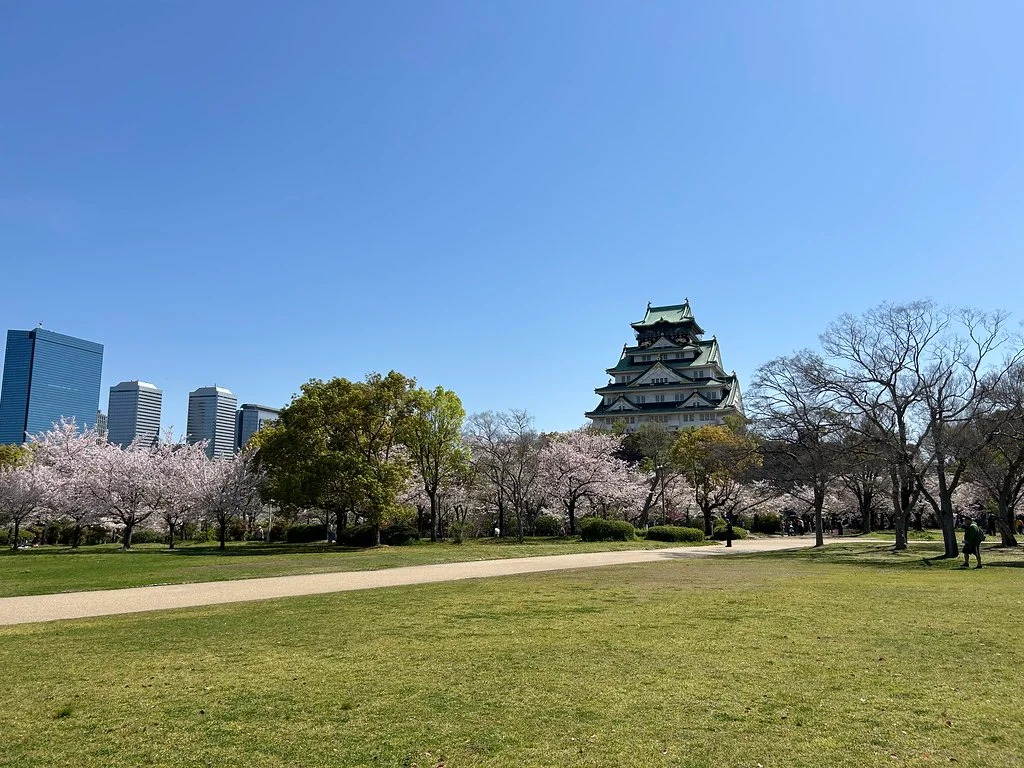
Begin around the castle by observing moats, stone walls and the relationship between the historic structures and modern city. JNTO presents the surrounding parks as a place to combine history with green space. Set aside a walking block and decide whether you also want the museum. Do not estimate the outing from a photograph of the keep alone: exploring the grounds, finding the appropriate entrance and reaching the building are part of the time needed.
The castle’s history does not mean every visible structure has survived unchanged since the sixteenth century. The operator explains that the current keep is the third reconstruction, completed in 1931 through citizens’ contributions. It also identifies major historic elements around it as dating from the Tokugawa period or later. This helps you understand the site through destruction, rebuilding and public memory, rather than treating it as a building that has remained intact for centuries.
If the museum interests you, check its admission conditions and calendar before buying. Exhibitions change, and an exterior view does not substitute for reading the correct ticket information. JNTO mentions Morinomiya and the JR Osaka Loop Line as an approach to the park; confirm the route from your accommodation. Cherry and plum trees are seasonal. An archive photograph of flowering trees cannot predict your travel dates or guarantee the same landscape at a different time of year.
Dotonbori: canal views, large signs and a deliberate food stop
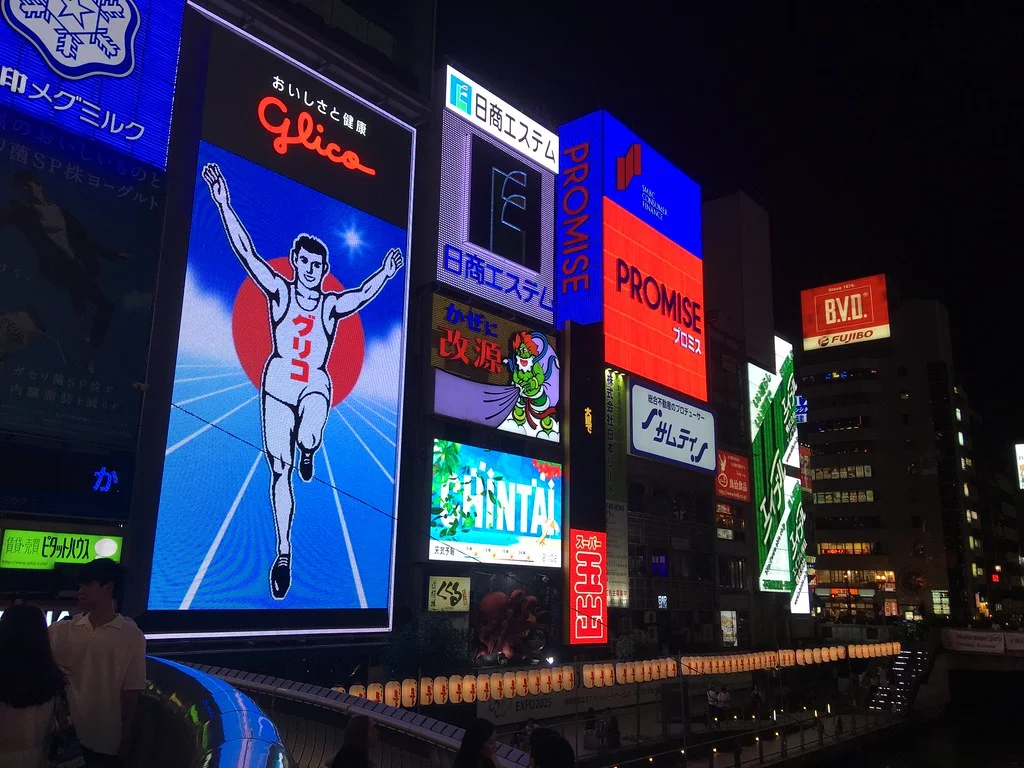
Dotonbori forms part of Minami and is known for large three-dimensional signs, restaurants and shopping activity. The tourism profile identifies the Glico and crab-restaurant signs among the district’s visual references, along with the waterside Tombori Riverwalk. Give the area time to reveal how it functions, rather than reducing it to a quick photograph of one billboard before immediately leaving for another neighbourhood or fixed booking.
An initial walk helps you recognise the canal and choose somewhere to eat. Businesses have their own opening hours and conditions; there is no single district admission or booking that includes every experience. Read the menu and total cost before ordering, and ask about ingredients when someone has an allergy or dietary restriction. A striking food model or a queue outside another restaurant does not establish what you will receive or whether the business suits your group.
Find photo positions that keep bridges and pavements moving. If people want to explore different shops, agree on an obvious meeting point before separating. Plan the return as well: save the station and route you intend to use instead of assuming unlimited late-night transport. This guide’s documentary image records signs and the canal at an earlier date. Advertising, works and crowd conditions can change, so it should not be read as a current description of every part of the street.
Shitennoji: distinguish the temple’s foundation from its buildings
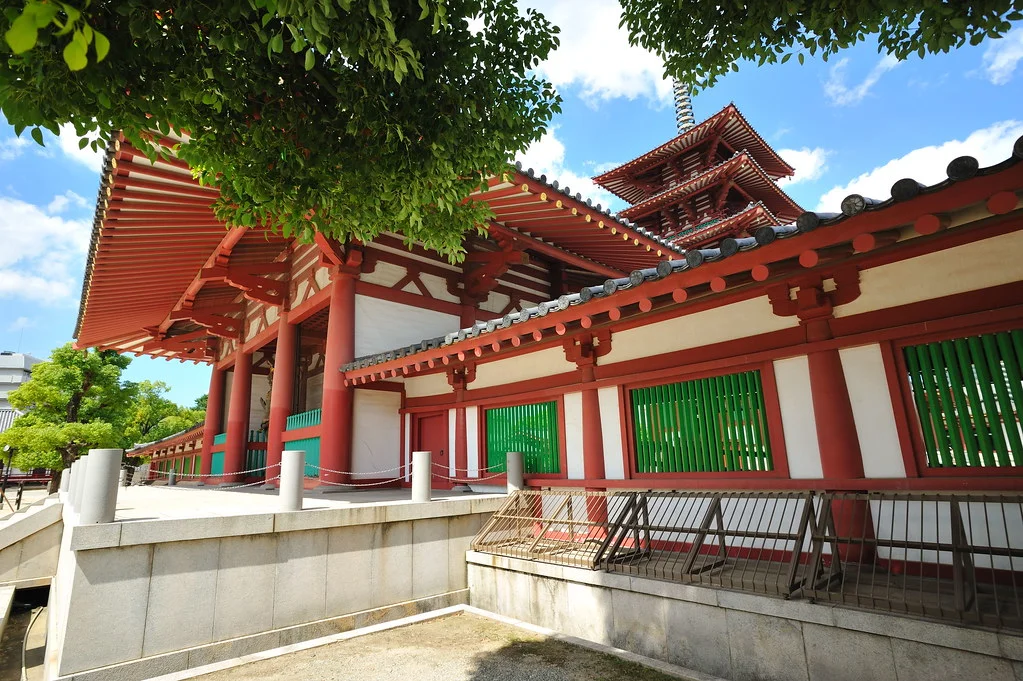
Shitennoji adds a religious and historical visit that differs from the castle landscape and Dotonbori’s commercial atmosphere. The tourism organisation dates its foundation to 593 and associates it with Prince Shotoku. That identifies the institution’s origins, not the age of every structure you see. The same source explains that the central complex was recreated during the Showa era, an important distinction between continuity of worship and the rebuilding of physical buildings.
Before entering, decide which parts interest you. The official profile distinguishes the central precinct, Honbo Garden and the treasure museum, with separate admission conditions. Do not assume one ticket or access to one part enables entry to every room and garden. The source also notes possible temporary garden closures. Follow the day’s notices and areas reserved for worship rather than applying a general internet description equally to the whole temple complex.
The visit rewards slow observation of gates, buildings and the spaces between them. Behave respectfully during ceremonies and check photography restrictions before using a camera inside. The tourism source mentions activities on particular dates, but that does not turn every visit into a promise of a market or celebration. Leave enough time to explore without arranging another timed ticket immediately afterwards, especially if the group would like to pause or discuss what it has seen.
Organise Osaka without multiplying transfers
There is no need to change accommodation between these three visits. Locate the castle sector and the Shitennoji–Minami area on your map, then plan from a base that also works for arrival and onward travel. Morinomiya is a useful reference when finding an approach to the park, but is not automatically the best station for every hotel or accessibility requirement. Check the particular entrance and route instead of using a station name as a complete itinerary.
Book indoor activities that matter to you first, leaving the remaining route flexible. The castle museum and Shitennoji’s different spaces require their own condition checks. Dotonbori can provide food and a walk around those decisions, although a specific restaurant may need a reservation or close on a different day. Rain may also change how long you want to spend outside in the park or beside the canal, making a short alternative worthwhile.
Keep admission confirmations and transport information accessible. With children or anyone needing frequent rests, alternate walking with a proper break rather than adding another neighbourhood. This Osaka plan does not require visiting Kyoto or Nara during the same two days. Those cities have their own heritage and pace and are better treated as deliberate extensions to a Kansai trip, with suitable time assigned to them instead of being squeezed between Osaka bookings.
A route to get you started
- Use a substantial part of the first day for the castle park. Decide whether the museum is a priority and check its calendar to position it before or after the outdoor walk. Leave time for a meal and rest. Visit Dotonbori for the canal, signs and a food stop, keeping a clear plan for returning to your base.
- On the second day, visit Shitennoji within the availability of the areas you want to see. Explore permitted spaces and confirm any special conditions for the garden or museum. The afternoon can remain open for returning to part of Minami, taking a longer break or dealing with practical needs of the trip without another compulsory booking.
- For a single day, choose one historical block—castle or Shitennoji—and combine it with Dotonbori. Avoid splitting a morning between the two complexes if that leaves only time to see their gates. Our Kyoto, Nara and Tokyo guides offer ideas for a wider journey, with separate days rather than an assumption of instantaneous travel between cities.
Good to know
Is Osaka Castle an untouched sixteenth-century building?
No. The operator explains that the current keep was reconstructed in 1931 with public contributions. Major historic structures around it date from the Tokugawa period or later. The visit can be understood through reconstruction and historical memory, as well as through its moats and park landscape.
Does all of Dotonbori follow the same opening hours?
No. Dotonbori is a restaurant and commercial district, so hours and reservations depend on the business or experience. Plan a walk around a meal if that suits you, but check the chosen establishment and your return transport before extending the outing into the night.
Does one ticket cover every part of Shitennoji?
The official profile distinguishes conditions for the central precinct, Honbo Garden and the treasure museum. Check what the purchase includes and which spaces are operating on your visit date. Access to one part does not establish that every other area is open or included.
Are cherry blossoms guaranteed at the castle park?
No. Flowering is seasonal and varies with the year and conditions. The photograph used here is an archive image of a past moment. For a trip focused on flowers, consult current information instead of treating a tourism photograph as a forecast for your travel dates.
A first Osaka visit can be varied without multiplying neighbourhoods: the castle helps explain history, Dotonbori reveals a commercial cityscape and Shitennoji adds a religious space at a different scale. Choose interiors that actually interest you and respect the time each place needs. One flexible afternoon may contribute more than a collection of bookings that forces you to hurry through everything.