
Oaxaca offers a cultural journey that does not depend on a festival. This guide brings together five places in the city and Central Valleys: Santo Domingo de Guzmán, Benito Juárez Market, Monte Albán, Mitla and the Tule Tree. Choose different experiences while understanding which ones require a road outing.
This is not a Day of the Dead programme or a promise of open celebrations. It develops heritage, market and landscape visits with an individual documentary photograph for each place. Official sources and changing details were consulted on 5 November 2026. Check conditions for your date before booking.
Before you pack
- Area
- Oaxaca city and the Central Valleys
- Selection
- 5 places; Monte Albán and Mitla are distinct outings
- INAH admission
- Quoted subtotal: MXN 210 national or MXN 420 foreign category
1. Santo Domingo de Guzmán: architecture and religious life
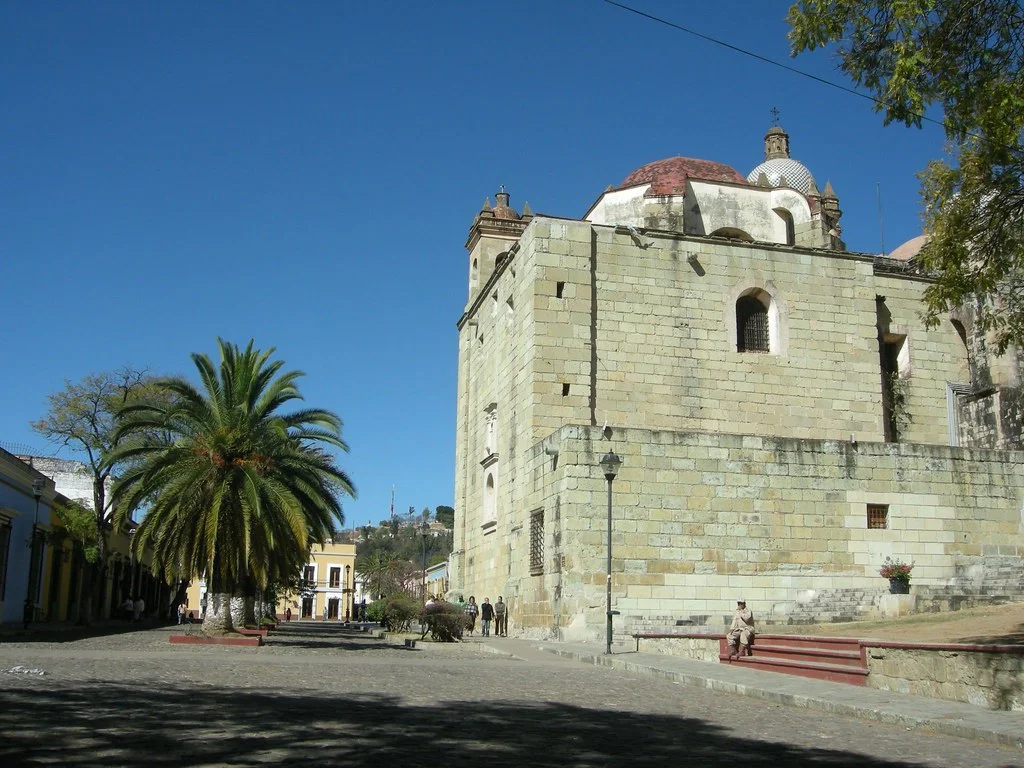
Santo Domingo de Guzmán church stands along the Macedonio Alcalá axis and is a useful landmark for starting a walk through central Oaxaca. The state’s official temple route explains its Dominican connection and highlights the Baroque complex. Begin with the facade and urban setting rather than confusing the church with every neighbouring cultural venue.
Worship, church interiors, the former convent’s museum and the nearby garden involve different arrangements. Respect services and instructions if entering the church. Check a museum or garden’s individual access and hours before adding it to your programme. This selection develops the church and its exterior setting, shown in a documentary photograph, without presenting a combined admission package or promising interiors available at every hour. Choose the visit that genuinely interests you instead of treating the whole complex as one quick stop.
2. Benito Juárez Market: look, ask and choose
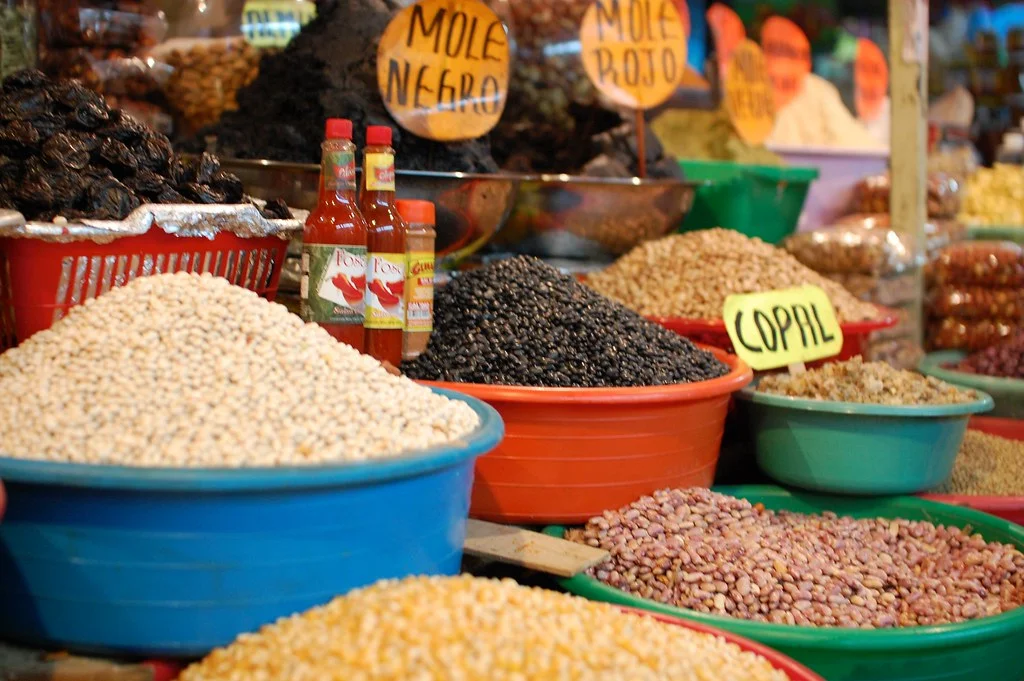
Benito Juárez Market is in the historic centre near the Zócalo. The state tourism portal documents food, crafts and other goods, with aisles named for Oaxaca’s regions and cultures. Dried chillies, cheeses, sweets and crafts offer a way to compare products from several regions within one visit.
Look around before purchasing and compare size, material, ingredients or quantity as appropriate. Stalls and prices do not form one uniform market offer. For a particular food or craft, ask the vendor about origin and conditions. We do not promise a minimum price or designate an unverified “best” stall. Ask permission before photographing people or a trader’s work. Time spent observing and speaking with vendors can be more useful than entering only to secure a quick souvenir.
3. Monte Albán: give the archaeological landscape its own outing
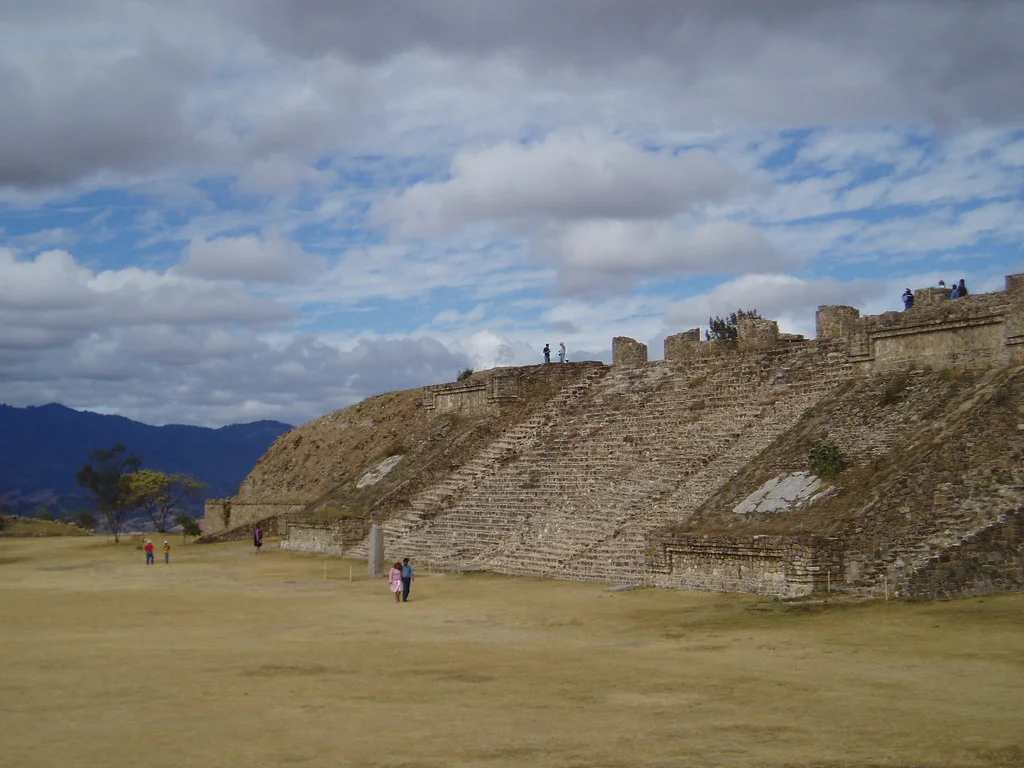
Monte Albán occupies elevated ground outside central Oaxaca and was a major Zapotec capital. INAH describes plazas, platforms and monuments revealing a city arranged across the mountain. Its appeal includes the landscape and the relationships between spaces, rather than only one isolated structure. The photograph shows the archaeological grounds, not a present-day ceremony or celebration.
The listing consulted on 5 November 2026 indicated daily hours of 08:00–17:00, with last admission at 16:00. It published MXN 105 for national visitors and MXN 210 for foreign visitors, with specific exemption conditions. Arrange outward and return transport and bring suitable protection for an outdoor visit. The site prohibits bringing in food, smoking and pets. Follow instructions and permitted routes rather than inferring universal accessibility from a broad view of the grounds.
4. Mitla: worked stone and a living community
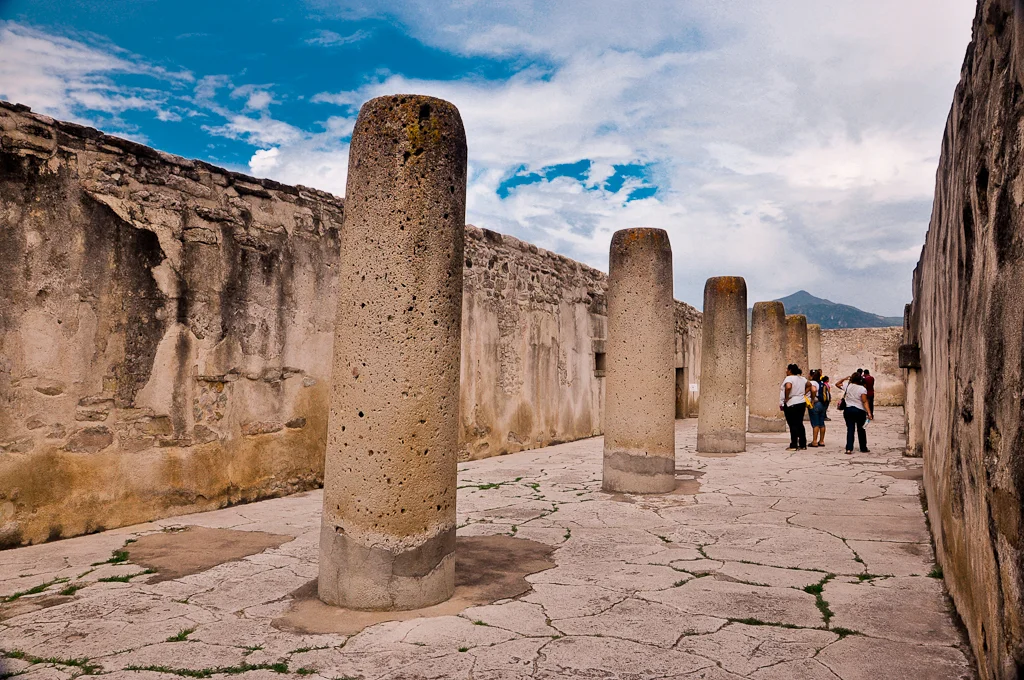
Mitla is in the Central Valleys at San Pablo Villa de Mitla, rather than another neighbourhood of central Oaxaca. INAH explains its Zapotec significance and architectural groups characterised by stonework and geometric decoration. The present-day town surrounds part of the archaeological area. Distinguish heritage grounds from the community’s everyday spaces instead of treating the entire settlement as a museum.
The consulted official listing indicated daily opening from 08:00 to 17:00, with last entry at 16:30. Published admission was MXN 105 for national visitors or MXN 210 for foreign visitors. Its last admission differs from Monte Albán’s. Check currently available routes and conservation and photography rules before visiting. A craft workshop or commercial demonstration is not presented as included with archaeological admission. Choose any such business and its conditions separately.
5. The Tule Tree: a stop in Santa María del Tule
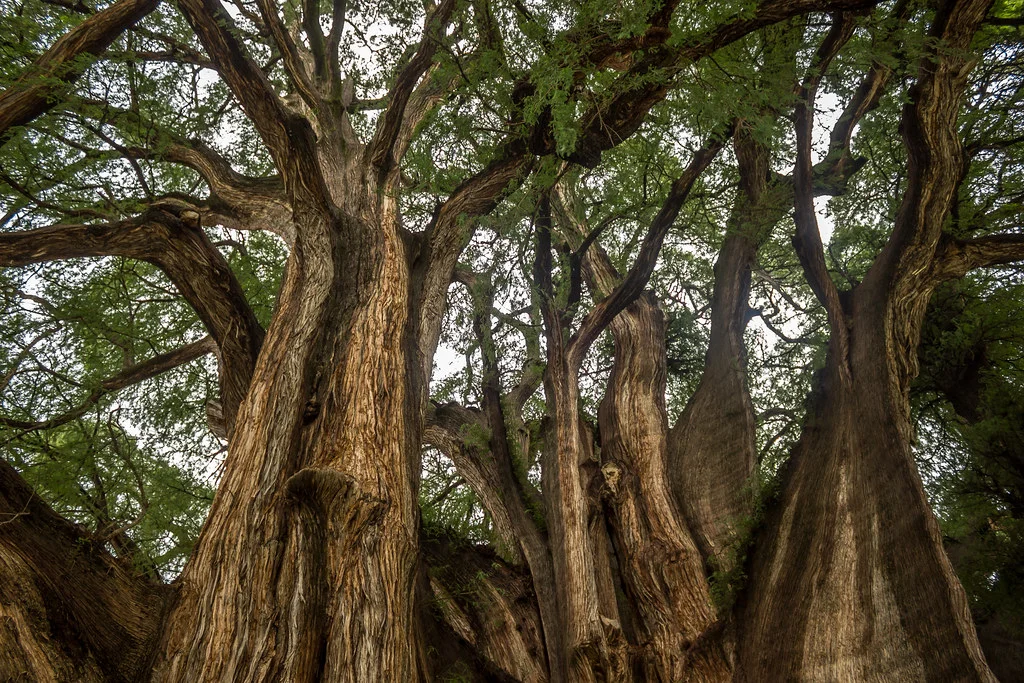
The Tule Tree, a locally significant ahuehuete, stands in Santa María del Tule. The state’s official route combines it with the area around Santa María de la Asunción church and other valley towns. This guide proposes looking at the tree and its surroundings without relying on a global size ranking or age figures that do little to organise a visit.
Confirm access and any current contribution or service before entering a particular enclosed area. Respect the tree’s protected space and the church’s religious use. Obtaining a photograph does not justify crossing barriers or entering restricted areas. If combining the stop with Mitla, plan the road route and breaks around your transport. Indicative timings in a tourism itinerary are not guarantees of arrival or connections for every traveller. Give the place time beyond a roadside photo stop.
Admission budgeting and planning by area
The two listed regular INAH admissions totalled MXN 210 in the national category or MXN 420 in the foreign category without exemptions. That subtotal covers only Monte Albán and Mitla, using the information consulted on 5 November 2026. It excludes transport, meals, guides and services at the other places. Check eligibility for each fare or exemption.
Separate the central walk, the Monte Albán outing and the Santa María del Tule–Mitla axis. Do not compress them simply because a leaflet puts them on one regional map. Confirm departure and return points and last admission times. This is a cultural guide for year-round planning; Day of the Dead celebrations have a separate calendar developed in their dedicated article.
A route to get you started
- Urban walk: combine Santo Domingo with the market according to your base and intended interiors. Leave room to walk, observe and choose a food break rather than racing between venues.
- Archaeological outing: give Monte Albán a block of its own. Check last admission and arrange the return before departure. A wide valley photograph does not reveal every elevation change within the route.
- Valley outing: choose Santa María del Tule and Mitla when transport allows time for both. Prioritise the archaeological site’s schedule rather than allowing the tree visit to push arrival at Mitla to closing time.
Good to know
Is this guide only useful for Day of the Dead?
No. It is a cultural selection for year-round planning. Celebrations and their dates are covered in a separate guide.
Do Monte Albán and Mitla have the same last entry?
No. Consulted listings indicate 16:00 for Monte Albán and 16:30 for Mitla, although both publish a 17:00 closing time.
Do both archaeological sites cost MXN 210 together?
That was the consulted regular national-category subtotal. Foreign-category admission totalled MXN 420 for both. Services and transport are extra, and exemptions require checking eligibility.
Are all the places in central Oaxaca?
No. Monte Albán, Mitla and Santa María del Tule require journeys beyond the central urban walk.
Oaxaca rewards time for its heritage and community life. Choose visits with context and fewer unnecessary transfers while respecting operating hours and everyday spaces.
Sources consulted
To combine this visit with other destinations, see the Mexico guide.