
Choosing which Amalfi Coast towns to visit? Start with seven offering different experiences: Positano, Amalfi, Atrani, Ravello, Minori, Maiori and Vietri sul Mare. The useful distinction is what you want to see: waterfront architecture, small squares, hillside gardens or ceramics, rather than which town wins a ranking.
This guide helps organise those choices and their connections. Interiors, beaches and transport services each have their own conditions; the images are documentary archive photographs. Sources were consulted on 5 November 2026, without promising unconfirmed schedules or access.
Before you pack
- Selection
- 7 towns with different attractions
- Planning
- Nearby groups, not seven stops in one day
- Reviewed
- 5 November 2026
1. Positano: a vertical town above the sea
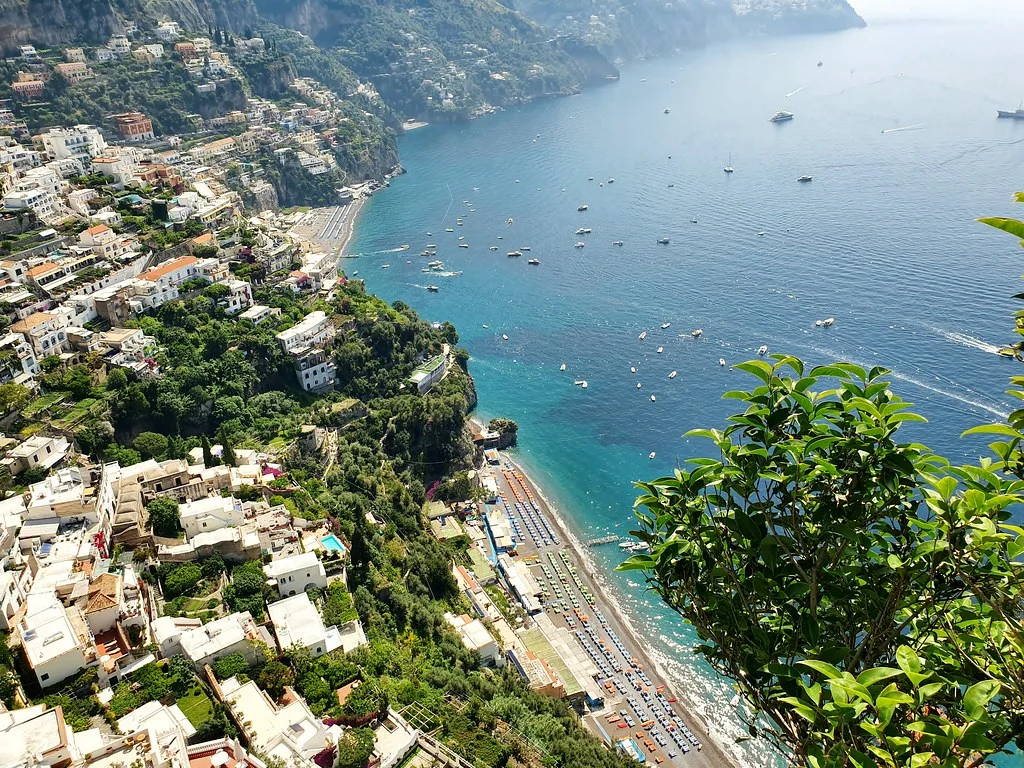
Positano explains one of the Amalfi Coast’s planning challenges: places that look close on a map can involve a great many steps. Houses descend towards Marina Grande, while the church of Santa Maria Assunta stands out for its tiled dome. Decide where you will arrive and, if staying overnight, how high your accommodation sits. Arriving at the waterfront is very different from arriving at an uphill bus stop.
A sensible walk combines the harbour area, the church and a few streets, leaving time to appreciate the town from below. If adding Fornillo, check the pedestrian access and return route before descending with luggage or a pushchair. You do not need a boat excursion or a rented sunbed to enjoy the setting. Keep the public walk separate from any beach services or meals you choose to purchase.
2. Amalfi: a cathedral, lanes and useful connections
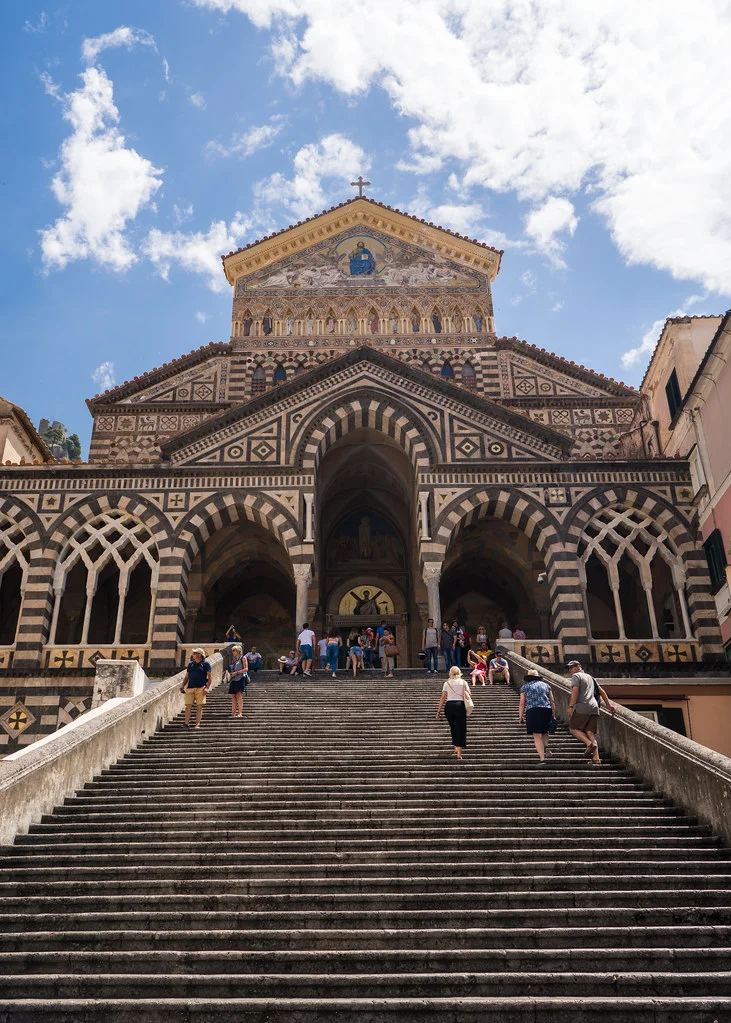
Amalfi gives the coastline its name and preserves traces of its former maritime republic. The staircase of St Andrew’s Cathedral rises above Piazza Duomo, surrounded by a dense network of lanes and closely packed buildings. This is a worthwhile historical stop in its own right, as well as a place to organise onward connections. Avoid reducing the entire visit to a wait beside the ferry pier.
Start with the square and the central streets, then decide whether to book an interior visit. Check which parts of the religious complex the admission includes and the conditions for your date; seeing the facade is different from reserving the complex. Leave a buffer if continuing by sea. Short walking distances in the centre cannot rescue an overly tight connection between two different forms of transport.
3. Atrani: a small square beside Amalfi
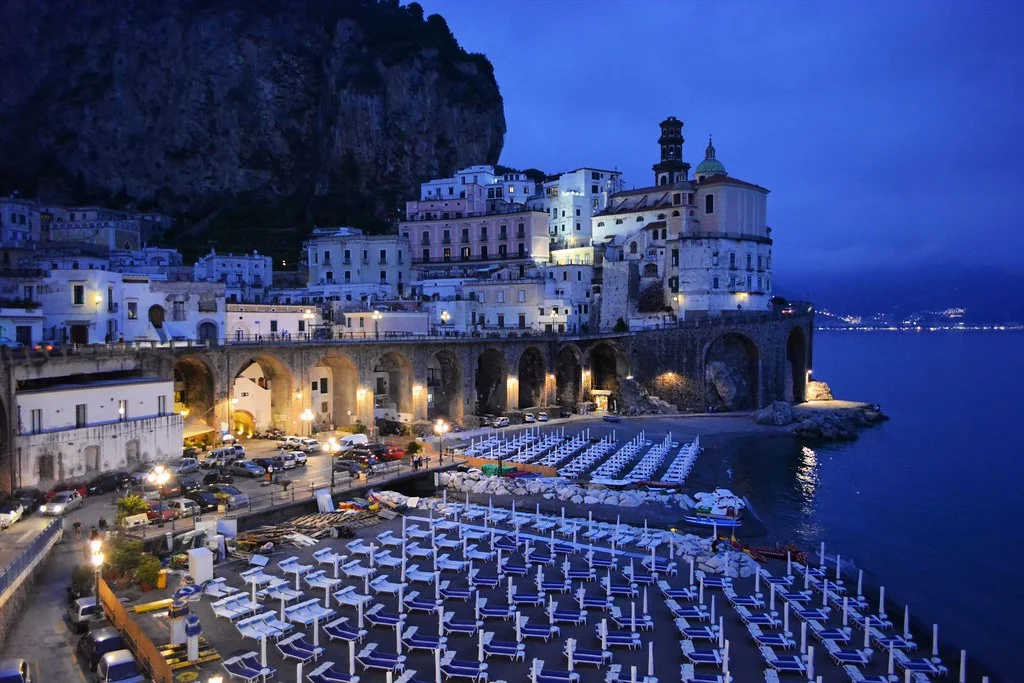
Italia.it places Atrani less than a kilometre from Amalfi, but its scale feels different: houses cluster above the beach, with arches, steps and Piazza Umberto I at the heart of the village. The church of San Salvatore de’ Bireto overlooks the square. Pairing the two towns is a useful way to add another historic centre without trying to cross the entire coast in one outing.
A walk through the lanes followed by time in the square works better than treating Atrani as a five-minute photo stop. Before walking from Amalfi, check the currently available pedestrian route. Geographic proximity does not make every roadside section comfortable or safe for walkers. Do not depend on finding parking beside the beach. If entering the water, follow the conditions and local instructions on the day.
4. Ravello: hillside views, not a ferry port
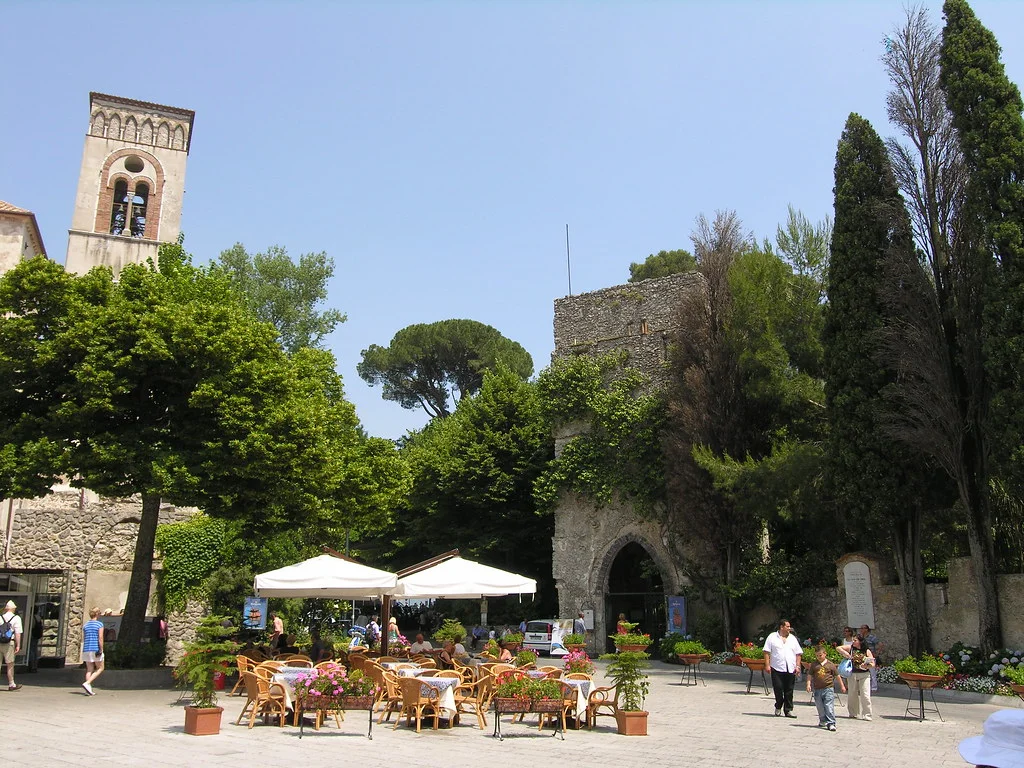
Ravello sits on a hill more than 350 metres above sea level. Its appeal is the view from above, around Piazza del Vescovado and the town’s gardens and villas. Italia.it highlights Villa Rufolo beside the square and the gardens of Villa Cimbrone, known for their viewpoint. The documentary photograph here shows Ravello’s urban setting; it does not represent included admission to either villa.
Allow a separate block of time for travelling uphill, walking and returning. A ferry ticket to Amalfi does not deliver you to central Ravello: you must also arrange the land transfer in both directions. If choosing a villa, check admission, accessibility and closures through its official channel before building your day around it. Adding both villas, several other towns and a tight sailing connection can leave little time for the views themselves.
5. Minori: a waterfront walk and local flavours
Minori is more compact than neighbouring Maiori. Its promenade leads towards the Basilica of Santa Trofimena, and the village lets you alternate the waterfront with streets and pastry shops. Italia.it also documents the Roman villa. Visiting those remains requires checking current access: the existence of a monument does not mean that it can be added without checking hours or booking requirements at the end of any walk.
The straightforward option is to focus on the seafront, the centre and a food break chosen from places actually open. If heading towards the lemon groves, check the condition and elevation of your intended section. The Sentiero dei Limoni should not be treated as a flat pavement between two beaches. Take suitable footwear and water, and avoid committing to a tightly timed ferry immediately after a walk.
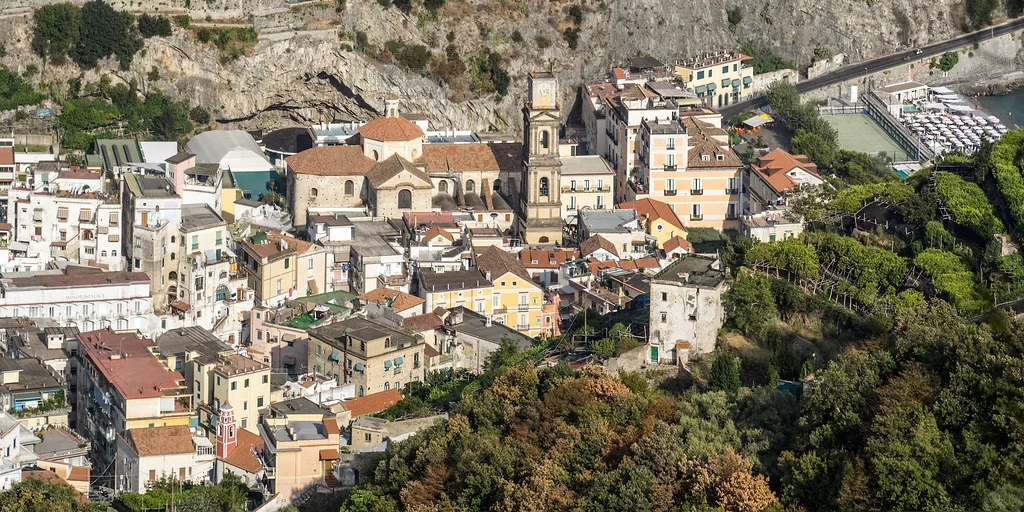
6. Maiori: a beach frontage with history above it
Maiori has a broad beachfront within a coastline better known for small coves. The Collegiate Church of Santa Maria a Mare and historic watchtowers are reminders that there is more here than the promenade. This guide’s documentary photograph illustrates the coastal setting and a historic building. It does not establish present-day interior access or imply that a particular building is open for visits.
Choose between a seafront stroll and a route involving climbs towards the town’s heritage, depending on energy and mobility. The convenience of the promenade does not extend automatically to every nearby viewpoint or beach. Some coves have stairs or access restrictions; this guide does not recommend entering closed approaches. Pairing Maiori with Minori makes more sense than repeatedly crossing the coast. Confirm available transport before adding extra stops.
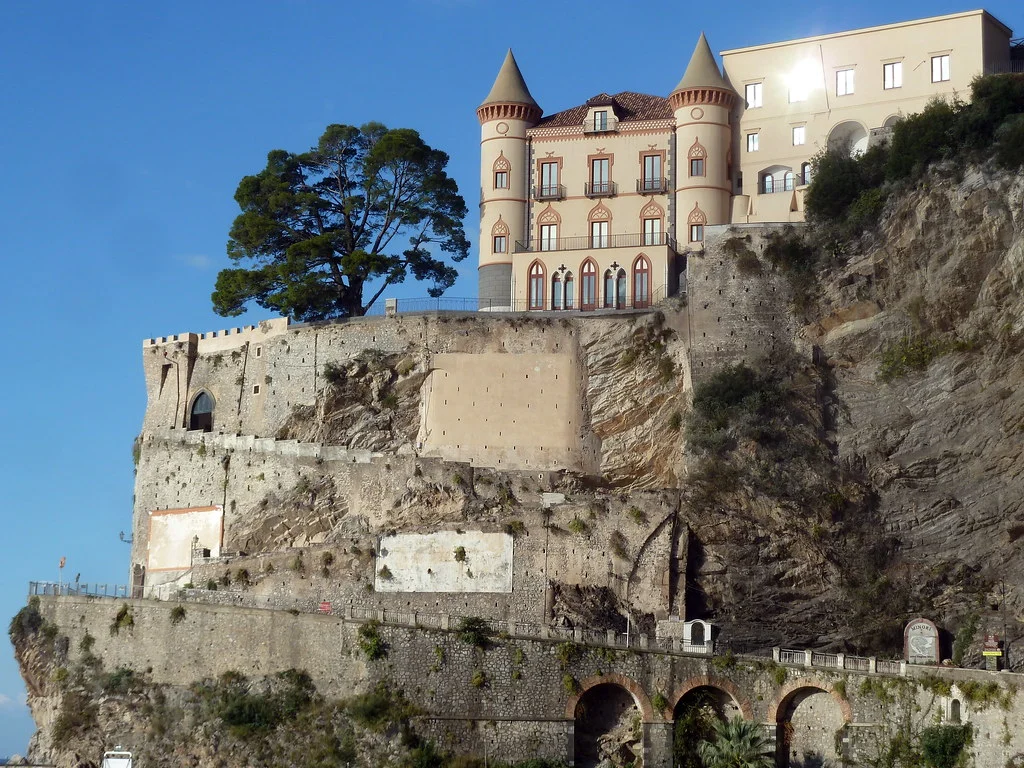
7. Vietri sul Mare: ceramics at the eastern gateway
Vietri sul Mare is the eastern gateway to the Amalfi Coast when arriving from Salerno. Ceramics shape its identity, from majolica-covered facades and workshops to the dome of the church of San Giovanni Battista. Look at how the material forms part of the town rather than seeking only a souvenir shop. The photograph shows Vietri’s coastal surroundings, rather than the interior of a workshop.
Explore the centre at an unhurried pace. If buying a fragile piece, ask about its origin, technique and suitable transport. Shopping is optional: the decorations in the streets are an attraction themselves. Distinguish the upper historic centre from the waterfront when choosing where to leave your transport, especially with luggage. Coming from Salerno, Vietri can be a logical first stage; there is no need to travel to Positano first and then double back across the coast.
How to combine towns without constant transfers
These seven towns are a selection to spread across a stay, not a checklist for one day. Group nearby places: Amalfi with Atrani, Minori with Maiori, and Ravello with a base from which you can reach it by road. Positano lies towards the west and Vietri towards the east. Changing accommodation every night can mean repeated climbs with luggage without saving useful sightseeing time.
We consulted Travelmar on 5 November 2026. Its website provides timetables and departure information and was advertising available service. That does not guarantee a particular sailing for every date, port or sea condition. Confirm both outward and return journeys for your date and prepare a land-based alternative. We do not quote a fixed fare or universal journey time: both depend on the route and service selected.
A route to get you started
- Historic block: focus the central section on Amalfi and Atrani. Decide whether to enter a monument or concentrate on squares and lanes; that choice determines your transport buffer.
- Panoramic block: give Ravello a separate outing, choosing a garden and arranging the land-based return. If mobility is limited, check each individual access before purchasing admission.
- Coastal block: combine Minori and Maiori if connections work. Place Positano and Vietri according to which end of the coastline you arrive from. A short trip can simply use two blocks; completing the whole list is optional.
Good to know
Can you visit all seven towns in one day?
We do not recommend planning it that way. Waiting, stairs and interior visits take time. Choose one nearby group and spread the rest across other outings.
Does the ferry reach Ravello?
Ravello is on a hillside, rather than beside a port. Arriving by sea at Amalfi still requires an additional land transfer to reach the town.
Do you need to rent a car?
That depends on accommodation, luggage and connections. Check land and sea transport first; do not assume that parking beside every town centre will be easy or inexpensive.
Are all seven places free to visit?
The list covers towns. Walking public streets is different from entering villas, museums, gardens or beach facilities, which may have separate admission and conditions.
Choose according to the setting and real transport connections. Two well-paired towns with time to explore offer more than a succession of rushed boardings.
Sources consulted
To combine this visit with other destinations, see the Italy guide.