
The city walls, Guinigi Tower, Piazza dell’Anfiteatro, San Martino Cathedral and San Michele in Foro provide a varied first visit to Lucca. Together they combine an elevated park, rooftop views, a square shaped by a Roman amphitheatre and two religious buildings with distinct identities. The practical approach is to organise the walk around your arrival point and the admission tickets you actually want, rather than rushing through every square.
Lucca’s historic centre lends itself to walking between sights, but combining the complete wall circuit with several tower climbs adds considerable effort. You do not have to do everything in one outing. This selection helps you decide where to spend your attention, which spaces require checking access and how to approach the centre from the station or suitable parking.
Before you pack
- Destination
- Lucca, Tuscany, Italy
- Selection
- 5 places in the historic centre and along its walls
- Arrival point
- Railway station on Piazza Ricasoli, outside the walls
- Stair-heavy visit
- Guinigi Tower: 230 steps and no lift, according to municipal tourism
1. The city walls: a park that explains Lucca’s shape
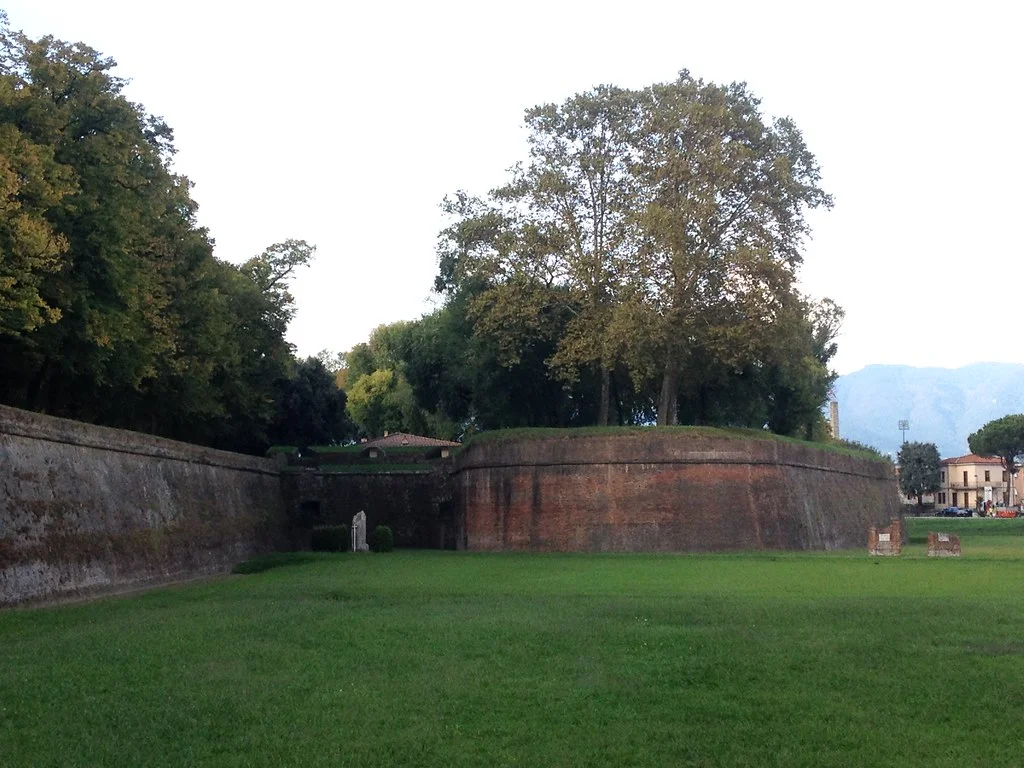
Lucca’s walls are more than a boundary to cross on the way into the historic centre. The circuit extends for more than four kilometres, according to the municipality, and functions as an urban park overlooking roofs, bell towers and green spaces. Brick bastions recall the Renaissance fortification’s defensive role; the trees and promenade tell the later story of its conversion to everyday civic use.
The municipality says the walls can be enjoyed free of charge on foot or by bicycle. You do not have to rent a bike or complete the entire circuit to appreciate them. A suitable section can provide enough orientation and a useful sense of the city. If you cycle, share the space with walkers and check the rental conditions: permission to ride does not make the promenade a racing track.
Choose an access that suits your group and leave time to descend towards the squares afterwards. Check particular ramps and connections on the ground, especially with a stroller or if steps are difficult. The photograph shows a bastion and the green space outside the walls. That perspective documents the fortifications rather than suggesting that every entrance or section has identical access.
2. Guinigi Tower: trees above the rooftops
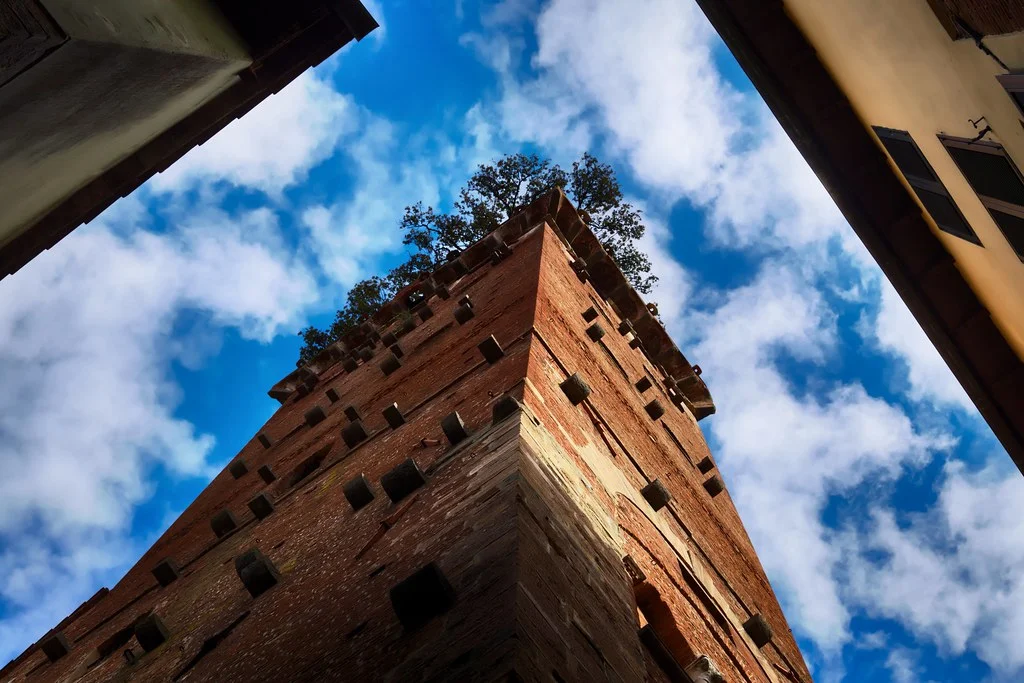
Guinigi Tower is recognisable by the trees growing on its rooftop terrace. Municipal tourism identifies the holm oaks in the elevated garden and explains the tower’s connection with the Guinigi family and medieval Lucca’s commercial power. Looking up from a nearby street already reveals the unusual combination of brick, stone and vegetation. Climbing is a separate experience: it offers an overview of the centre and requires the appropriate admission ticket.
The visitor information describes 230 steps and no lift. That is a practical consideration, not simply a picturesque detail. Before booking, consider your companions’ needs and how much stair climbing you have already planned. You do not need to add another tower to make a Lucca visit complete. A break after descending may be more worthwhile than going straight into a second climb.
Consult the official booking calendar for your date. Opening hours published for a particular season should not be treated as a year-round timetable, and admission depends on the current booking conditions. If you decide not to climb, keep the exterior stop and view the tower from different streets while respecting entrances and passageways around neighbouring buildings.
3. Piazza dell’Anfiteatro: understand an elliptical square
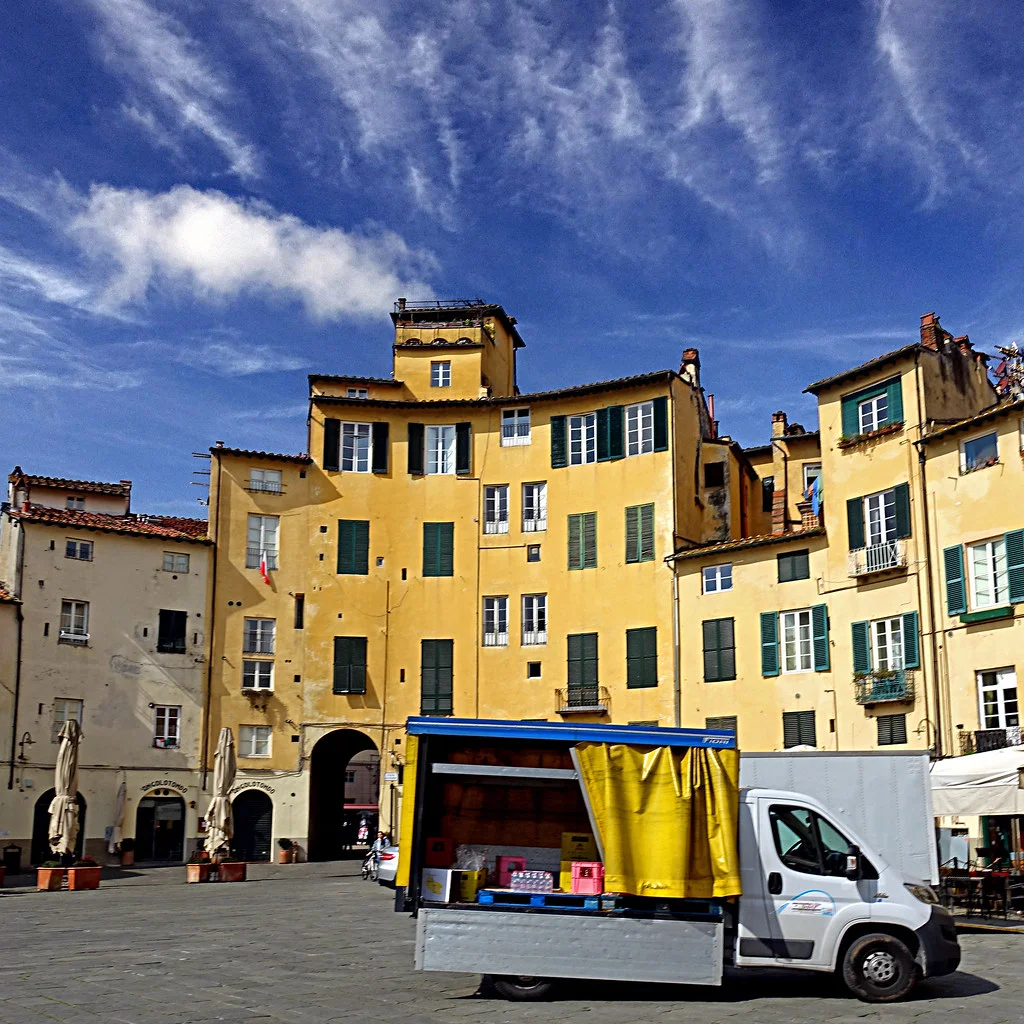
Piazza dell’Anfiteatro follows the outline of the Roman amphitheatre that once occupied the site. It is not an isolated monumental arena of the kind you may have seen elsewhere: later buildings incorporated the remains while retaining their shape. Municipal tourism attributes the present square’s reorganisation to Lorenzo Nottolini from 1830. This history explains why the space is so distinctive without looking like an open archaeological ruin.
Walk around part of the edge before choosing a photograph. The curving façades make more sense as a whole than when a camera is pressed towards one individual house. Enjoying the square does not require turning the stop into a restaurant purchase. If you choose a terrace, check its prices and conditions separately; an interesting urban setting is not a guarantee of a particular dining experience.
Its entrances and exits let you continue through the centre without retracing every step. Locate your next stop and leave room for people crossing the square, working or entering their homes. Temporary stalls, permitted vehicles and the atmosphere can vary. An archive photograph cannot promise an empty square or a particular arrangement on your visiting day.
4. San Martino Cathedral: an asymmetric façade and artistic heritage
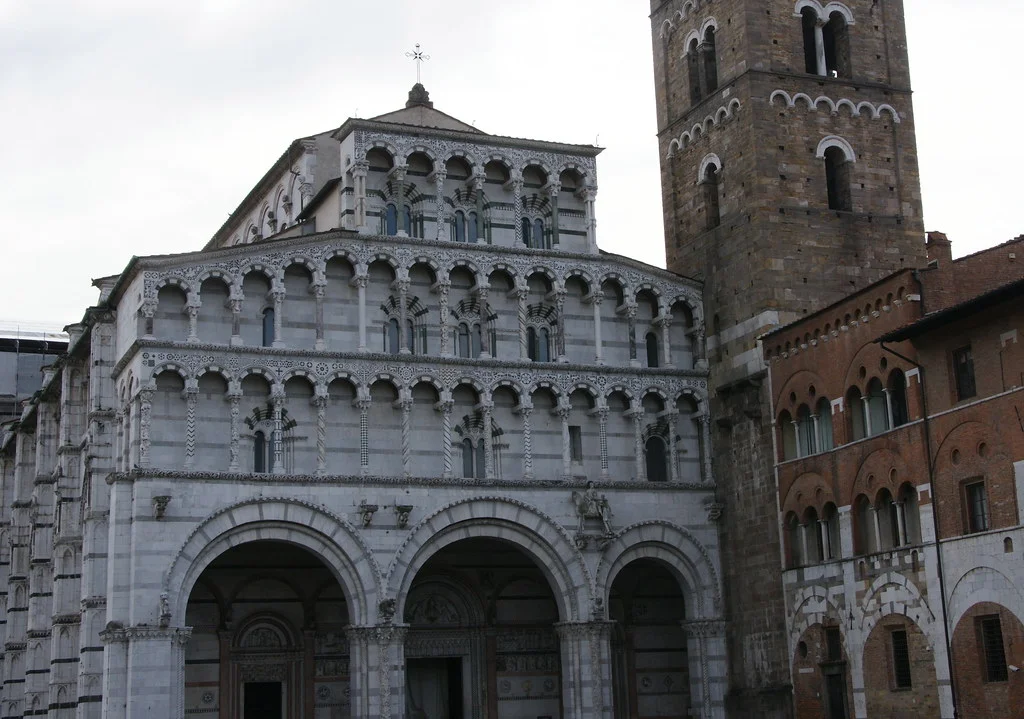
Look at San Martino Cathedral slowly from the square before entering. Its portico and asymmetric, column-decorated façade provide a clear comparison with San Michele in Foro without confusing the two buildings. The tourism entry describes successive transformations across the centuries. Notice how the façade relates to the bell tower: appreciating the outside does not depend on booking a tour or climbing anything.
For an interior visit, distinguish the tickets and spaces within the museum and archaeological complex. Tourism highlights Ilaria del Carretto’s tomb by Jacopo della Quercia and the Volto Santo among its important works. Check what is accessible on your date and what your selected ticket includes instead of assuming that all works and rooms are permanently available through one admission product. The building remains a religious space as well as a cultural visit.
Visitor hours vary through the year and tourist admission is paid. The tourism entry mentions wheelchair ramps at the cathedral and the church of San Giovanni and Santa Reparata. This should not be extended automatically to the bell tower or every part of the complex. Confirm the appropriate entrance and accessible circuit in advance if you need assistance.
5. San Michele in Foro: look up, then look around the square
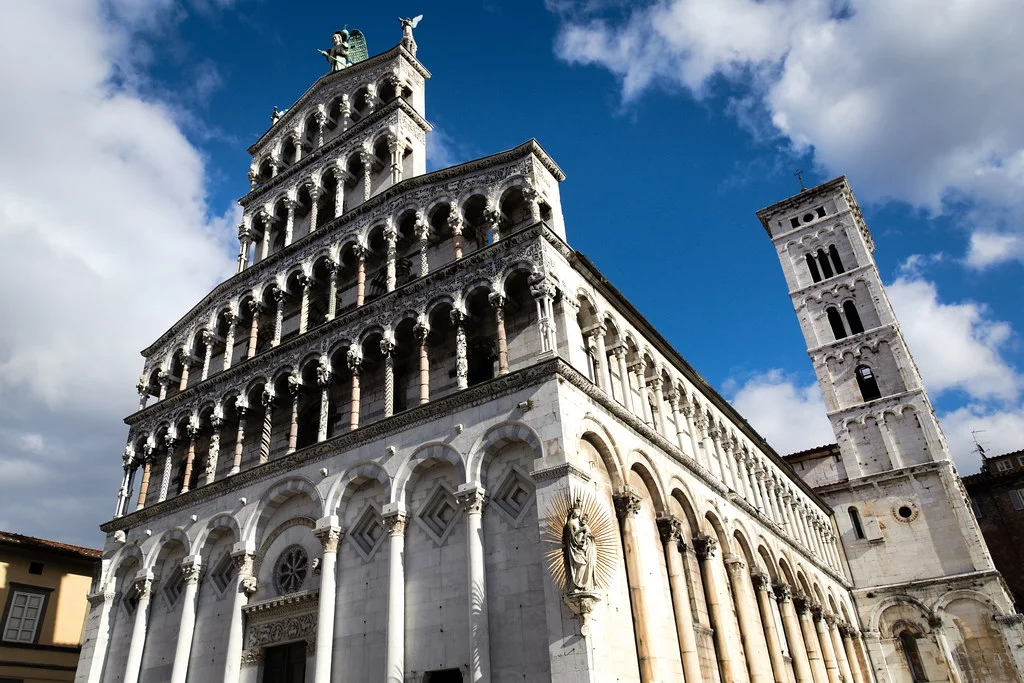
San Michele in Foro occupies the site of the former Roman forum, according to the municipality. Its façade rises above the roofline, with elaborate sculpture and inlay culminating in the figure of the archangel. The building also recalls the area’s importance for civic meetings and exchange, beyond its religious role. It makes a useful final stop if you want to appreciate an active urban setting without adding another lengthy interior visit.
View the façade from a little distance, then approach the details without obstructing the passage. The bell tower and streets opening into the square offer changing perspectives. Do not confuse this church with other buildings dedicated to San Michele in the municipality, including the one at Meati. Use Piazza San Michele and the full name in Foro when locating this stop.
The municipality lists free entry, with separate morning and afternoon opening periods. Check that day’s hours and respect services that may affect sightseeing. If the interior is closed when you arrive, the square and façade still provide a meaningful visit; waiting outside does not need to become an obligation that overturns the whole itinerary.
Arriving and walking without driving into a restricted zone
Lucca railway station is on Piazza Ricasoli, just outside the walls and within walking reach of the historic centre. Municipal tourism lists connections with Pisa and Florence, so consult the particular service and the return journey before planning a day trip. A nearby station does not remove the walking time from each monument: avoid finishing an interior visit when you should already be heading back to the train.
If driving, check the signs and restricted-traffic zone. Do not set a central square as your navigation destination while assuming unrestricted car access. Ask your accommodation about the relevant procedure before crossing a control if it lies within a restricted area. You do not need a vehicle between these five sights; the official information recommends walking or cycling around the pedestrian centre.
What to book and how to adapt the five stops
Separate admission tickets, transport and meals in your budget. Free access to the walls and the municipality’s listed free church entry at San Michele do not make Guinigi Tower or the cathedral free. Before choosing a pass or combined ticket, compare included spaces and validity with the visits you genuinely intend to make. Do not assume that a cultural admission product also covers trains, bicycle hire or every bell tower.
With limited time, prioritise the squares, a section of the walls and one paid interior or climb. With more flexibility, spend longer inside and separate stair-heavy visits. Reorganise outdoor sections and breaks in rain or heat instead of following a rigid sequence. This guide proposes five specific places: spending attention on three can be more rewarding than completing all five without stopping.
A route to get you started
- If arriving by train, arrange San Martino first and continue towards San Michele in Foro. Then link Piazza dell’Anfiteatro with Guinigi Tower according to your reservation. Fit a section of the walls around the light, weather and departure point rather than completing the whole circuit before entering the city.
- For an art-focused visit, give the cathedral more time and shorten the outdoor circuit. To reduce stair climbing, keep the squares and an exterior view of Guinigi. Always leave time to return to the station or your vehicle. The five places are a selection, not a requirement to finish everything before a fixed hour.
Good to know
Can I visit Lucca without a car?
Yes. Municipal tourism places the railway station just outside the walls and recommends walking or cycling in the pedestrian area. Check outward and return connections, especially if you are combining the trip with Pisa or Florence.
Does Guinigi Tower have a lift?
No. Municipal visitor information describes 230 steps and access without a lift. Consider the climb before booking and adapt the plan to your group’s needs. Looking at the tower from surrounding streets remains part of a worthwhile visit.
Do I need to walk the complete wall circuit?
No. Choose a section that connects with the rest of your route. The circuit exceeds four kilometres, but you do not need to finish it to appreciate the bastions, urban park and views of the historic centre.
Are all the churches and towers on this route free?
No. The municipality lists free entry at San Michele in Foro, while San Martino’s tourism entry specifies paid admission and Guinigi requires a ticket. Check each product and the spaces it includes before purchasing a combination.
Lucca rewards alternating an overview with close attention: see the centre from the walls, recognise Guinigi’s rooftop trees, then pause in a square or in front of a façade. Fit bookings around your interests and keep the remaining walk flexible. If you continue through Tuscany, our Pisa and Florence guides help you plan other visits without confusing their monuments, stations or admission products with those in Lucca.
Sources consulted
To combine this visit with other destinations, see the Italy guide.