

Stone Town stands on the western coast of Unguja and preserves a layout shaped by centuries of Indian Ocean exchange. UNESCO highlights the combination of African, Arab, Indian and European traditions within a Swahili trading town that retained its own identity. Understanding it means looking at relationships between homes, streets, businesses and the coast as well as monuments. This is not an isolated collection of historic buildings: people continue to live, work and meet here.
These five stops or areas of observation provide a starting point for a cultural visit. Heritage sources explain why places matter, but they do not certify current opening hours for individual interiors. Confirm access using up-to-date local information and consider a guided walk if you want deeper historical interpretation. The experience benefits from time to listen and find your bearings, rather than trying to cross every alley in pursuit of a list of photographs.
Before you pack
- Location
- Western coast of Unguja, Zanzibar
- Suggested time
- One or two cultural sightseeing days
- Focus
- Heritage, architecture and remembrance
1. Old Fort: recognise the city’s different layers
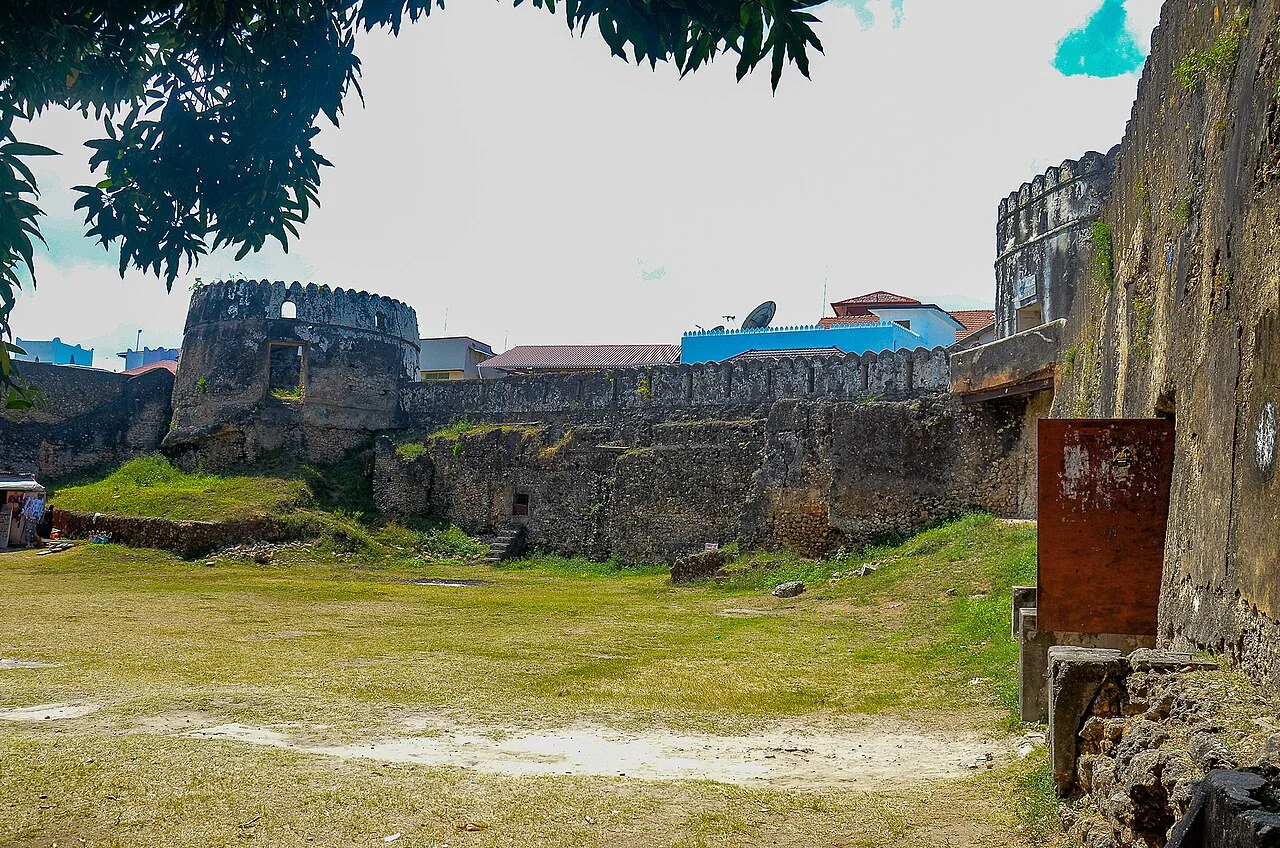
UNESCO identifies the Old Fort among Stone Town’s principal monuments. Its heritage description explains that it occupies the site of an earlier Portuguese church, a detail that encourages an understanding of the town as successive layers of use and power. Observe the walls, the shape of entrances and the relationship between the enclosure and surrounding spaces. The visit becomes more informative when you ask which elements belong to different periods instead of attributing one date to everything visible.
Before entering, check the site’s current arrangements and any scheduled activity. A historic place can accommodate contemporary uses without making every area available to visitors. Pause where you will not obstruct circulation and seek interpretation or a guide who distinguishes documented information from legend. The photograph in this guide is an archive view of the complex; it should not be read as confirmation of the exact layout or services you will encounter on your travel date.
2. Old Dispensary: take time with the façade
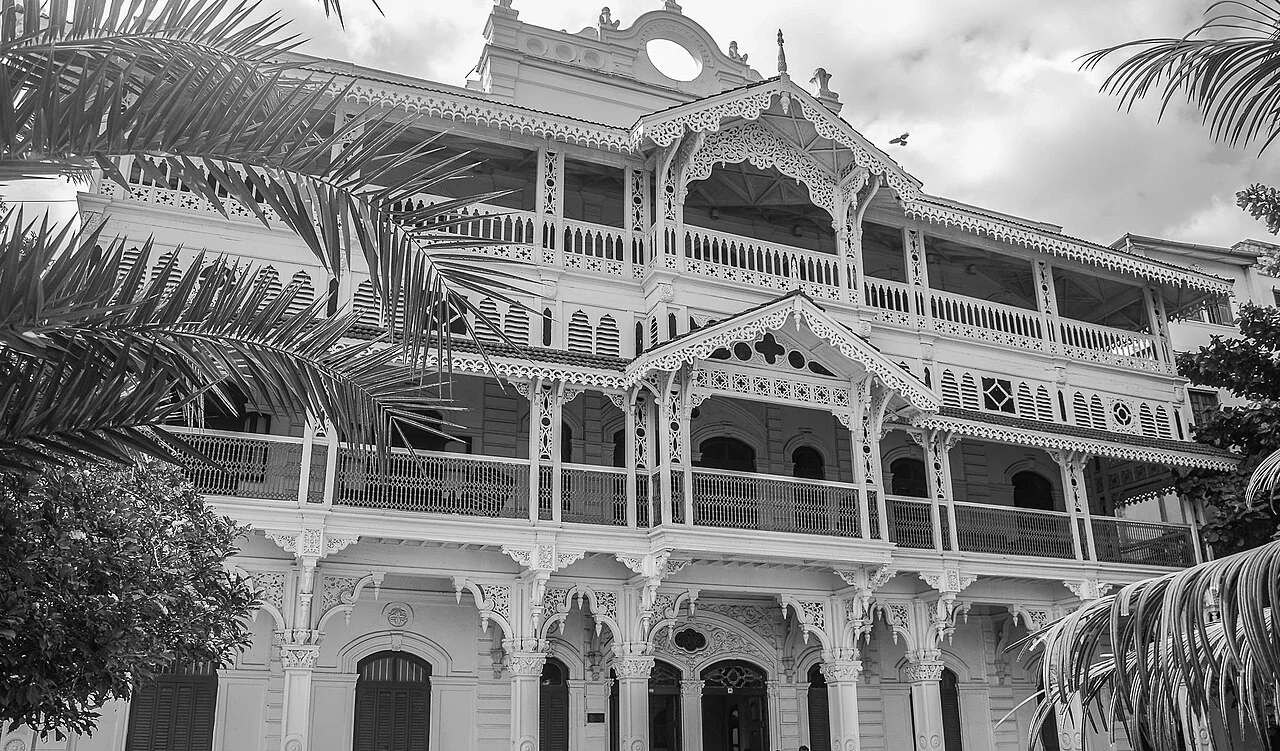
The Old Dispensary is another building included by UNESCO among the town’s heritage landmarks. Its façade rewards attention to balconies, railings and wooden details, and comparison with simpler buildings on nearby streets. Look from far enough away to appreciate the whole before focusing on one element. Comparing a prominent building with everyday architecture helps explain a city in which different construction traditions interacted over a long period rather than developing as entirely separate styles.
An exterior view does not establish that the interior can be visited. Ask about present use and admission if you want to go inside, and respect areas that may serve workplaces or private activities. When photographing, keep doors and routes clear and ask permission if a person is the main subject. You do not need to invent an explanation for every detail. When the meaning of a decorative motif is unclear, a well-judged question is more useful than repeating an unsupported interpretation.

3. Christ Church: approach the history of enslavement thoughtfully
UNESCO describes the Anglican Christ Church cathedral as standing on the site of the former slave market. That connection calls for a different approach from a purely architectural stop. Seek information about the people subjected to this trade, the networks that sustained it and the changes leading to its suppression. The building opens these questions, but no façade alone can explain the complexity of a history involving violence, exploitation and resistance. Interpretation deserves a central place in the visit.
Allow time for available explanations and check access arrangements for different parts of the site. Avoid treating it as a backdrop for playful photographs: attention and respect are part of understanding what is commemorated. With children, adapt explanations to their age and leave room for questions. A local guide can connect the site with the wider town, provided documented history is distinguished from simplified stories or anecdotes that cannot be verified. It is reasonable to ask where an account comes from.
4. St Joseph’s Cathedral: religious diversity in the townscape
St Joseph’s Roman Catholic Cathedral appears among the monuments UNESCO uses to describe Stone Town’s cultural mixture. Approaching it reveals another religious presence within an urban landscape shaped by multiple traditions. Notice the building’s relationship with nearby streets and structures, comparing its scale with the houses encountered earlier in your walk. This broader view prevents the visit from becoming a collection of disconnected monuments and encourages attention to how different places function within the same town.
Before entering, ask about visitor times, services and photography rules. A church maintains a purpose independent of tourism, and religious activities may require quiet or restrict sightseeing. If the interior is unavailable, observing it from public space remains worthwhile. Do not force access or assume that a closed door indicates permanent closure. Adapt the plan using current information and continue to another stop without interrupting the building’s use. A flexible itinerary makes this easier than relying on a tightly timed sequence.
5. Streets, carved doors and domestic architecture
The narrow, winding street pattern is central to Stone Town’s heritage value. UNESCO describes courtyard houses, carved double doors, shops connected to working spaces and materials including coral stone and mangrove timber. Choose several streets and observe how homes, businesses and open areas fit together. Everyday details reveal information that is easily missed when the sole objective is reaching the next famous building quickly. Looking carefully at a limited area can provide more insight than crossing the entire town without stopping.
Doors remain entrances to homes and businesses. Admiring them does not authorise entry or photography of interiors without permission. Stand back when someone needs to pass, ask consent for portraits and avoid touching fragile features. A guided walk can provide orientation and context, but agree on duration, language, price and included places before starting. If exploring independently, keep an offline map and a clear reference for returning to your accommodation. Finding your way calmly is preferable to wandering without direction once tiredness accumulates.
Living heritage and changing access
Conservation sources warn that buildings can deteriorate and urban development requires care. One prominent example is the House of Wonders, which partly collapsed in December 2020 and underwent documentation work described by UNESCO in 2021. That article provides historical background, not a current opening notice. For this reason, an interior visit to the building is not presented here as a guaranteed activity. Any proposed access should be confirmed with the responsible authorities or local managers.
Prepare your walk with water, breaks and clothing appropriate to the weather and religious places. Ask your accommodation for current route and transport information, and consult official sources for country-entry requirements or health preparations. This guide covers urban heritage and does not replace those separate arrangements. When hiring services, agree on the scope beforehand and allow gaps between activities. An interesting conversation or restricted entrance may change the sequence without making the day unsuccessful.
A route to get you started
- First part: approach the Old Fort and Old Dispensary, observing their surroundings and checking which areas are available. Include a break to rest and get your bearings. On a guided visit, ask for connections between the buildings and the town’s commercial and social history rather than only a sequence of dates.
- Second part: give Christ Church and its historical context sufficient attention, then approach St Joseph’s according to visiting arrangements. Reserve a final stretch for streets and doors without entering private spaces. With two days, divide the route and leave more time for interpretation, meals and conversation.
Good to know
Is Stone Town the same as the whole island of Zanzibar?
No. This guide focuses on the historic urban area on the western coast of Unguja. Beaches and other island outings require their own journeys and planning. They should not automatically be added to a cultural day as though all were part of the same short walk.
Do UNESCO sources provide current visiting hours?
Heritage descriptions explain historical values and conservation concerns rather than operating as a continually updated admissions calendar. Confirm hours and conditions with those responsible for each place. An older restoration article does not by itself establish that a building is currently open or closed to visitors.
Is a guided visit worthwhile?
A guide can help with history and orientation, provided the service has clear conditions. Agree on language, duration, price and content before beginning. Choose an approach that respects local life and the history of enslavement rather than turning them into entertainment or a series of sensational anecdotes.
Stone Town rewards an approach that connects buildings, memory and daily life. Select several places to examine carefully, respect homes and religious spaces, and verify current access. Its importance lies not only in preserving an image of the past, but in understanding how that heritage remains part of a living town.