
To explore the Mount Fuji area without climbing the summit, choose among Lake Kawaguchiko, Arakurayama Sengen Park with Chureito Pagoda, Oshino Hakkai, Kitaguchi Hongu Fuji Sengen Shrine and Lake Yamanakako. These are five specific places with individual photographs and different transport requirements.
We do not suggest rushing all five into an excursion from Tokyo. Mount Fuji’s visibility changes, and connections determine which stops work together. Official JNTO, Yamanashi and shrine sources were consulted on 5 November 2026. Several JNTO pages redirected to their French versions; those actual pages were reviewed for this guide.
Before you pack
- Area
- Yamanashi: Fujiyoshida and the Fuji Five Lakes
- Visit type
- Fuji surroundings; no summit climb
- Planning
- Choose nearby stops and check the return journey
1. Lake Kawaguchiko: choose a shore, not the entire lake
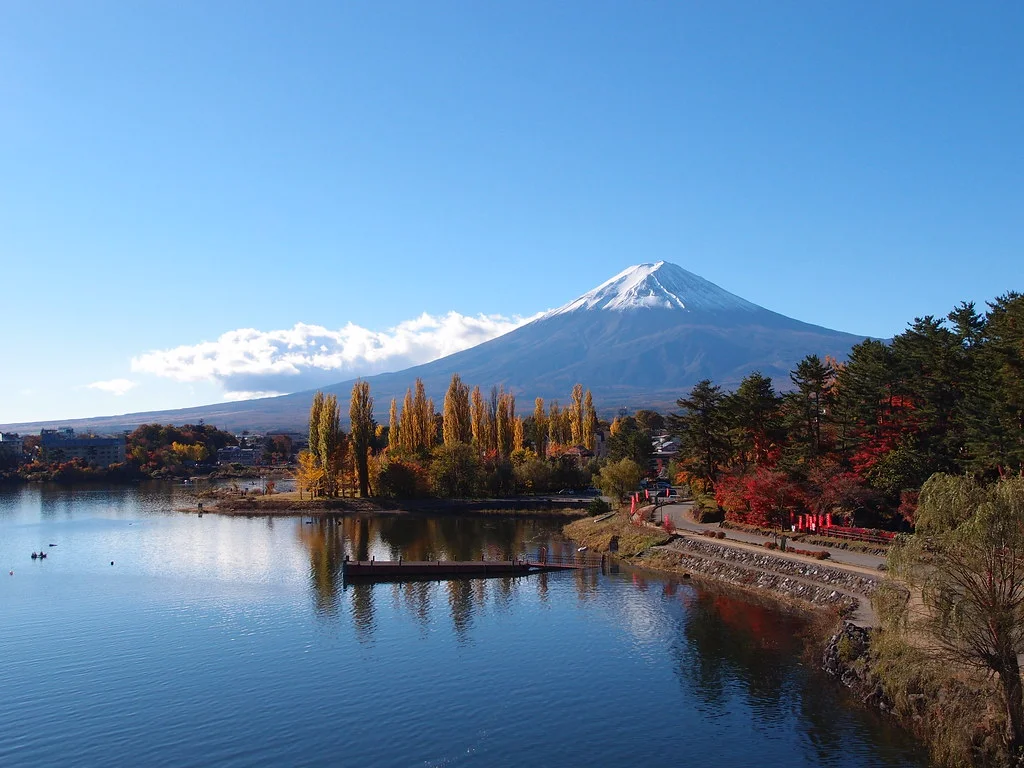
Lake Kawaguchi, also called Kawaguchiko, is a base for exploring the Fuji Five Lakes region in Yamanashi. It combines a lakeside setting with views of Mount Fuji when conditions allow. This guide’s archive photograph shows autumn colour; it does not establish that foliage or visibility will be the same on your travel dates.
Choose which part of the shore to explore and how you will return to the station. Marking several locations around the lake as a single stop can turn a walk into repeated transfers. If the mountain is hidden, the lake remains a place to walk, but avoid purchasing an activity solely for a promised view. Leave room to adapt your route to the conditions and your return departure rather than chasing every viewpoint.
2. Arakurayama Sengen: Chureito Pagoda and the uphill approach
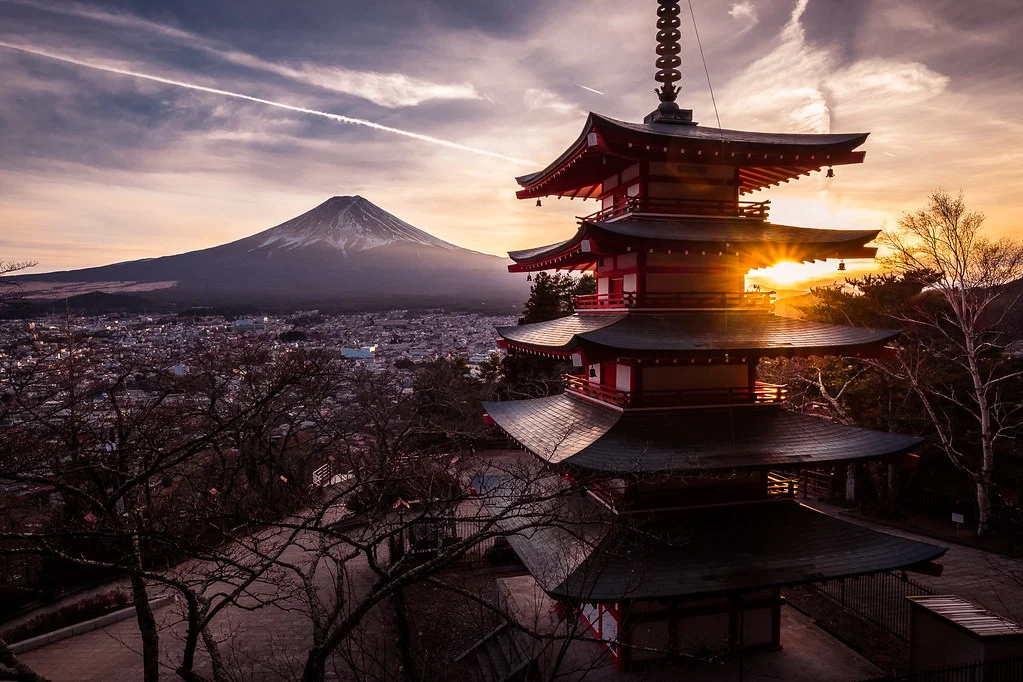
Arakurayama Sengen Park includes Arakura Fuji Sengen Shrine and Chureito Pagoda on a hillside in Fujiyoshida. This is the setting of the familiar composition of pagoda, city and Mount Fuji. The photograph helps identify the location, but blossoms and a clear summit belong to the moment the image was taken, rather than being guaranteed features of every visit.
Shimoyoshida Station on the Fujikyu line provides an access point for this area. The approach from town involves an uphill walk and steps. Save energy for returning and check accessibility arrangements if needed. A navigation app’s estimate to the shrine is not necessarily the time for the entire outing. At the viewpoint, follow instructions and permitted areas. Getting a photograph does not justify blocking the route or entering neighbouring private property.
3. Oshino Hakkai: ponds fed by Mount Fuji snowmelt
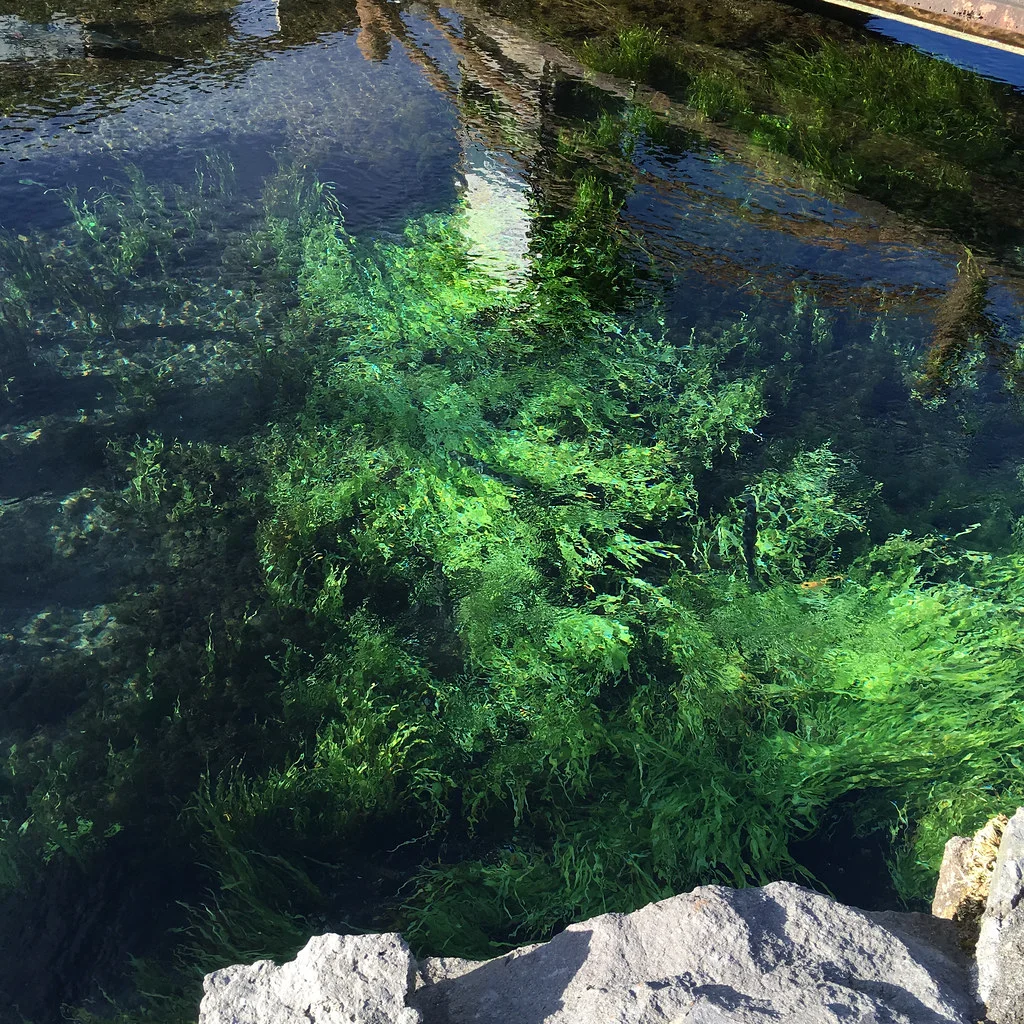
Oshino Hakkai is known for eight ponds, bridges and traditional buildings between the Lake Kawaguchi and Lake Yamanaka areas. JNTO and Yamanashi’s tourism organisation explain the connection between the water, Fuji’s melting snow and filtration through volcanic materials. Looking at how water shapes the village makes the visit more rewarding than collecting eight almost identical photographs.
You can plan a bus approach from Fujisan Station; check the appropriate stop and the return service for your date. Do not assume that every private space, exhibition or facility around the ponds follows identical admission rules. The ponds are not a suggestion for swimming or drinking untreated water. With children or a group, choose a manageable route and leave room for other visitors on bridges and narrow paths.
4. Kitaguchi Hongu Fuji Sengen: an approach through cedars
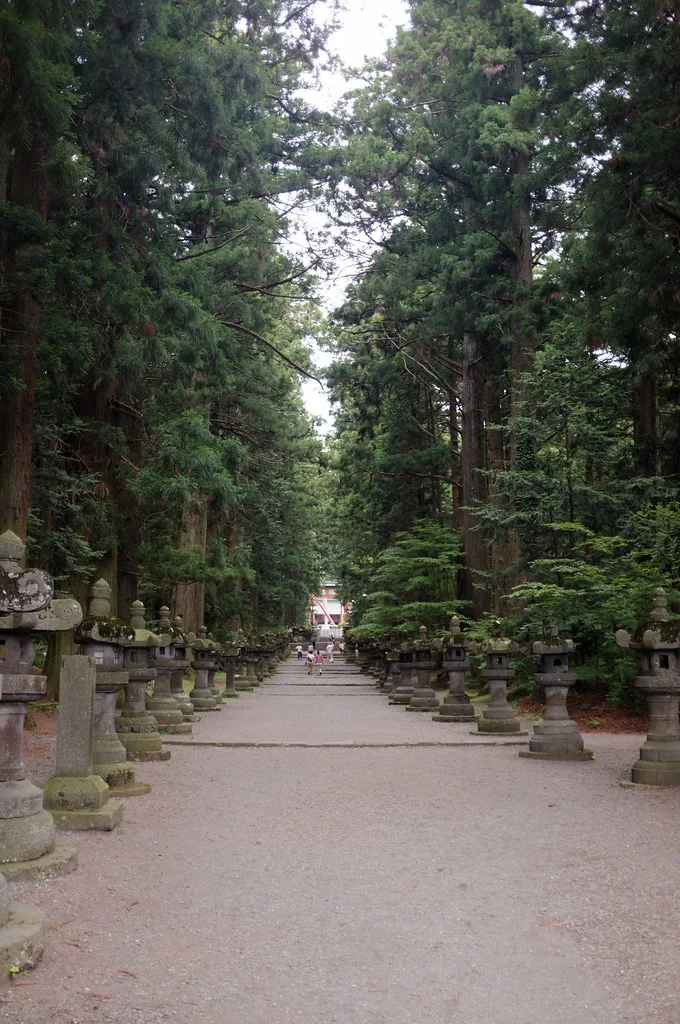
Kitaguchi Hongu Fuji Sengen Jinja is in Fujiyoshida. Yamanashi highlights its approach through large cedars and moss-covered stone lanterns, offering a different setting from the open lakeshores. This stop allows time for a religious site and its wooded surroundings without turning the visit into a climb to Mount Fuji’s summit.
Distinguish it from Arakura Fuji Sengen Shrine, associated with Chureito Pagoda. Similar names do not mean they are the same stop. Confirm the exact destination when arranging transport or taking a taxi. Respect worship and photography instructions; a documentary photograph’s licence does not grant unrestricted camera access inside buildings. The guide’s image shows the shrine approach, rather than a mountain ascent or a private ceremony. Choose this stop for its setting and religious context.
5. Lake Yamanakako: a different landscape and connection
Yamanakako is another of the region’s five lakes, alongside Kawaguchi, Sai, Shoji and Motosu. JNTO describes access to this sector through Fujisan Station and highlights activities beside the water. Its open landscape offers a different lakeside experience, but it is not an extra stop beside Kawaguchiko Station that can be added without considering travel.
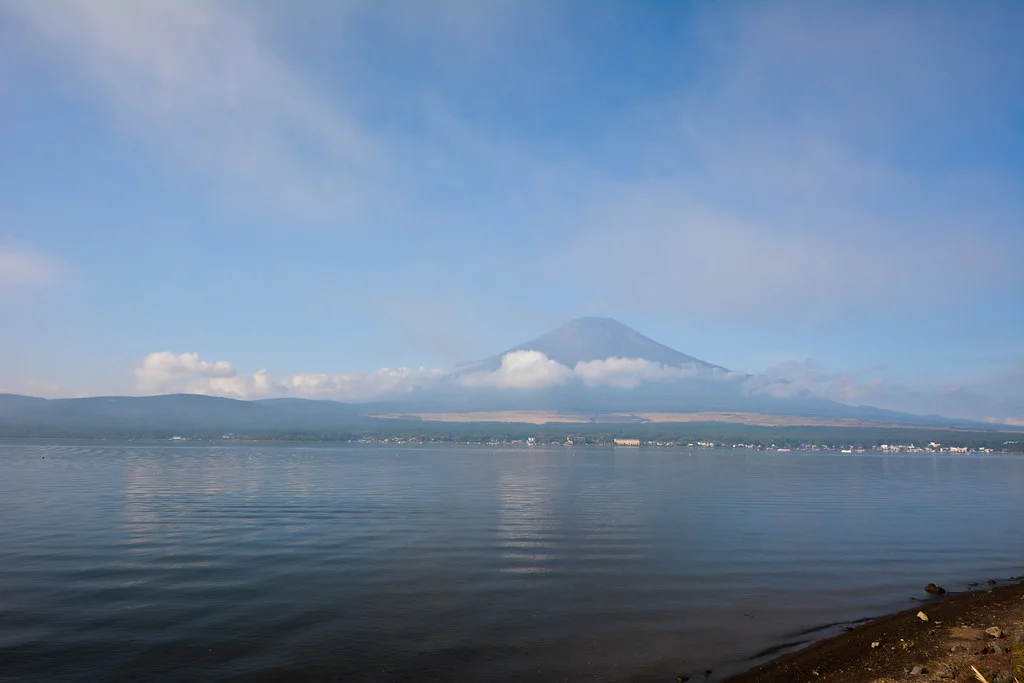
Pairing it with Oshino Hakkai can make sense when transport schedules allow. Choose a particular section of shore and identify your return stop beforehand: “visiting the lake” does not specify a meeting point. For an activity on the water, check the operator, equipment, weather conditions and operation on the day. The archive photograph with Mount Fuji behind the lake does not guarantee wind conditions, reflections or clear skies for your outing.
Transport and visibility: what determines the route
From Tokyo, JNTO describes road connections and a rail option using the JR Chuo line to Otsuki, followed by Fujikyu. Do not assume that a JR pass automatically covers that second section. Compare the complete journey, reservations and return, rather than only a fare to an intermediate station. Within the region, Fujisan, Shimoyoshida and Kawaguchiko are separate stations.
This guide covers lakes, a park, ponds and a shrine in the surrounding towns. It is not a summit climb, a fifth-station excursion or a mountaineering route. Climbing preparation and restrictions require separate, specific research. For these foothill visits, check weather and transport before departure. If Fuji is hidden, prioritise a place with appeal beyond the view and avoid missing your last return connection while waiting for a photograph.
A route to get you started
- Western group within this selection: make Kawaguchiko the main walk, adding Arakurayama Sengen if the connection through Shimoyoshida and your mobility allow it. For a short visit, these two objectives can be enough; there is no need to circle the entire lake.
- Eastern group: use another outing for Oshino Hakkai and a chosen section of Yamanakako, with outward and return services confirmed from the Fujisan area. Add Kitaguchi Hongu Fuji Sengen only if you can give it a distinct block of time rather than rushing between religious sites.
- Low-visibility alternative: keep a shrine or pond visit if conditions are suitable and those places interest you in their own right. If your sole objective is the summit view, flexibility over the date is more useful than a promise of clear skies at a fixed hour.
Good to know
Do these places require climbing Mount Fuji?
No. They are visits to towns, lakes and sites in the surrounding area. A summit ascent is a separate activity requiring its own preparation and regulatory checks.
Is a mountain view guaranteed?
No. Cloud, rain and conditions on the day can hide it. Archive photographs identify the setting but are not a forecast.
Does the Japan Rail Pass cover the whole journey?
Do not assume so. The option described by JNTO includes Fujikyu after Otsuki. Check the precise coverage of your pass and intended service.
Are the two shrines the same place?
No. Arakura Fuji Sengen is associated with the Chureito park, while Kitaguchi Hongu Fuji Sengen is another shrine in Fujiyoshida. Check the full name when arranging transport.
Choose fewer transfers and more time at each stop. A realistic route around Fuji can work without the perfect photograph when the landscape and individual places interest you in their own right.
Sources consulted
To combine this visit with other destinations, see the Japan guide.