

Rotorua combines geothermal activity, Māori culture and forest walking, but its main visits are not interchangeable. Te Puia connects a geothermal landscape with cultural interpretation. Wai-O-Tapu focuses on the forms and colours of another thermal field. Whakarewarewa Redwoods provides walking routes and a forest setting. This guide selects those three places for a first stay without adding activities simply to fill a list.
We suggest three days to separate transfers and allow unhurried walking. October is spring in New Zealand, although conditions can change and rain clothing is useful. Each image is a real photograph of its location. Steam, visibility and route availability depend on the day, so no picture should be interpreted as a promise of an identical scene during your visit.
Before you pack
- Suggested time
- Three days, adjusted to your pace
- Places in this route
- Three selected places
- Destination
- Rotorua
Te Puia: geothermal features with Māori cultural context
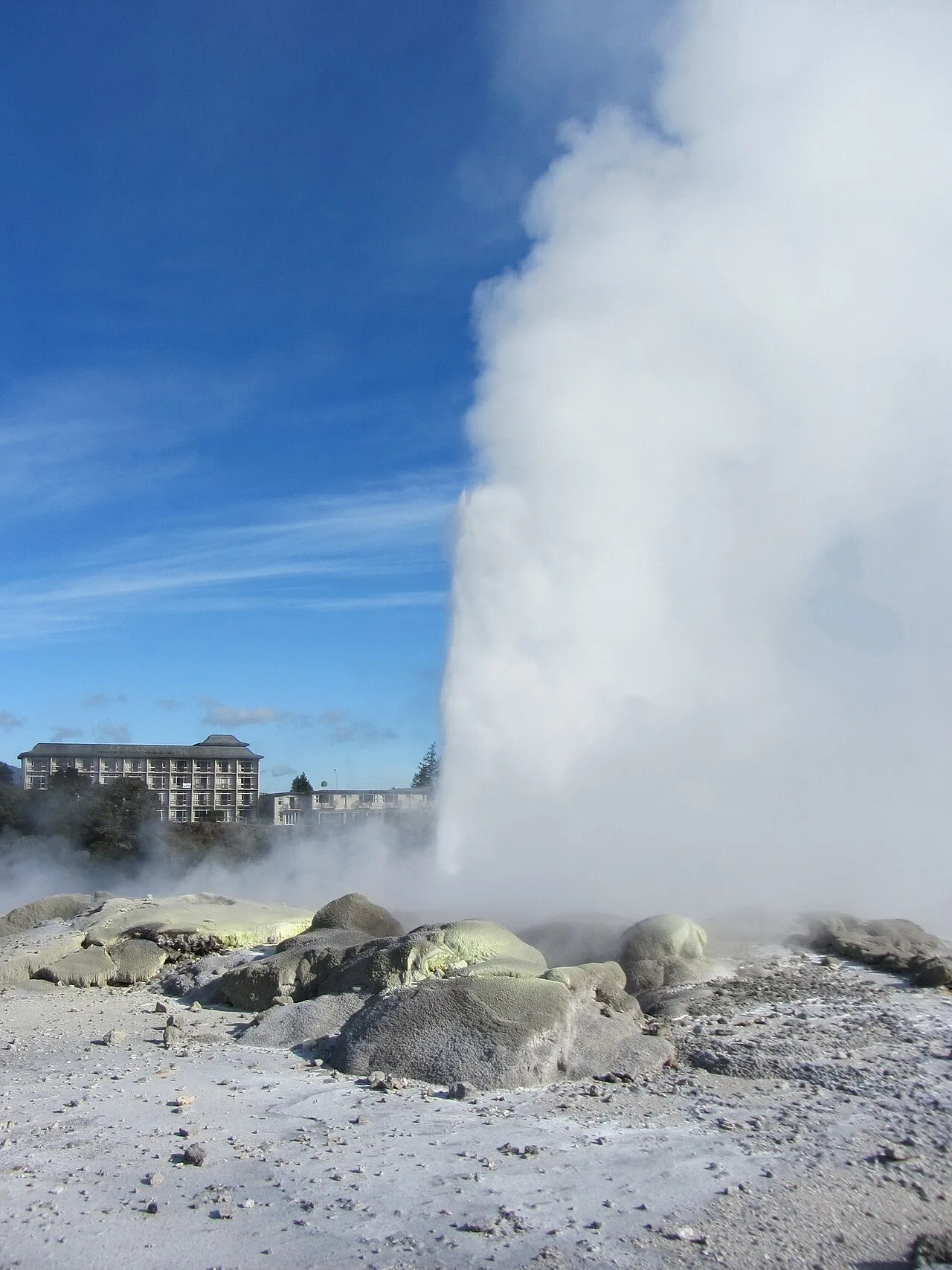
Te Puia lies in the Te Whakarewarewa geothermal valley and presents Pōhutu Geyser as one of its principal features. Its website explains that it also houses the New Zealand Māori Arts and Crafts Institute and a kiwi conservation centre. That combination makes the experience more than a walk to photograph steam. Cultural interpretation and landscape are connected within the operator’s offering.
Before reserving, choose the precise experience. The programme distinguishes daytime and evening activities, with options that may include meals or performances. Do not assume every ticket contains the same elements. Confirm the reporting time and the format or language of the visit. Arriving with a buffer helps you follow the route from its beginning rather than joining in a hurry.
During interpretation, pay attention to relationships between place, the transmission of knowledge and craft practice. Māori culture is not simply a decorative setting for a geothermal excursion. Respect photography instructions concerning people, workshops and cultural spaces. If you are uncertain about a practice or symbol, ask your guide rather than filling the gap with an assumption.
We do not promise a particular eruption at the minute you arrive. Natural activity and viewing conditions vary. Stay on authorised routes and follow instructions near hot areas. Te Puia should not be confused with other operators around Whakarewarewa: check the exact name and location on your reservation so that you arrive at the right place.

Wai-O-Tapu: observe the thermal landscape from established paths
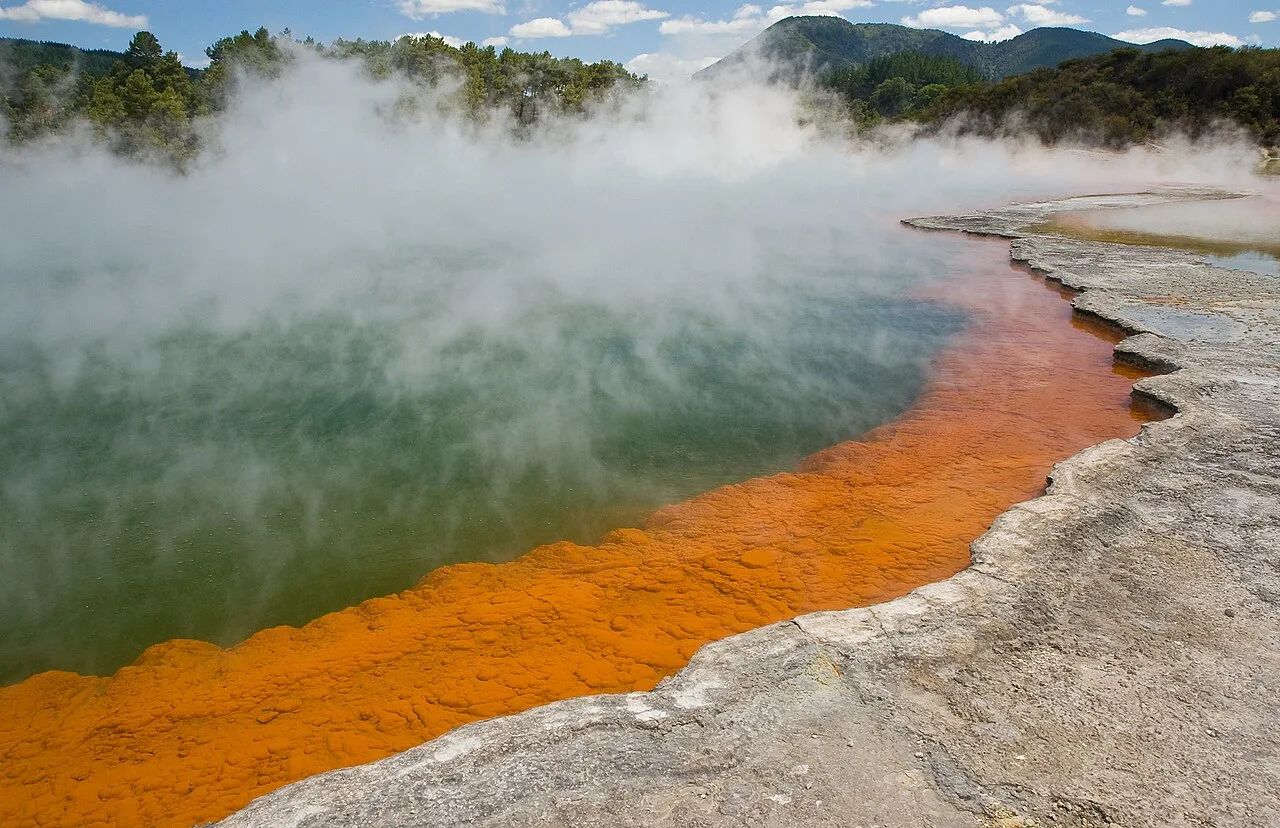
Wai-O-Tapu presents landscapes formed by geothermal activity, including water features, mineral deposits and mud. The operator describes a substantial system below the surface and distinguishes the park from other parts of its offering. This section’s photograph shows Champagne Pool, one of the site’s recognisable views. Colour and steam change with light and conditions without making the visit less worthwhile.
Choose a circuit according to available time and the group’s physical needs. Check the current map and notices before starting. Not everyone needs to complete the longest route to appreciate the setting. A shorter walk with pauses for observation and interpretation can be more rewarding than rushing to finish before last access or a tightly arranged return journey.
The water features are not swimming pools. Remain on paths and boardwalks, do not cross barriers and never reach towards water or ground to test its temperature. A surface that looks firm or an edge that seems reachable does not establish that leaving the route is safe. With children, maintain close supervision throughout, not only beside the most dramatic-looking features.
Check separately any scheduled presentation you want to include. Its start time does not automatically describe the opening hours or duration of the entire park. Arrange outward and return transport if you are not driving. Wai-O-Tapu deserves its own substantial part of a day so that the road journey, walking and breaks are not squeezed between unrelated reservations.
Whakarewarewa Redwoods: distinguish forest trails from Treewalk
Whakarewarewa Redwoods changes the pace after the geothermal visits. The forest information highlights Californian coast redwoods and a network of routes for walking and other activities. Signposted walks begin around the visitor centre and use colours to identify different circuits. Starting with the map helps you select a route suited to your time and energy.
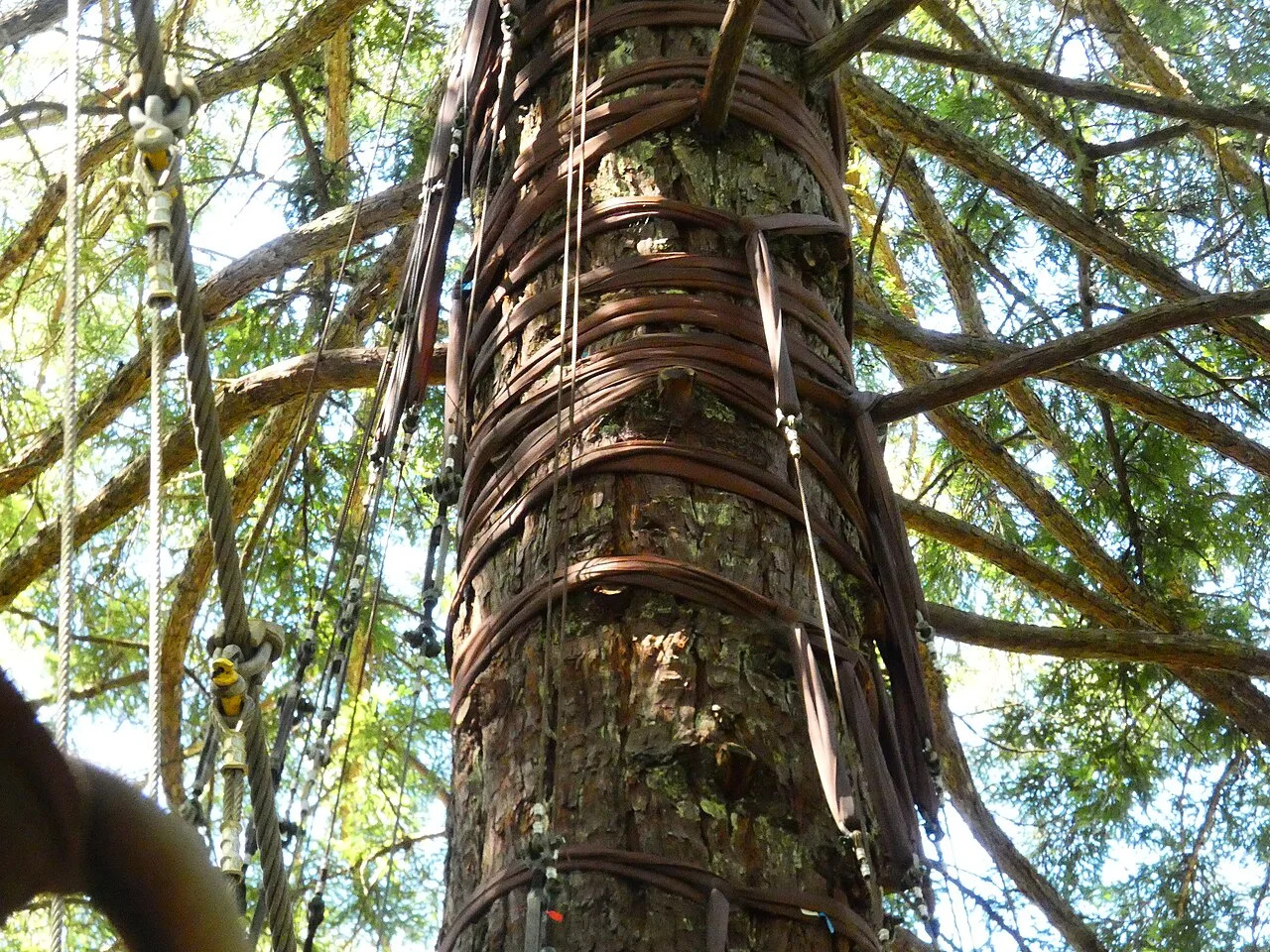
Do not confuse a ground level walk with the Redwoods Treewalk. The photograph in this section shows a structure belonging to the elevated experience among the trees, which has separate admission. The forest website describes suspension bridges and directs visitors to the operator for information and booking. You can decide whether it interests you, but should not consider it automatically included in every visit to the forest.
For ordinary walking, follow the arrows of your chosen circuit and respect shared-use instructions. The wider network includes routes for bikes, horses and other activities, so not every path serves the same purpose. Save the map and calculate your return before travelling farther into the forest. A setting close to town still requires water, suitable shoes and clothing for actual conditions.
In rain, assess the route and any current notices. An attractive photograph of wet woodland does not guarantee that every track is open or that a long walk suits your group. In this guide, the Redwoods closes the trip with a more flexible experience of observation and movement. It need not become an extreme activity or a sequence of additional purchases.

Organising three days without confusing operators
Confirm Te Puia, Wai-O-Tapu and any commercial Redwoods activity separately. Geographical names and operator names can sound similar without implying a shared ticket. Save the booking with its exact address, reporting time and inclusions. If purchasing a combined excursion, check how much time it actually allows at each location.
Arrange the programme around the journeys involved. Te Puia and the forest relate to the Rotorua area, while Wai-O-Tapu requires a specifically planned outing. Include travel, parking and the approach to the entrance in the visit duration rather than treating them as invisible minutes between attractions. Without a car, confirm your return options before buying a standalone admission.
For October, prepare layers, rain protection and shoes suitable for wet surfaces. Check the short term forecast and site notices. Costs can change substantially when meals, performances, evening visits or Treewalk are added. Select those extras because you want them and compare equivalent products; none is automatically required for the overall stay to make sense.
A route to get you started
- Day one: visit Te Puia using your selected booking and arrive with time before the start. Give attention to cultural interpretation as well as the landscape. Afterwards, leave room to rest and organise the following day without an immediately adjoining reservation.
- Day two: travel to Wai-O-Tapu and choose a circuit using the map, current conditions and your group’s needs. Confirm any scheduled presentation and do not confuse its meeting point with the general park entrance. Allow enough time for an unhurried return to Rotorua.
- Day three: explore the Redwoods on a trail suited to your energy. If choosing Treewalk, treat its admission and conditions as a separate activity within the forest. Finish with time to collect luggage and prepare your onward journey rather than depending on a rushed return.
Good to know
Do Te Puia and Wai-O-Tapu offer the same experience?
No. Te Puia combines geothermal landscape with cultural interpretation and other operator activities, while Wai-O-Tapu centres on its own thermal setting. Compare inclusions according to your interests rather than only comparing photographs of steam.
Is Treewalk included in a Redwoods visit?
Do not assume so. The forest’s ground level trails and the elevated experience are different options. Treewalk has its own admission and conditions. The photograph shows its structure, not a compulsory passage on every walking circuit.
Can I swim in Champagne Pool?
It is not a recreational swimming pool. This guide recommends observing the landscape from authorised routes. Respect barriers and instructions, and do not approach water or hot ground to test the temperature.
Can I visit all three places without a car?
That depends on services available for your dates. Confirm both directions of transport and the time allowed by each option before buying admission. Regional proximity does not mean the three locations form a continuous walking itinerary.
Te Puia, Wai-O-Tapu and the Redwoods reveal three complementary dimensions of Rotorua. Choose admission types carefully, respect marked routes and retain room for changing weather and transfers. The combination of culture, geothermal activity and forest works best when each place keeps its own pace.