

Quito becomes more rewarding when its historic centre stops feeling like a collection of façades and starts making sense as a living city. This route allows two days for three different religious complexes: San Francisco, La Compañía de Jesús and the Basilica of the National Vow. The first two introduce colonial art; the third adds a contrasting neo-Gothic skyline. You do not need to add distant excursions, multiple towers and every museum to make the visit worthwhile.
UNESCO places Quito at an altitude of 2,850 metres and highlights the survival of its historic urban layout. That combination is a good reason to leave room for unhurried walking, particularly when arriving from a lower elevation. Two days is our suggested way to distribute the visits, rather than an official duration or a promise of admission. Check the services you want and build breaks into the spaces between the churches.
Before you pack
- Route
- 2 days · three places
- Country
- Ecuador
- Focus
- A first visit at your own pace
San Francisco: begin with the square and read the whole complex
San Francisco square gives you a first impression of Quito without requiring an immediate museum entrance. Look at the relationship between the façade, the open space and the streets approaching it. UNESCO identifies the monastery as an example of the Quito school of Baroque art, bringing together European traditions and Indigenous knowledge. The point is not simply to find an elaborate decoration for a photograph, but to recognise how different artistic practices contributed to the same complex.
It helps to separate looking around outside from entering a particular interior. First identify the entrances, changes of level and everyday movement across the square; then ask which parts can be visited and on what terms. The church, museum and other services may involve different arrangements. An open door during worship is not automatically an invitation to conduct a full sightseeing visit or to photograph everything inside. Follow the information supplied at the actual entrance.
For an approach to this part of the city, Quito Turismo recommends San Francisco metro station. Save the exit and your group’s meeting point as well as the station name: knowing where you arrived underground does not necessarily make the surface streets intuitive. From this sector you can organise the walk towards La Compañía without taking luggage from attraction to attraction. This is a proposal for exploring one area, rather than crossing the entire capital on foot.
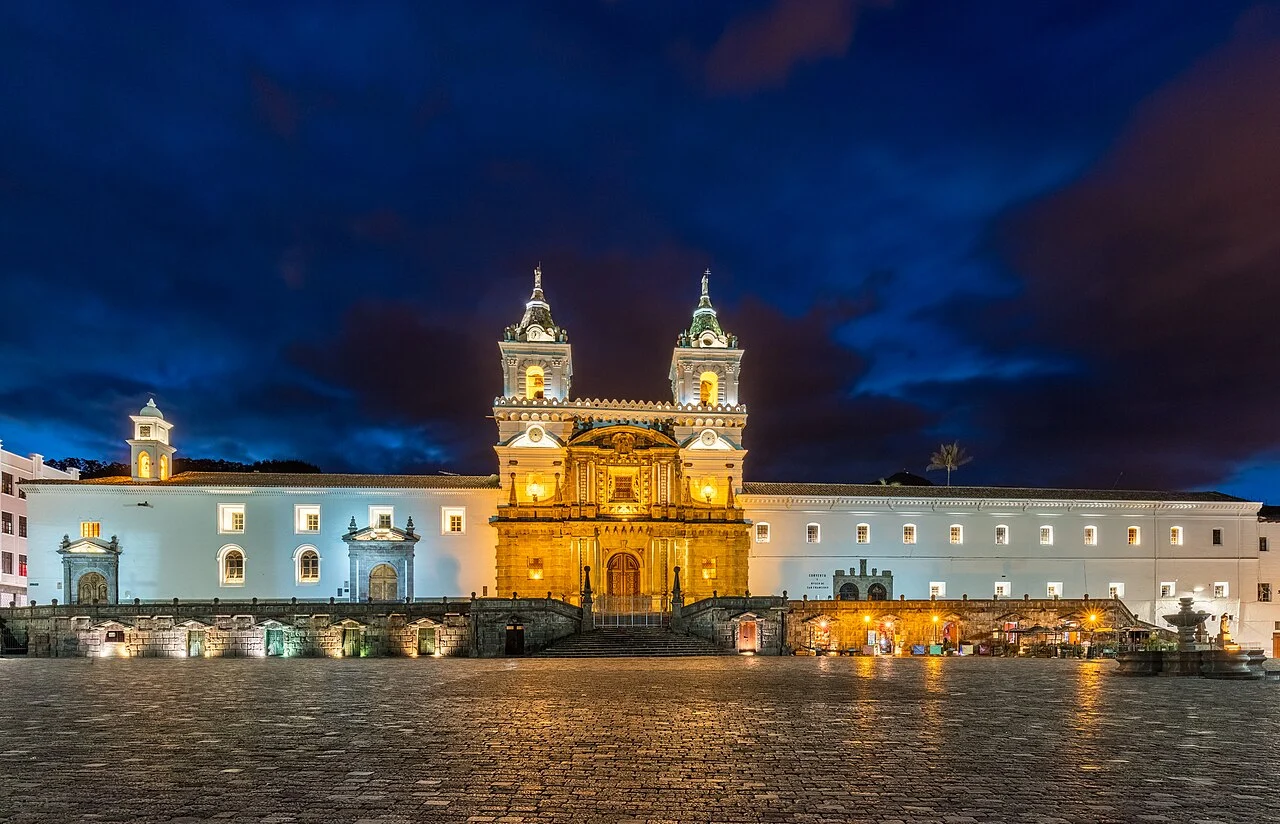
The photograph here shows San Francisco illuminated from outside. It is an architectural reference, not a guarantee of the lighting you will find or evidence that night tours will be available. If you want to compare the exterior with an interior visit, leave enough time to consult the complex’s information. Do not arrive at the final admission opportunity expecting to organise a lengthy tour: the available type of visit should shape the day rather than surprise you at its end.
La Compañía de Jesús: carved stone and the art of Quito
La Compañía changes the scale of your attention. After San Francisco’s open square, it is worth studying the worked surface of the façade and, if you enter, the relationship between painting, sculpture and architecture. The municipal museum directory dates construction from 1605 to 1765 and presents the church as an expression of Baroque art. That helps place it within a long artistic process, rather than imagining a building completed in a single moment.
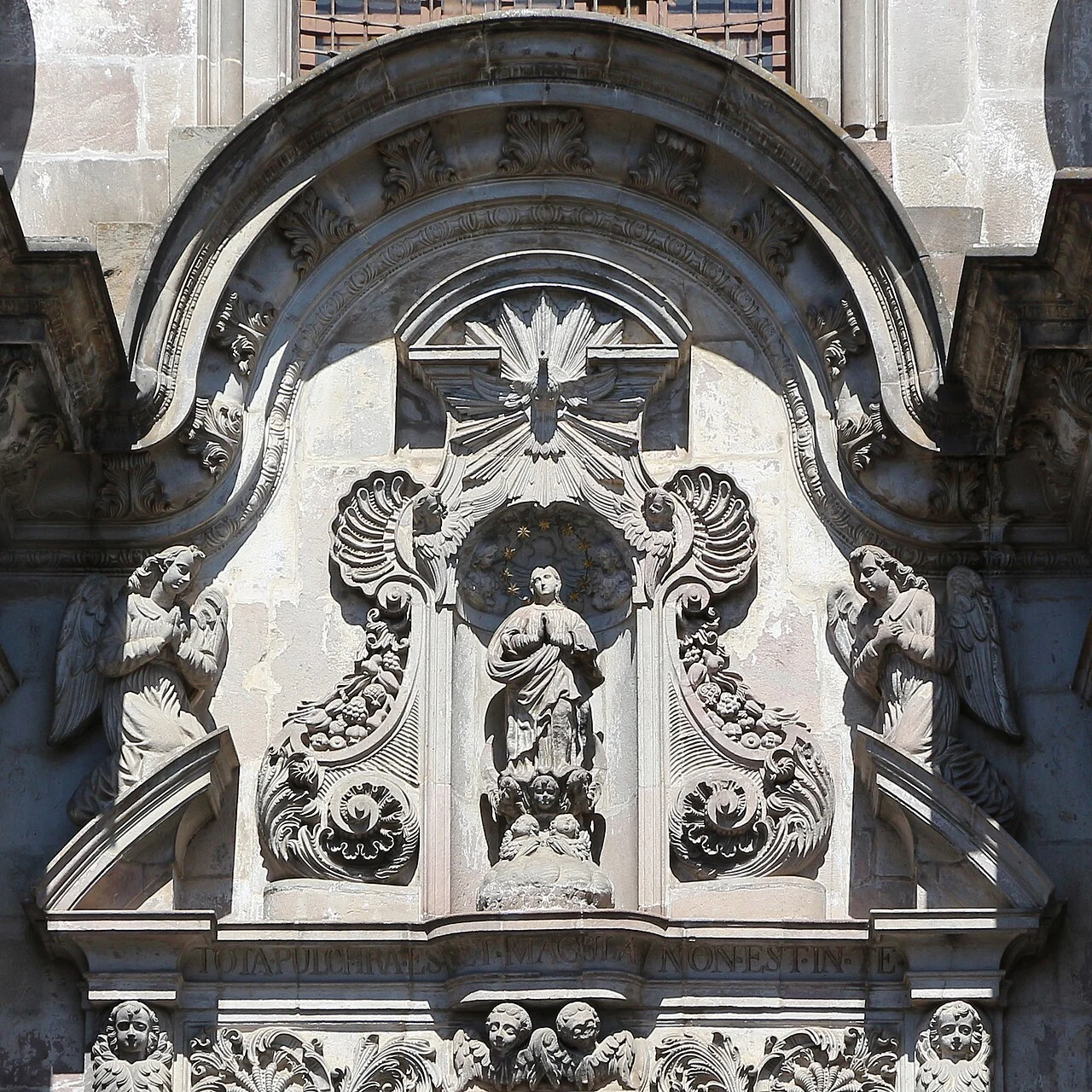
Quito Turismo highlights the carved stone outside and the gilded decoration within. Try not to reduce the experience to checking how much gold appears in a picture. Notice how the lines are arranged, where the light changes and how an individual object relates to the surrounding space. This section’s own photograph is a façade detail: it is intended for examining carving closely, not as a substitute for a complete building view or a photograph of the interior.
Before buying admission, distinguish the principal visit from any advertised extra route. The municipal directory mentions spaces such as crypts and domes, but that does not establish that all are available on every date or included in one ticket. Ask what the chosen visit actually covers, whether someone accompanies it, how long it takes and what photography rules apply. Choose something you can use comfortably rather than paying for a route whose demands or content you have not understood.
Make this a main block of one day, with flexible time on either side. It is difficult to pay attention to architectural detail while constantly watching the next booking. If an interior visit conflicts with worship or cannot take place, keep the exterior walk and change the itinerary order. We do not promise uninterrupted opening or publish an admission price that could become outdated between writing the guide and your journey. The operator remains the place to confirm those details.

Basilica of the National Vow: a different architectural perspective
The Basilica of the National Vow contrasts clearly with the Baroque character of the other two complexes. Quito Turismo describes a neo-Gothic building above the historic centre, recognised for its towers and gargoyles inspired by Ecuadorian animals. Start by looking for that different architectural language. Here your eye can follow the height of the towers and the lines across the façades, instead of searching for exactly the same decorative treatment you noticed at La Compañía.
A building associated with views does not require everyone to climb it in order to enjoy a visit. Decide whether your group wants the exterior, a particular interior or an option involving height. Before purchasing a climb, establish what the route entails and which conditions apply. Mobility needs, discomfort with heights or simple tiredness can change the sensible choice. This guide does not certify identical access to every level or an equivalent alternative for every visitor.
Quito Turismo’s transport information connects La Alameda station with the approach to the Basilica and other places in that sector. It is a different orientation option from San Francisco: the two names do not identify interchangeable entrances to the same spot. Compare the route from your accommodation and avoid travelling first to the wrong end simply because you recognise one station name. Check the transport operator’s current information before setting out and plan the return as well.
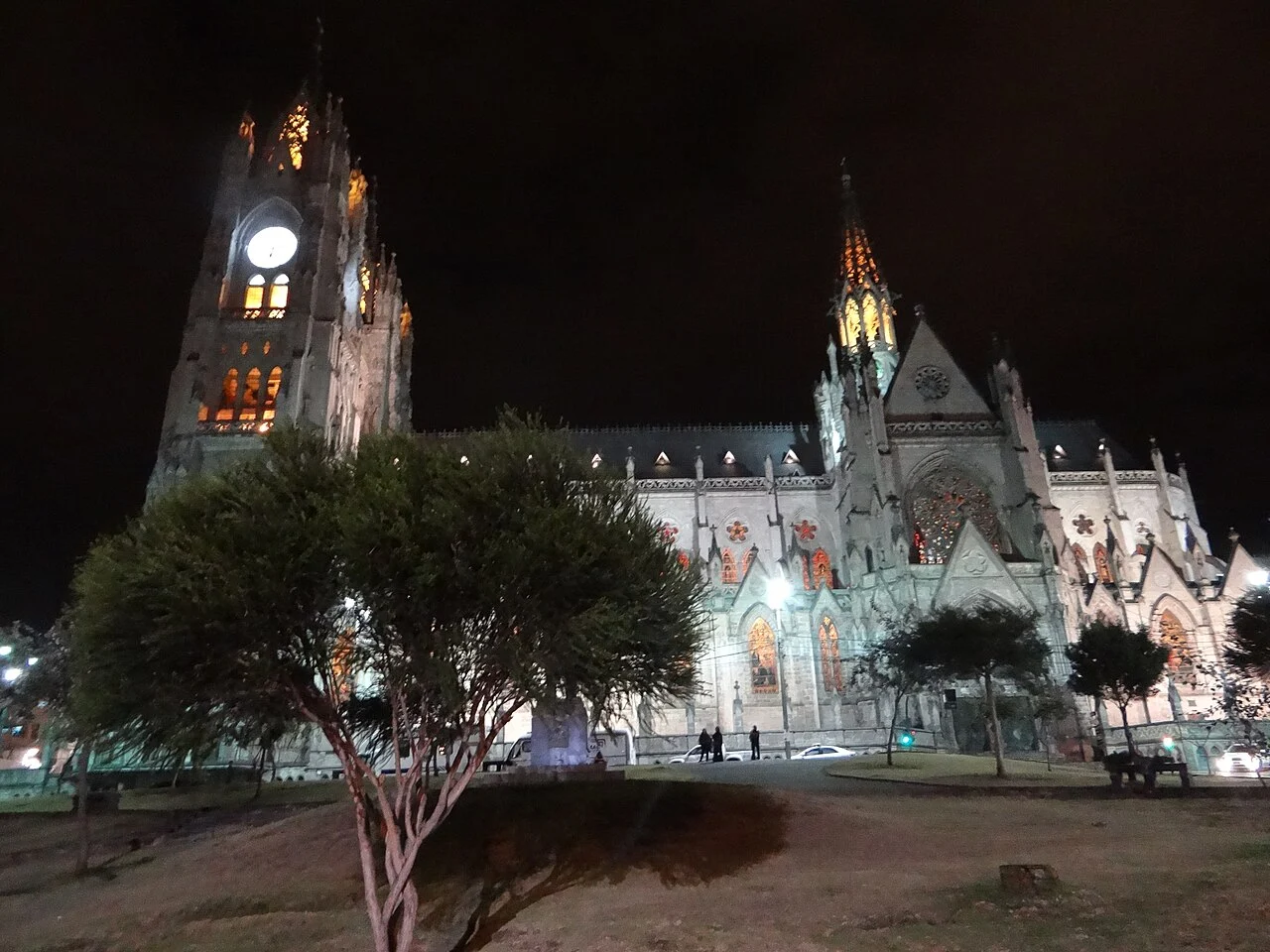
The photograph in this section shows the Basilica’s exterior at night. As with San Francisco, that does not mean the towers can be visited after dark. If you want an exterior photography session, treat it separately from the booking for accessible interior spaces. Doing so avoids confusing an illuminated landmark with an operating visitor service, or rushing around in an attempt to fit two incompatible activities into the same time slot. The exterior itself can still be your chosen experience.

Distribute the visits instead of chaining reservations
For the first day, group San Francisco and La Compañía with a break between them. The second day can focus on the Basilica and on returning calmly to anything unfinished. This arrangement lets you change the order if an interior visit requires a different time. Avoid committing simultaneously to several tickets that are difficult to move. Confirm the experience you care about most, then organise the rest of the day around that commitment.
Save directions and admission conditions before leaving, but check the operator’s notices again when you approach. A short route on a map may still include slopes and demanding surfaces. Carry what you need for the chosen section, distribute breaks and agree where to meet if the group separates. Your time at each complex should reflect your interests and energy rather than an obligation to finish the entire list. These are three places to understand, not three boxes that must be ticked.
A route to get you started
- Day one, first part: arrive around San Francisco, get your bearings in the square and establish which interior visit you want. Use the opening part of the trip to understand the area rather than immediately adding another booking.
- Day one, second part: continue towards La Compañía and give its architecture the principal sightseeing block. Leave space for a meal and for returning to your accommodation without relying on the final transport service.
- Day two: approach the Basilica from the sector that best fits your base. Select exterior or interior spaces according to the conditions you have confirmed. A climb is an option, rather than a requirement for completing your experience of Quito.
Good to know
Can I fit all three places into a single day?
You can consider it if admission arrangements and your pace align, but two days distribute interior visits and walking more comfortably. Avoid compressing the programme merely because the names belong to the same historic area.
Which metro station is useful for the historic centre?
Quito Turismo identifies San Francisco for the sector containing San Francisco and La Compañía. Its transport guide also explains La Alameda as an approach to the Basilica; compare both with the location of your accommodation.
Are admission prices and opening times guaranteed?
No. Each complex sets its own conditions and may separate admission or services. Consult the official sources before booking, and distinguish tourist access from religious activity rather than assuming that one implies the other.
The strength of this route is its comparison: San Francisco’s square and complex, La Compañía’s Baroque detail and the Basilica’s neo-Gothic profile offer different ways to understand Quito. Clear admission arrangements and two flexible days let you concentrate on those differences instead of turning a walk through the historic centre into a race between reservations.