

Granada is difficult to plan from map distances alone. The Alhambra and Albaicín occupy neighbouring hills separated by the Darro, and that terrain matters as much as the monument list. For a first two-day stay, this guide groups the Alhambra and Generalife on one day and gives the Albaicín its own day. You can then understand the relationship between palace city, gardens and neighbourhood without constantly climbing up and down.
These are three connected visits, with an important distinction: the Generalife and Nasrid Palaces belong to the same broad monumental ensemble but offer different experiences. Before buying admission, check the exact areas included. Palace availability should shape the schedule; the neighbourhood walk provides more flexibility.
Before you pack
- Suggested time
- Two days, adjusted to your pace
- Places in this route
- Three selected places
- Destination
- Granada
Nasrid Palaces: book time to look closely
The Alhambra was a palace city and preserves an exceptional concentration of Nasrid architecture and decoration. UNESCO highlights plaster, wood, ceramics and Arabic inscriptions, alongside the integration of water and landscape. Within the palaces, those qualities become visible in courtyards and rooms. You do not need to translate every inscription to appreciate shifting light, proportions and the changing sense of enclosure as you move through the complex.
Choose admission that explicitly names the Nasrid Palaces if they are your priority. Products carrying the Alhambra name may cover different routes; do not infer their inclusions from a promotional photograph. Consult the sales channel linked by the monument authority, required documents and the time printed on your confirmation. Save the booking and prepare the identification requested rather than assuming every issue can be resolved at the entrance.
Allow enough time to orient yourself within the wider complex before any assigned admission. Arriving at the grounds is not the same as standing at the entrance to your reserved space. Study the official map and decide what fits before and after it. Last-minute improvisation can add unnecessary walking and anxiety, especially if your group moves at different speeds or needs breaks.
Inside, prioritise observation over collecting pictures. Stop where you will not obstruct the route and follow conservation instructions; delicate decoration should not be touched to establish its material. With children, comparing reflections, shapes and shadows may be more engaging than a long sequence of historical dates. These are archive documentary photographs, not evidence that a room will be empty or free of conservation work when you arrive.
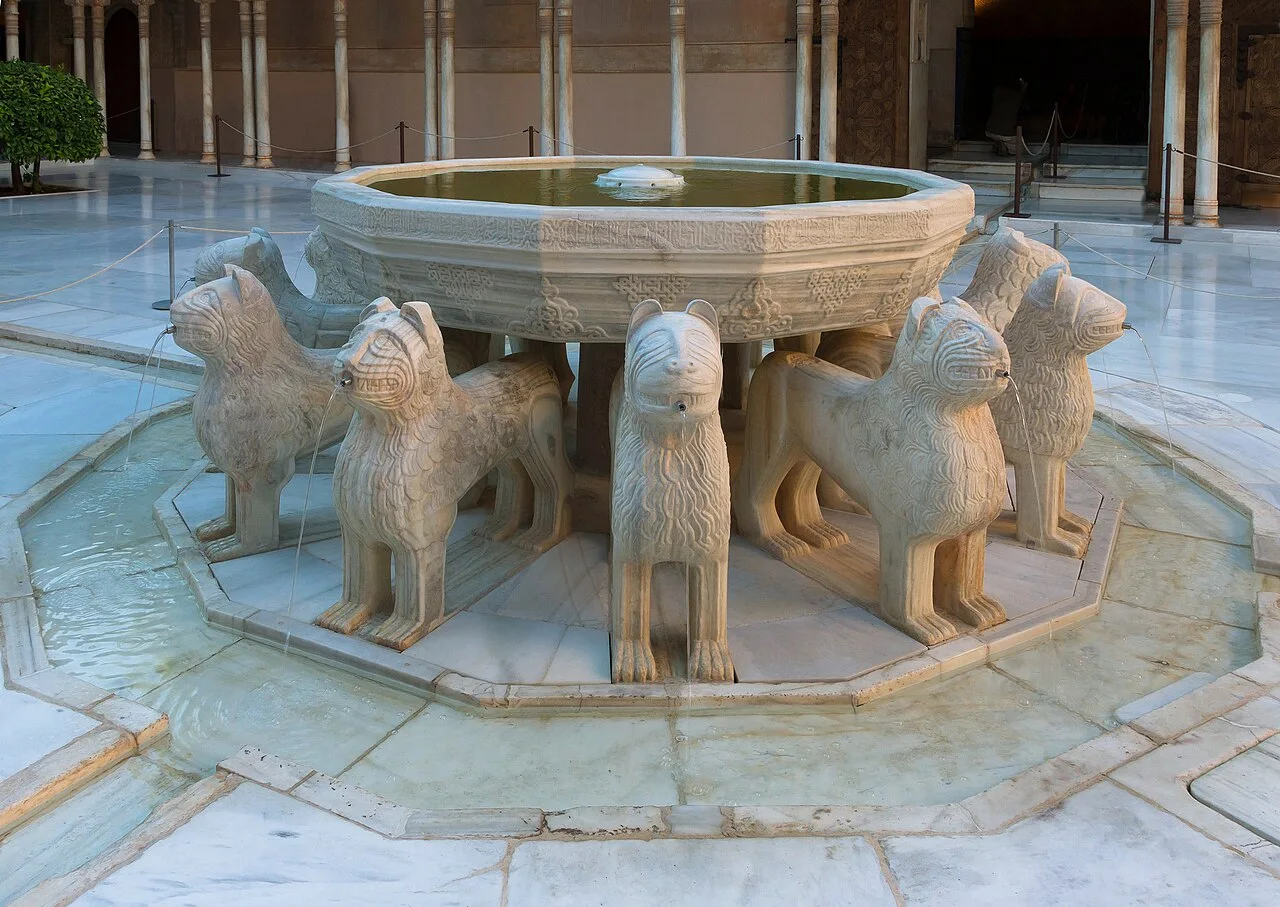
Generalife: water and gardens as architecture
The Generalife lies east of the Alhambra. UNESCO describes it as a rural residence of the emirs, with gardens and a water-management system closely connected to the surrounding landscape. It deserves more than a quick passage between photographs. Paths, outlooks and planting explain another way of inhabiting and enjoying this setting, and its relationship with the palace city becomes clearer when the two are visited together.
Give the Generalife a defined block within your Alhambra day. If your ticket combines the visits, arrange the sequence around any compulsory palace appointment, not the other way round. Use the official map to estimate connections. A distance that looks small on screen can feel considerable after several hours of walking, stopping and standing, particularly with children or companions who need frequent rests.
Treating water as a design element helps make the visit more rewarding. Notice how channels, vegetation and architecture align, how sounds change and which views are framed by each space. Identifying every plant is unnecessary. Equally, do not expect exactly the flowering display seen in photographs: seasons, maintenance and weather all influence the appearance of a living garden.
Wear comfortable walking shoes and prepare for the actual forecast. A garden setting does not guarantee continuous shade throughout the route. If you need to avoid steps or particular gradients, ask the monument about the adapted itinerary you intend to follow. Accessibility measures in one section do not make every path equivalent. Planning a pause is usually better than abandoning the final part through exhaustion.
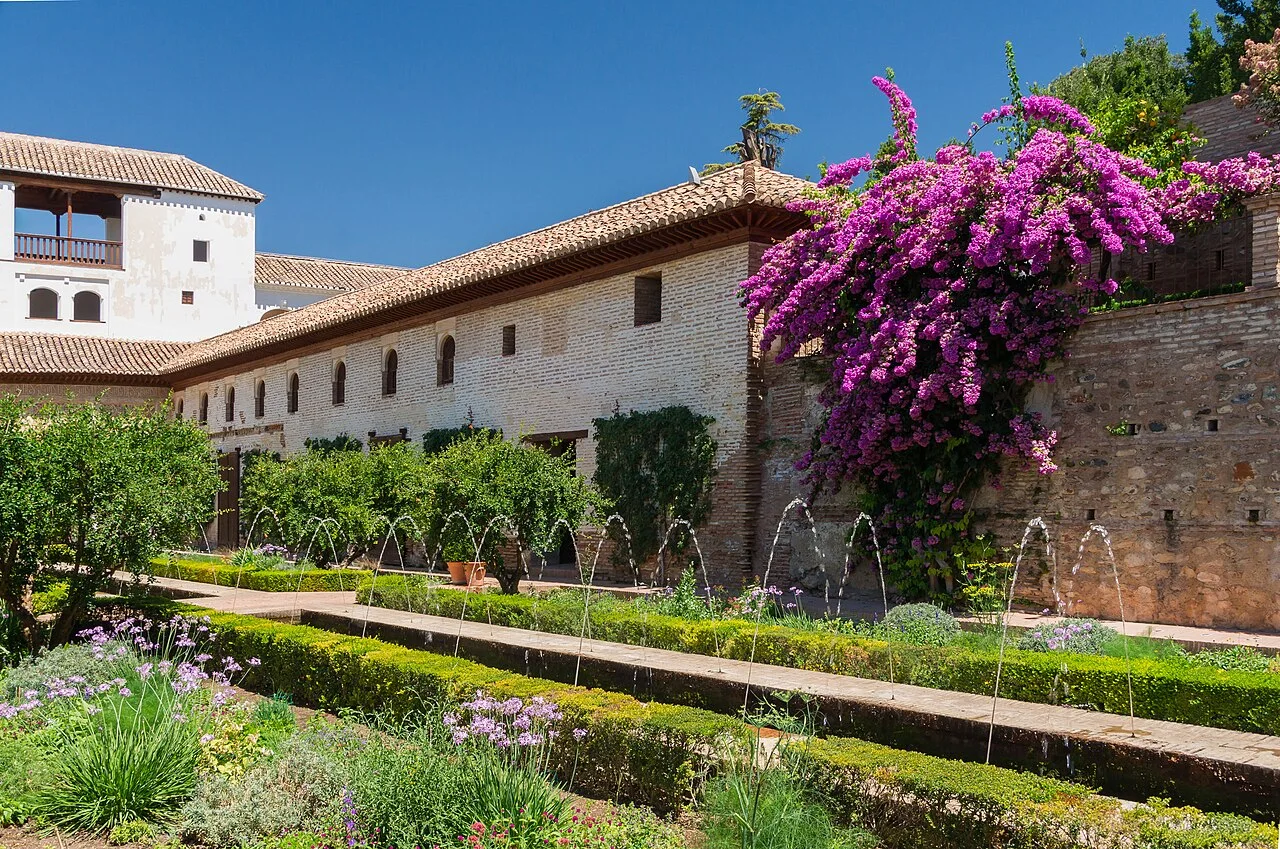

Albaicín: see Granada from the opposite hill
The Albaicín is a residential neighbourhood, not a viewing platform constructed for the Alhambra. Its pattern of narrow streets and small squares forms part of the heritage recognised by UNESCO. Buildings rooted in Hispano-Muslim traditions coexist with later contributions. The walk becomes more interesting when you notice everyday urban details: changing street widths, doors, slopes and the relationship between houses, rather than searching only for a panoramic photograph.
Plan a short route that can be extended, beginning at an access point comfortable for your group. Granada tourism’s downloadable map can help establish a starting point and an exit without repeating every climb. Spain’s tourism information describes city buses and minibuses serving uphill areas. Check current routes and frequencies; enjoying the neighbourhood does not require proving how far you can walk.
Explore in daylight at a pace that allows you to navigate and respect the people living there. An open door is not permission to enter a private courtyard, and interiors should not be photographed without consent. Leave room in narrow passages and keep noise down. If one spot is crowded, continue or return later rather than blocking it until you can manufacture a picture without other visitors.
Connect the two days by looking towards the Alhambra hill from public spaces with an open view. After visiting the complex, the landscape gains recognisable reference points. Instead of adding a lengthy excursion that afternoon, leave time to eat, rest and explore another small part of the neighbourhood if you still feel like it. That flexibility is a strong reason to stay rather than treat Granada as a brief stop between other cities.
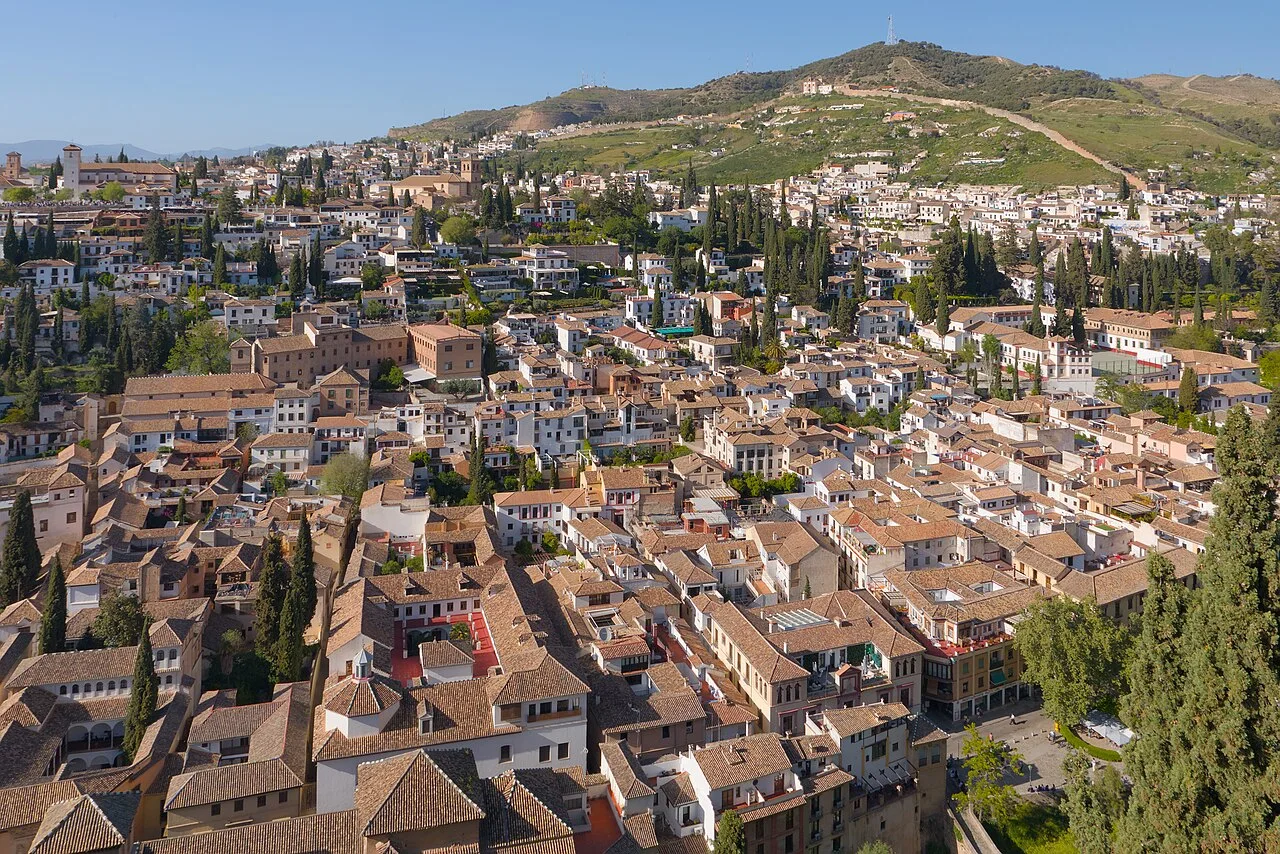

Manage the hills and choose a practical base
For this itinerary, the actual approach to your accommodation matters more than a spectacular photograph of its location. Check slopes, steps, arrival with luggage and transport possibilities. Travellers with reduced mobility should obtain specific information from both the accommodation and the monument before booking. Establish where a vehicle can leave you: the drop-off point and front door may not be identical.
Both days involve substantial outdoor time, including the monument day. Match clothing and timing to the forecast and reserve a proper break between larger blocks. Prices and admission slots are not fixed here because they depend on ticket type and may change. Compare total cost and inclusions before buying a pass; a longer list of attractions is not automatically a better solution for two days.
A route to get you started
- Day 1: arrange the Alhambra around the admission you secured, prioritising the Nasrid Palaces appointment when one is printed on your ticket. Distribute the remaining time between gardens and the Generalife, including a genuine break. Avoid an early dinner reservation far away that forces you to rush the final section.
- Day 2: enter the Albaicín by the approach best suited to your energy. Walk in short sections, observe its relationship with the Alhambra hill and leave the afternoon adaptable. If travelling onwards, preserve enough time to descend, collect luggage and reach the station without relying on perfect connections.
Good to know
Does every Alhambra ticket include the Nasrid Palaces?
Do not assume so. Read the full ticket description and inclusions before paying. If the palaces are essential to your trip, confirm that they are explicitly included and note any assigned access time. Admission covering other parts of the complex is not an equivalent substitute.
Does the Generalife require a separate day?
Not necessarily. This itinerary combines it with the Alhambra when the ticket and admission arrangements permit. Give it a dedicated block and allow for walking between areas. A separate day may suit visitors who prefer a particularly gentle pace and have more time available.
Can I explore the Albaicín with fewer climbs?
You can reduce effort by using transport for part of the approach and selecting a shorter walk, but that will not remove every gradient. Check specific routes and accessibility, especially with a wheelchair or pushchair, instead of assuming any line drawn on a map is suitable.
Are two days enough for a first visit to Granada?
They allow a sensible introduction to these three connected experiences, but do not cover every monument in Granada. Add time if you want further interiors or excursions. Cutting the palace visit short merely to fit a much longer checklist rarely improves a first stay.
Granada becomes easier when its hills and available admission shape the plan. A day for the Alhambra ensemble and another for the Albaicín connect architecture, water and urban life, leaving enough space for the details that tend to disappear when every movement is rushed.