

Adelaide offers a varied first visit without requiring a different excursion outside the city every day. This route brings together a fresh-produce market, a botanic garden and an urban beach: Adelaide Central Market, Adelaide Botanic Garden and Glenelg. Three days let each experience have its own pace, with time for transport, rather than making the coast a hurried addition after an already full city day.
The order matters more than the number of stops. The market does not follow the same calendar as the garden, and reaching Glenelg means checking a particular journey instead of assuming any tram will do. We therefore suggest interchangeable blocks rather than three rigid dates. Use the official sources to adapt them to your stay and confirm variable services before booking activities or depending on a particular connection. The aim is a workable visit, not a prescribed sequence.
Before you pack
- Route
- 3 days · three places
- Country
- Australia
- Focus
- A first visit at your own pace
Adelaide Central Market: choose a suitable trading day first
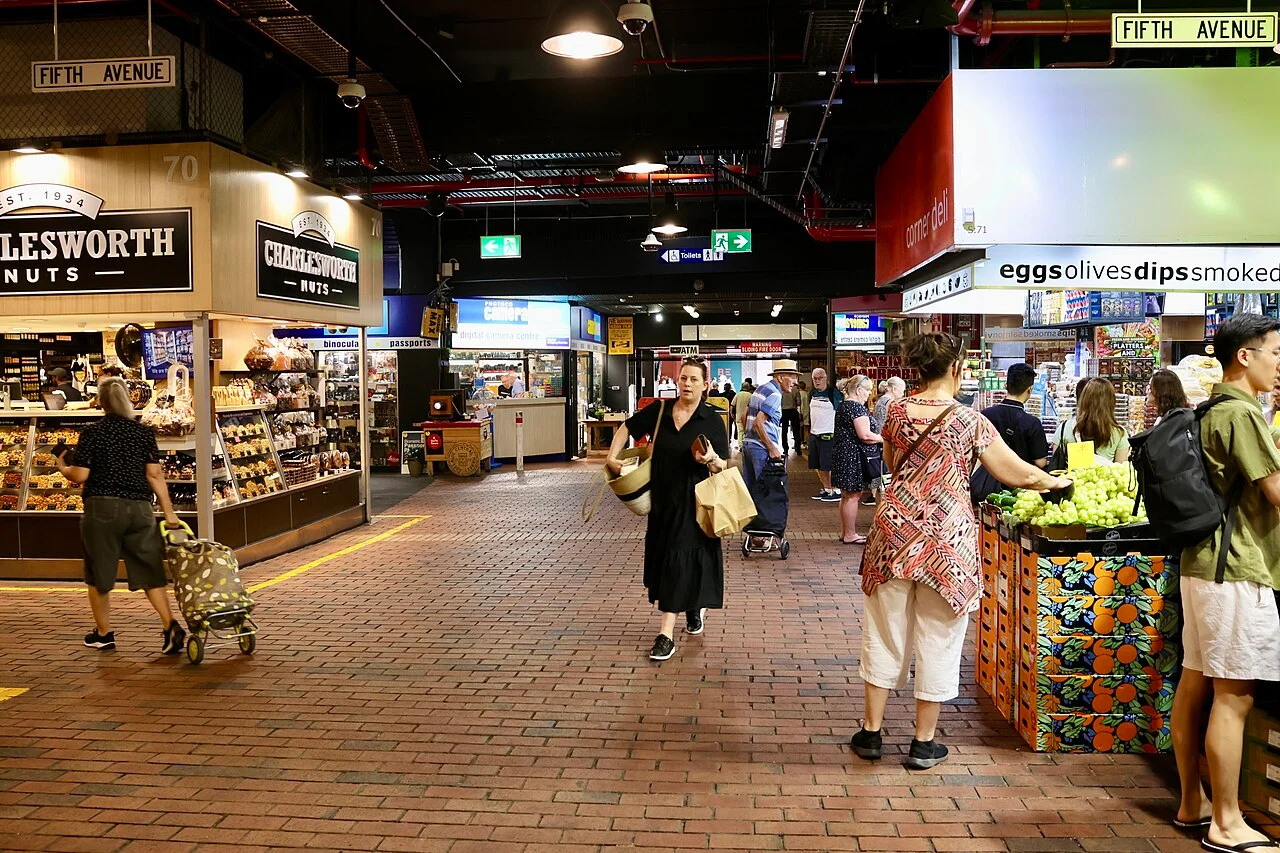
Adelaide Central Market describes itself as an undercover fresh-produce market in the city centre. Its own history places the establishment of the market in 1869, but visiting is not simply about looking at a date or a façade: this remains a place where people shop and work. Walk through the aisles to notice produce, presentation and the relationship between stalls, without making other people’s everyday movements difficult while you take photographs.
The first practical decision is to check the calendar. The operator’s regular published schedule lists Monday and Sunday as closed, while Wednesday is marked as optional trading for a range of traders. That distinction matters if a particular mix of stalls interests you. Holiday arrangements can introduce exceptions, so do not turn a weekly pattern into a guarantee for every date. Check the official table for your day before organising an entire morning around the market.
For an initial circuit, look before deciding what to buy. You might select something to eat during a break, but carrying produce that is difficult to keep appropriately makes little sense if the rest of your day will be away from your accommodation. Ask about ingredients, quantities and prices when necessary, and purchase according to your preferences. This guide does not recommend an individual stall or claim personal tasting experiences: it helps organise a visit to the real market rather than inventing a review.
The section’s photograph shows the interior in 2025, helping you recognise its aisles and stalls. Businesses can change, so an image does not guarantee that every pictured trader is present today. If a specific purchase is essential to your visit, confirm it with the market. For somebody with limited time, a purposeful circuit and a proper pause may be more useful than attempting to cover every aisle at an identical pace. Let the visit suit the reason you came.

Adelaide Botanic Garden: choose a route through living collections
Adelaide Botanic Garden occupies the eastern end of the city centre. Its official Plan your visit page states that general admission is free and the garden opens throughout the year, with hours changing according to season and available daylight. That makes it a different kind of experience from the market, while still requiring you to check the current arrangements for individual buildings, exhibitions or special activities. Do not assume that everything advertised within the grounds belongs to exactly the same admission category.
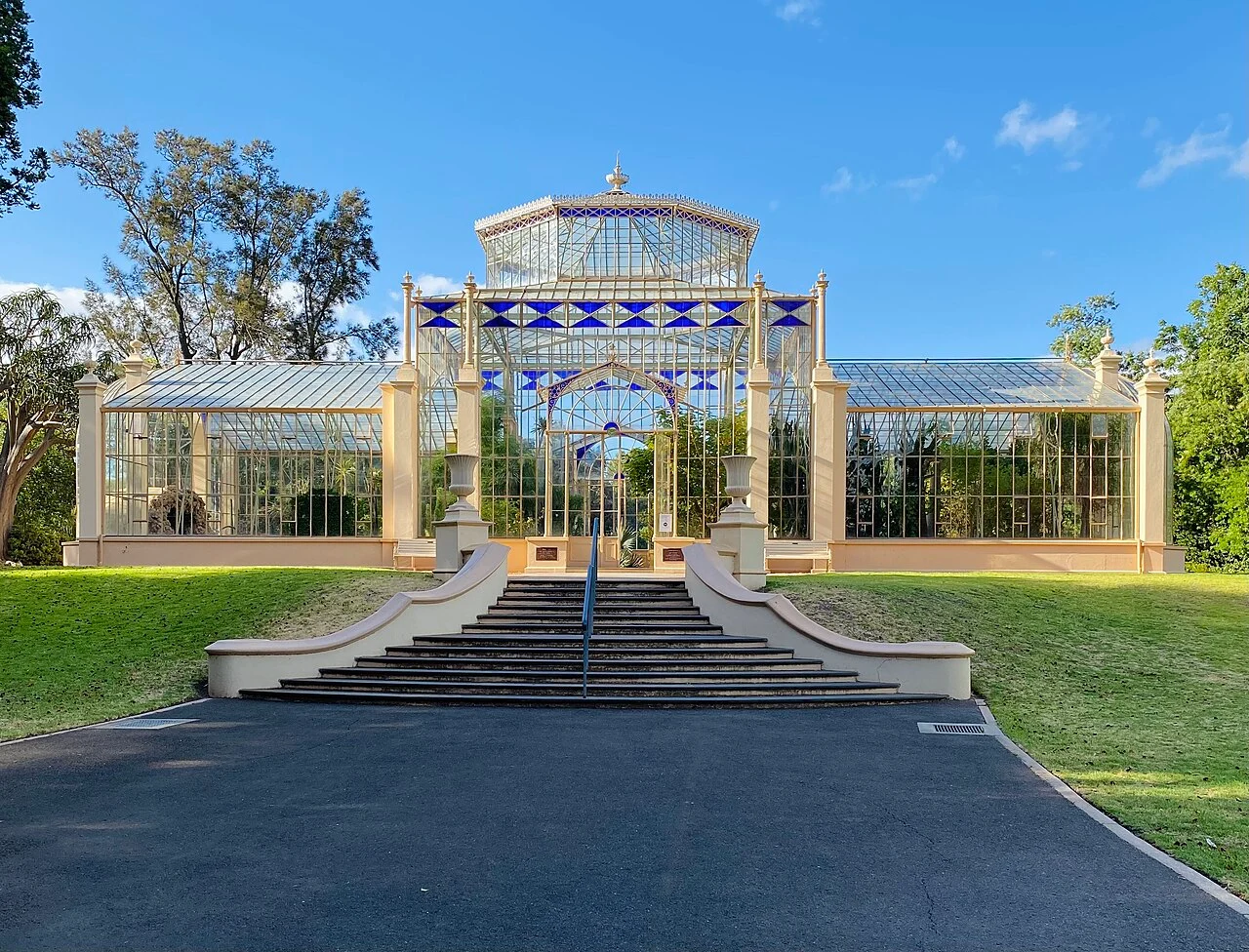
Official information explains that botanic gardens are not simply public parks: they hold plant collections with conservation value. On a first visit, choose a route that allows you to look at plants and read some labels instead of measuring success by distance covered. This section’s own photograph shows the exterior of the Palm House. Its architecture is a visual reference within the garden, not a certificate that the interior is available on every day or included in a particular experience.
The visitor guide lists several entrances and places the Main Gate on North Terrace, near a stop called Botanic Gardens. Save the gate where you enter and work out how to return to the place you need afterwards. The name of a large garden does not by itself identify a convenient entrance from every direction. If your group needs particular access arrangements, consult the map and suitable services before choosing a circuit that finishes at a different gate.
The operator asks visitors not to ride bicycles or scooters inside, while explaining how to arrive with them and handle them according to its instructions. On foot, you can alternate a collection, a pause and another area without trying to see everything. Respect the edges of planted beds and do not collect plants as personal souvenirs. Observing a conservation garden works best when a wish to approach does not alter the living collections other people are caring for.
Glenelg: give the coast a separate block of time
Glenelg adds a different landscape from the centre: beach, waterfront and jetty, with the Moseley Square area as a useful reference. The South Australian Tourism Commission presents it as a beach destination within Adelaide. Set aside a block that includes getting there and returning, rather than a few minutes for a photograph. An urban outing still needs transport planning from the actual location of your accommodation, especially when you want to continue somewhere else afterwards.
Adelaide Metro identifies the GLNELG route as the service between Glenelg and Royal Adelaide Hospital and publishes its stops. Consult the journey planner for your specific starting point. Do not assume every botanic-garden entrance offers a direct onward tram to Glenelg without changes, or that conditions within one central zone apply automatically to the whole journey. Confirm the route, appropriate ticket and day’s operation before leaving for the coast, rather than learning about a difference when boarding.
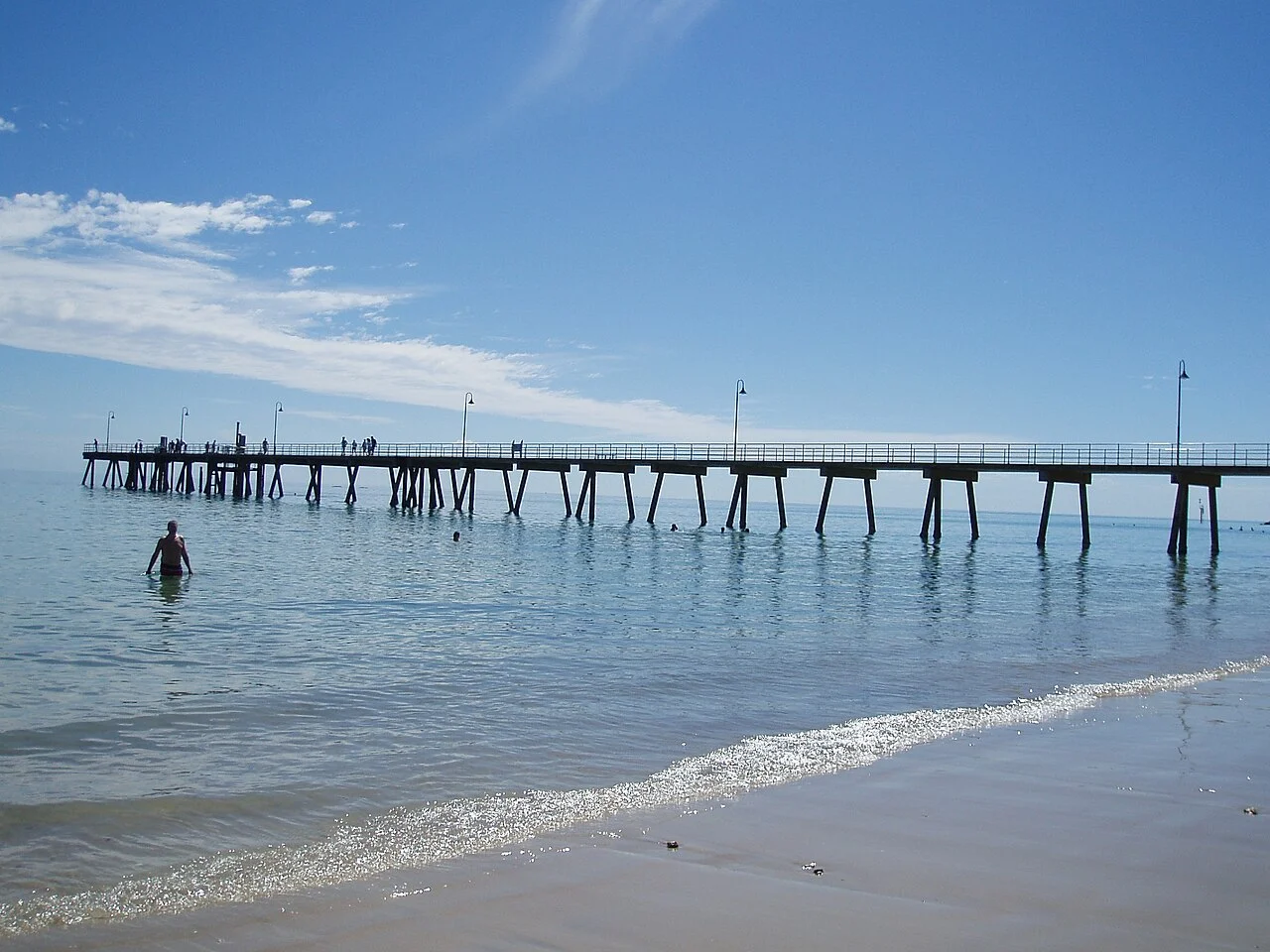
Once there, concentrate on the waterfront walk and the relationship between beach and jetty. This guide’s photograph was taken in 2009: it is a genuine archive image identifying the place, not proof that every element retains the same present condition or access. Adapt to any restricted area and follow local notices. A picture of the jetty should not become a promise of a specific activity without checking the conditions that actually apply during your visit.
Swimming is a different decision from visiting a beach. Check sea conditions and local guidance, rather than treating a photograph’s water colour as a safety assessment. Visitors who do not want to enter the water can still enjoy the coastline. Plan the return before deciding to extend the outing. Watching the light change may be attractive, but an unhurried break should not end up depending on a transport connection you never checked.

Adapt the three blocks to the dates of your stay
Place the market first on a day when suitable trading is confirmed. If you arrive when it is closed, start with the garden and retain the market block for another day. There is no reason to force the exact order used by a list: what matters is using real conditions well. For the garden, check seasonal hours and notices for particular precincts. For Glenelg, review transport and leave sufficient time for the return journey.
Keep a clear accommodation reference and save the journeys you will actually use. The garden’s visitor page distinguishes free tram travel in the city centre from the wider transport information to be checked with Adelaide Metro; do not extend a local condition across the whole network. Likewise, free general garden admission does not make every advertised experience identical. Separating these decisions helps avoid buying the wrong service or improvising a journey when the group is already tired.
A route to get you started
- City and market block: choose a suitable trading day, explore Central Market and allow time for a break. If a purchase needs particular storage, arrange a return to your base before continuing with a different activity.
- Botanic block: enter through a gate you can identify and choose a circuit that interests you. Allow time for the collections and their context without assuming that every internal building is included or open.
- Coastal block: establish the route to Glenelg, allow time for a waterfront walk and decide on the return with a margin. Exchange this with either of the other blocks when calendar or conditions make that more sensible.
Good to know
Does Central Market open every day?
No. The operator’s regular calendar lists Monday and Sunday as closed and Wednesday as optional trading for a range of traders. Check the precise date because holiday exceptions can change the usual weekly pattern.
Is general admission to the botanic garden free?
The official page states that it is when consulted for this guide. Check exhibitions, buildings and special activities separately, and confirm the opening hours relevant to the season of your visit.
Can I assume the whole journey to Glenelg is free?
No. Check the conditions of the actual journey with Adelaide Metro. A travel rule within the city centre should not automatically be extended to an outing to the coast or to every service in the network.
Do I have to swim or walk the entire jetty?
No. Glenelg can be a coastal walk adjusted to current notices and conditions. The archive photograph does not guarantee present access or suitability for a particular activity on the day you travel.
The value of these three days lies in the contrast. Central Market shows everyday commerce, the botanic garden invites attention to living collections, and Glenelg opens the view towards the coast. With trading days and transport clarified, you can create a varied Adelaide stay without depending on unnecessary bookings or a rigid checklist that ignores how the places operate.