
Dunedin, also known as Ōtepoti, combines railway heritage, social history and gardens without requiring a different excursion every day. For a first stay, this guide selects three places: the railway station, Toitū Otago Settlers Museum and Dunedin Botanic Garden. Two days leave a substantial museum block and another for exploring plant collections, with time to arrive, eat and rest.
The station and Toitū belong to the heritage area near the centre, while the garden is in North Dunedin and needs its own journey. This route stays within the city rather than automatically adding the Otago Peninsula or a rail excursion. Official sources were checked on November 4, 2026. Suggested durations are planning choices; current notices and arrangements should be checked again for the date you intend to visit.
Before you pack
- Route
- Two days · three places
- Country
- New Zealand
- Focus
- An unhurried first visit
Dunedin Railway Station: explore the building before choosing a train
The 1906 station retains an architectural presence that helps explain the historical importance of rail to the city. Start outside to understand the proportions of the building, its tower and the relationship with the approach. You do not need to buy a journey simply to appreciate a facade: seeing a heritage place and boarding a train are separate decisions with different practical requirements.
The city tourism website highlights Royal Doulton mosaics in the atrium, while Tohu Whenua describes locomotive motifs in the booking hall floor and a stained-glass window. When the interior is available to visitors, observe those details without obstructing staff or passengers. Heritage information presents the station as open for visits, but this guide does not establish current opening times for every room, exhibition or business within the complex.
The station now serves as a point of reference for tourist journeys and rail excursions. Do not arrive assuming it operates as a terminal with frequent departures to any city in New Zealand. If a journey interests you, check its operator, date, route, return arrangements and inclusions before building the day around it. An archive photograph of a train at a platform does not establish that a corresponding departure will run during your stay.
For this two-day programme, give architectural observation its own block and treat a rail excursion as an additional choice. Current city tourism information is more useful for present services than an older heritage listing: businesses mentioned across different sources should not all be assumed still to operate. The route below depends on seeing the station setting and nearby museum, rather than an unconfirmed interior attraction or train journey.

Toitū Otago Settlers Museum: discover the city through people
Toitū focuses on people and their stories, from Kāi Tahu and their ancestors to later arrivals. That perspective helps present Dunedin as a city shaped by different experiences and processes rather than simply a collection of old buildings. The museum's themed galleries and interpretation connect objects and personal accounts with changes in local life, offering context for the streets you explore outside.
Choose a pace that allows time to read and relate the material. The official visitor page describes interactive displays and encourages visitors to approach hosts with questions about galleries and programmes. There is no need to turn every display case into another photograph. A useful first visit can concentrate on the sections that matter most to your group, then leave a break to talk about them before continuing with a different city walk.
On November 4, 2026, the operator listed daily opening from 10am to 5pm, with closure on Christmas Day. General admission is free, while special exhibitions may carry charges. That does not automatically include parking, cafe purchases or a particular programme. If an exhibition is the reason for your visit, check its dates and admission conditions before choosing the day or assuming it belongs to the permanent galleries.
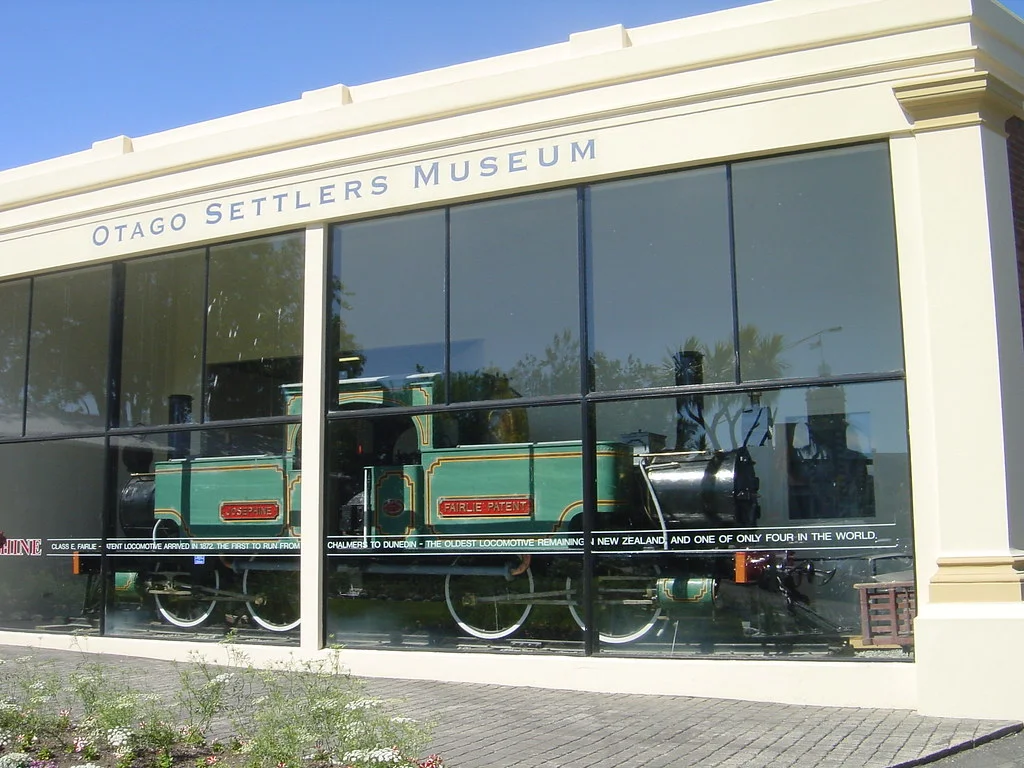
The museum states that galleries and facilities are wheelchair accessible and welcomes assistance dogs. Personal, non-commercial photography is allowed without flash or artificial lighting. Respect those conditions and any gallery instructions. This guide uses an archive photograph of the historic exterior of the complex; it does not present it as a picture of the current main entrance or reproduce a commercial photograph taken inside the exhibitions.
Dunedin Botanic Garden: choose between lower paths and slopes
The Botanic Garden occupies sloping land in North Dunedin. Official information describes New Zealand native plants, trees, rhododendrons and other collections. A visit works best when you choose an area of interest and a route appropriate for your group, rather than trying to complete every path on the map. Allow time to look at labels and understand how the plant collections are arranged.
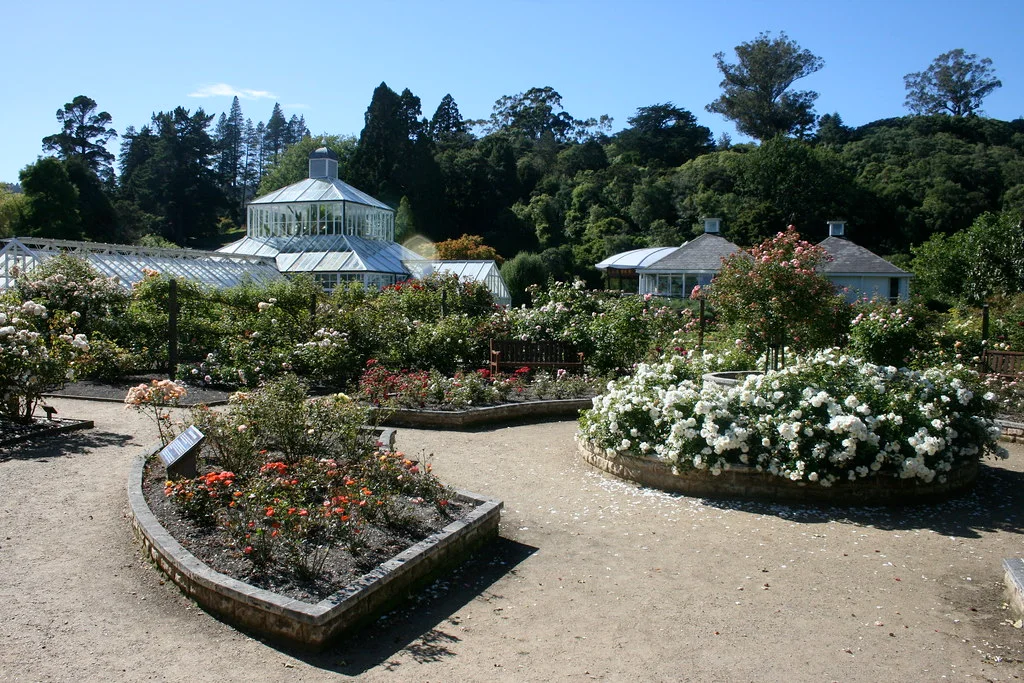
The lower section and Winter Garden Glasshouse provide a recognisable starting reference. The operator describes the Edwardian-style glasshouse and its tropical, desert and subtropical plants. Garden admission is free, but the spaces do not all share one timetable: the grounds open from dawn to dusk, while the information checked lists 10am–4pm for the glasshouse and Information Centre. Plan the building visit inside its own opening window.
The official map rates paths as easy, medium or hard. Those distinctions matter to visitors with limited mobility, families using pushchairs and anyone who prefers to avoid gradients. An urban garden should not be assumed entirely flat. Look at the chosen route and required facilities before setting out, and ask staff if you need help adapting the walk. A shorter lower-level circuit may better suit the group than treating an uphill collection as compulsory.
November is southern spring, but that does not guarantee a particular flowering display or the landscape shown in an archive image. Enjoy the collections for their botanical interest and the walk itself, without depending on a named species at peak bloom or a specific bird encounter. If you continue into higher areas, allow time to return and remember that individual buildings can close while the wider grounds remain open.
Plan the journeys and separate optional costs
The simplest combination gives the station and Toitū one day and the garden a substantial block on the other. The museum places itself in the heritage precinct between the historic station and Chinese Garden. That is a useful orientation reference, without implying every entrance lies immediately beside the next. Check the position of your accommodation and the actual point you want to reach before deciding on a route.
For North Dunedin, compare walking, local transport or another suitable option using current mobility information. This guide does not promise an unchecked bus route or service frequency. Arriving with enough energy to explore the garden may matter more than adding a long walk before you even reach it. Agree on the return when time is limited or the day's forecast requires an adjustment, rather than leaving the onward journey entirely open.
Separate accommodation, food, journeys and optional services in the budget. Official information lists free general admission to Toitū and the garden, while rail travel, special exhibitions and parking require their own checks. Keep room for breaks and a shorter version of the day. A useful introduction to Dunedin depends on understanding a few places, rather than accumulating every available experience during a two-day stay.
A route to get you started
- Day 1: explore the station exterior and, when visitor access is available, the atrium. Give Toitū the main block afterwards, allowing time for its stories and a meal break. If you choose a rail excursion, reorganise the day around its actual schedule rather than overlapping it with a full museum visit.
- Day 2: travel to the Botanic Garden and choose a circuit using the graded path map. If the Winter Garden Glasshouse interests you, arrive within its own hours before continuing through collections suitable for the group. Return with a comfortable margin and keep the rest of the day flexible for rest or the onward journey.
Good to know
Are two days enough for these three Dunedin places?
They allow a substantial museum block, another for the garden and time to see the station. They do not include a full rail excursion or Otago Peninsula trip. For those additions, confirm the time required and extend the stay or reduce other sightseeing.
Can I rely on frequent intercity trains from the station?
Do not assume that arrangement. The city tourism website presents tourist services and excursions with their own calendars. Choose a route and confirm operation, return arrangements and inclusions with the operator before treating it as a fixed connection in your trip.
How much does Toitū admission cost?
The official source checked lists free general admission, with possible charges for special exhibitions. It does not establish that parking, meals or every programme is included. Check the conditions for what you actually want to visit on your date.
Do the Botanic Garden and glasshouse share opening hours?
No. The grounds open from dawn to dusk, while the information checked lists 10am–4pm for the Winter Garden Glasshouse. Confirm current notices and distinguish the timetable of each building from access to the wider garden.
Is the whole route suitable for visitors with limited mobility?
Toitū states that its galleries and facilities are wheelchair accessible. The garden includes slopes and a map with different difficulty ratings. Check the actual route at each place instead of assigning one uniform level of accessibility to the entire city itinerary.
Dunedin brings architecture, the stories of its residents and plant collections into one stay. The station establishes a heritage reference, Toitū develops the social context and the garden leaves room for walking. With clear journeys and optional products kept separate, two days provide a varied introduction without relying on activities that have not been verified.
Sources consulted
- Dunedin Railway Station | Tohu Whenua —
- Dunedin Railway Station - Ōtepoti | Dunedin New Zealand official website —
- Plan your Visit | Toitū Otago Settlers Museum Official Website —
- About the Dunedin Botanic Garden | Dunedin Botanic Garden Official Website —
- Collections | Dunedin Botanic Garden Official Website —
- Dunedin Botanic Garden - Ōtepoti | Dunedin New Zealand official website —