
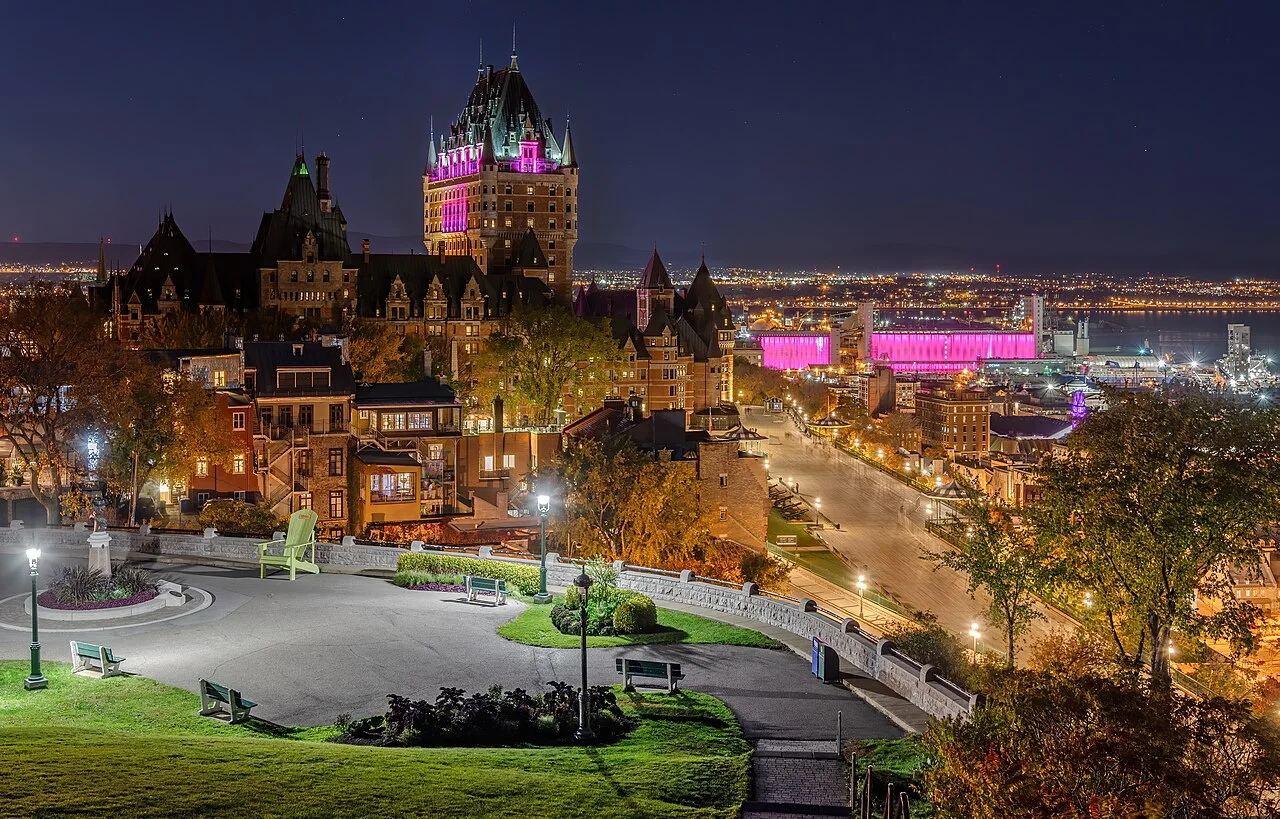

Québec City becomes more interesting when you look beyond the familiar photograph of Château Frontenac. The St Lawrence River, the change in elevation between the upper and lower town, and the old defensive walls explain how its urban landscape fits together. Walking helps reveal these relationships, but it pays to plan the climbs and choose places to rest. This guide brings together five places or nearby groups of sights, including a separate outing to Montmorency Falls if you have another day.
The selection combines history, public spaces and nature without assuming that every attraction operates throughout the year. Winter changes the experience of walking outdoors, while guided activities and managed historic sites have their own calendars. Use the official sources to adapt the route to your dates. Choose fewer stops if you want substantial museum visits, need a gentler pace or prefer spending longer in a neighbourhood rather than collecting views.
Before you pack
- Suggested stay
- Two or three days
- Route
- Historic centre plus a regional outing
- Watch for
- Slopes and seasonal services
1. Dufferin Terrace and Château Frontenac
Dufferin Terrace provides a useful first reading of the landscape: Château Frontenac stands beside the promenade, while the St Lawrence opens out below. Walk a little before choosing your photograph of the hotel. Different points reveal the relationship between the building, the escarpment and the river. The tourism authority describes the château as a working hotel that can also be experienced through organised visits. Looking at the exterior from public space and joining an interior tour are separate plans, with separate conditions to check.
Beneath the terrace are the remains of the Saint-Louis forts and châteaux, once the seat of power of French and British governors. Parks Canada explains that history and manages interpretive experiences, but the existence of an archaeological site does not mean it is permanently accessible. If the underground visit is unavailable, the terrace still works as a viewpoint. Avoid scheduling a tight connection immediately afterwards: wind, stops to look at the river and mobility needs can all change how long you spend here.
2. Place Royale and Petit-Champlain
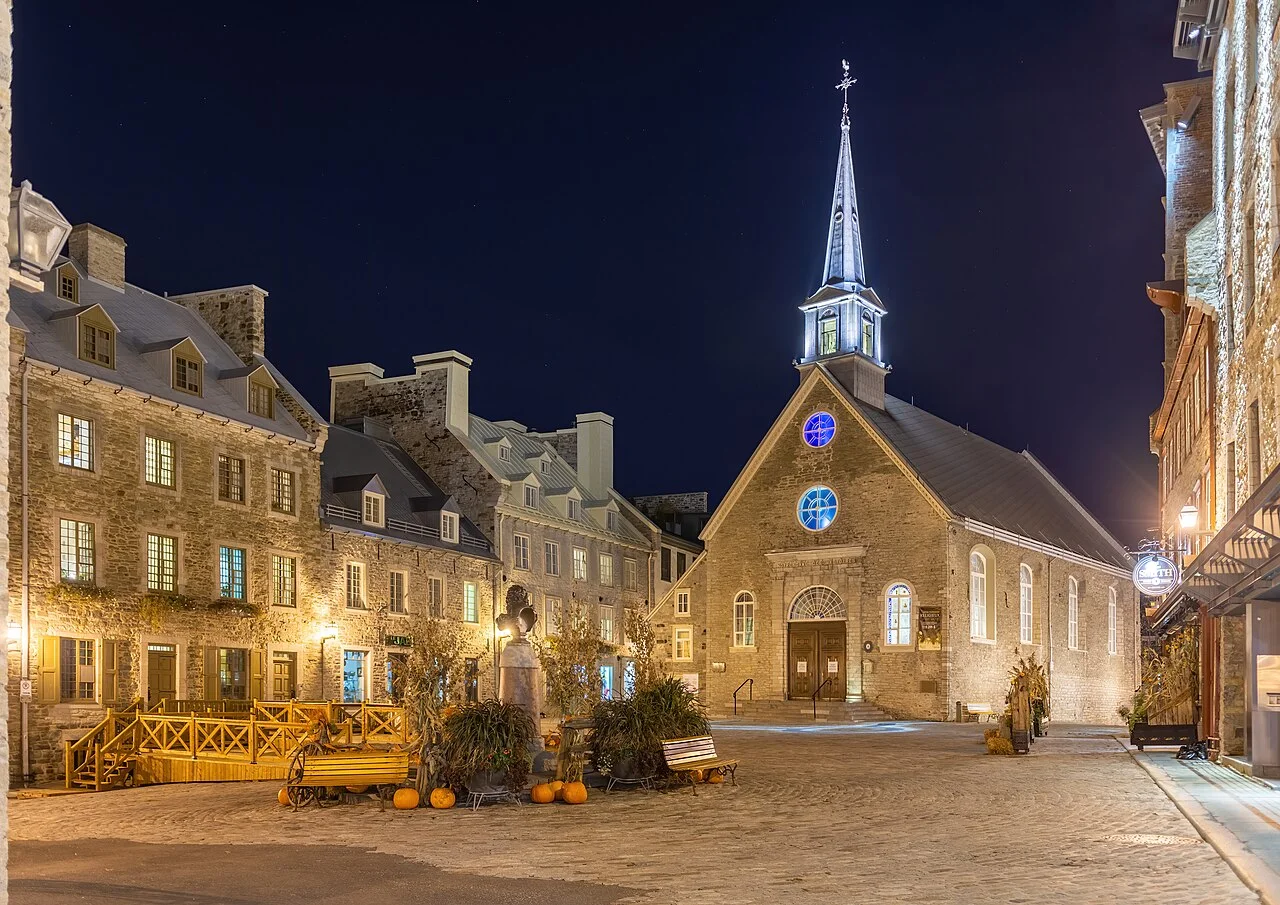
Place Royale introduces the city’s history through a relatively intimate square. The tourism authority associates it with the founding of Québec and highlights the French and British influences visible in its built environment. Look at the shape of the buildings and the way streets enter the square before continuing towards Petit-Champlain. You do not need a date for every façade to make the visit worthwhile. Noticing the transition from square to shopping street already offers a more attentive way to explore the lower town.
Petit-Champlain brings together shops, galleries and small restaurants in a pedestrian setting. Leave time to look at local work or have a meal, and check the opening hours of any business you particularly want to visit. This is a functioning neighbourhood, with residents and deliveries, rather than an empty outdoor museum. Keep entrances clear when taking photographs and agree on a meeting point if your group separates. Choose the return to the upper town according to your needs: a short distance on a map can conceal a demanding climb.

3. The walls and city gates
The fortifications help explain Québec’s commanding position above the river. Parks Canada interprets both the military past and the social history of the site, and offers guided walking experiences. Approaching a gate and following part of the perimeter shows how defensive structures now fit into a living city. Select a particular section instead of assuming that a complete circuit can be comfortably squeezed between two other reservations. A map becomes much more useful when you have decided where you want to enter and leave.
Check the activity calendar before relying on a guided visit. The reviewed Parks Canada page listed a 2026 season running from June to September; that does not confirm the same service operates in autumn or winter. Equally, it does not establish that every outdoor area is closed outside those dates. Distinguish an urban walk from managed buildings and programmes, and follow the signs at individual entrances. Supportive footwear is particularly helpful when surfaces are wet or weather conditions make walking less straightforward than expected.
4. The Plains of Abraham
The Plains of Abraham combine a large green space with a major episode in colonial history: the Battle of Québec took place here in 1759. The tourism presentation outlines the confrontation between French and British forces, but interpretation can help you move beyond that brief account. Decide what you want from the stop before setting off: historical context, a rest in the park or a connection with a nearby cultural activity. Those are different experiences, and they need different amounts of time.
The setting allows you to step away from shopping streets and regain a broader perspective on the city. Do not confuse a large park with a single obvious walking route; identify a convenient exit before wandering too far. The tourism authority also places the Musée national des beaux-arts du Québec in this area. If its collection interests you, reserve a proper block of time and check which galleries are available. A substantial art museum deserves more than a few spare minutes before returning to your accommodation.
5. Montmorency Falls
Montmorency offers a natural outing beyond the historic-centre circuit. The tourism authority distinguishes several ways to experience the falls, including a suspension bridge, a panoramic staircase and a cable car, alongside particular activities. Choose according to your comfort with heights, the physical effort you want to make and current operating conditions. Being relatively close to Québec does not remove the need to arrange the outward and return journeys. Treat this as an outing in its own right and leave space to stop at viewpoints.
Summer photographs do not describe a winter visit. Snow, ice and operating changes affect paths and activities, and different products may require different tickets. Check which facilities operate on your dates, which route suits your mobility and how you will reach your departure point afterwards. Stay within authorised areas. Seeing experienced athletes undertake technical activities on ice does not make those activities suitable for an unprepared visitor. A short, well-chosen viewpoint visit can be more enjoyable than committing to a route whose conditions you have not checked.
Planning around elevation and the season
Within the historic city, the most useful distinction is between elevations and types of access. Group Dufferin Terrace, the defences and the park into manageable blocks, then give the lower town its own time. If travelling with luggage or mobility aids, inspect the actual approach to your accommodation. A description such as “close to the centre” says little about slopes, steps or pedestrian streets. Check each institution’s access information before making bookings that depend on an easy connection.
For budgeting, separate what you want to see from public space from activities that require a ticket or guide. A short trip built around outdoor walks can be rewarding; a museum-focused visit needs more time and a different spending plan. Carry clothing appropriate to the weather, protect devices from rain and keep an offline map. Restaurant opening times and transport schedules also deserve attention, particularly after the busiest season, when fewer services may make an otherwise simple plan less flexible.
A route to get you started
- Day one: begin with Dufferin Terrace and an exterior view of Frontenac. If you have booked an archaeological or guided experience, organise the rest of the day around it. Continue towards Place Royale and Petit-Champlain, allowing time for lunch and a relaxed look at the streets.
- Day two: give one block to the fortifications and another to the Plains of Abraham. Add a museum only if you can give it enough time. With a third day, arrange Montmorency Falls. If you have just two days and the waterfall is your priority, replace an urban visit instead of compressing everything.
Good to know
Do I need a car for the historic centre?
Walking offers the best opportunity to appreciate the streets and squares described here, provided the route suits your mobility. Montmorency needs a separate transport plan. Compare the options available from your accommodation before deciding whether a car would add convenience or mainly create parking difficulties.
Can I freely explore the inside of Frontenac?
It is a working hotel. Seeing its exterior from the surrounding public area is not the same as admission to explore interior spaces. Check the visits offered and the property’s rules; a booking for another attraction should not be assumed to include entry to this building.
Do guided activities run throughout the year?
Do not assume so. Parks Canada publishes seasons and calendars for its programmes, while outdoor walks and individual businesses follow different arrangements. Verify the exact date of the activity you want and keep an alternative ready if that particular service is unavailable during your stay.
Québec rewards a combination of elevation, history and river views, with time to notice how they connect. Choose one main activity for each block, respect seasonal changes and give Montmorency a properly organised outing. This route is a way to set priorities and enjoy the city, rather than a checklist to complete as quickly as possible.