
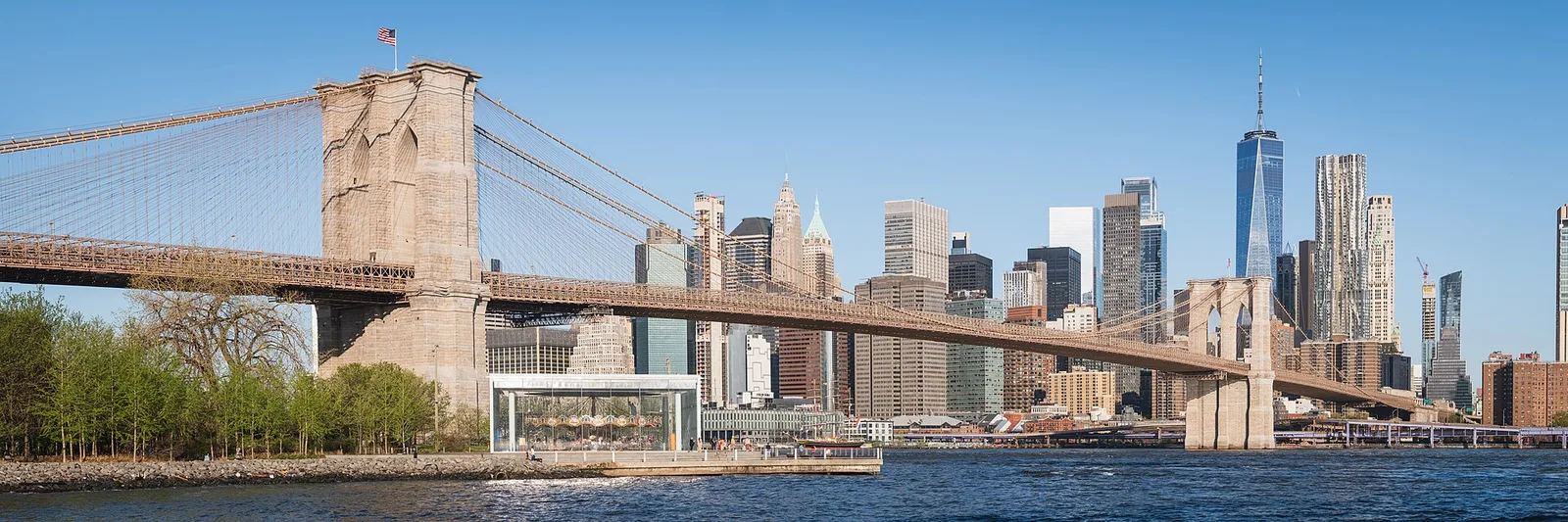

New York makes more sense when explored by area than as a checklist of photographs. These fifteen places combine skyline views, parks, museums and urban memory, with time to walk between them. They are not fifteen visits to squeeze into a weekend: use the selection to decide what interests you and build days that work on a map.
Most of this first itinerary focuses on Manhattan, with outings to Brooklyn and the harbour islands. Choose the reservations that matter most before filling your calendar. Linked official sources let you check access, exhibitions and notices without relying on prices or opening hours that may change.
Before you pack
- Focus
- Manhattan, Brooklyn and the harbour islands
- Suggested pace
- Several days, grouping nearby visits
- Booking priorities
- Ferry, chosen observation deck and theatre
1. Central Park: choose a manageable walk
Central Park offers breathing room between Manhattan’s avenues. The Conservancy provides a map covering places, services and visitor centres; use it to choose a section that fits the rest of your day. This is not a small square that you can casually cross while seeing everything. Exploring one area attentively is more rewarding than trying to collect every landmark while constantly watching the time.
Decide on an entrance and exit before starting, then locate toilets and nearby alternatives. If wooded scenery appeals to you, look up The Ramble on the official map. Combine your walk with your chosen museum, but check which side of the park contains its entrance. Seasonal activities and closures need checking against your actual travel dates, rather than a photograph taken during another season.
2. Times Square and the theatre district
Times Square combines screens, advertising and constant movement. Its appeal is the urban scene as a whole rather than an isolated monument. The Times Square Alliance guide connects the area with Broadway theatre, public art and local businesses. A short stop may be enough to get your bearings; attending a show is a separate decision that deserves its own time and budget.
Locate the exact theatre before purchasing a ticket: Broadway does not mean that every venue shares one address. Allow enough time for arrival and the performance’s entry arrangements. When photographing the screens, stand somewhere that leaves pedestrian routes clear. Returning as the light changes can be interesting, but there is no need to make this a compulsory nightly journey if you are staying elsewhere.
3. Empire State Building: architecture and skyline
The Empire State Building combines the outline of a 1931 skyscraper with an elevated view of the city. Art Deco architecture is part of its identity, so the experience is more than looking down from a tall structure. Its official website distinguishes the 86th-floor and 102nd-floor observation options. Understand those differences before comparing ticket prices or promotional packages.
Choose the experience you want before selecting a ticket. Visibility influences what you will see, while a popular admission slot may reduce flexibility. If your budget allows one observation deck, compare this building with Top of the Rock according to the perspective that interests you. Visiting both is not essential to understanding Manhattan; the saved time and money can support a different cultural experience.
4. Top of the Rock at Rockefeller Center
Top of the Rock provides three levels of panoramic views at Rockefeller Center. It is an alternative way to understand the city as a pattern of buildings and avenues. Before going up, identify the neighbourhoods you have explored on a map. Recognising them from above connects days that can feel unrelated when most of your travel happens underground.
The official site offers several ticket types and additional experiences. Check what belongs to observation-deck admission and what is an extra; promotional photography does not necessarily represent the simplest ticket. Fit the visit around your priorities for light and visibility. If you have already chosen the Empire State Building, explore Rockefeller Center at street level and give the remaining time to another area.
5. Grand Central Terminal: pause inside a working station
Grand Central Terminal is both a working station and an architectural destination. Official visitor information identifies the Main Concourse, clock, Vanderbilt Hall and Whispering Gallery among its points of interest. The main entrance is on East 42nd Street at Park Avenue. Using that reference helps distinguish visiting the building from finding any rail connection carrying the Grand Central name.
Move through the space without blocking commuters and notice how circulation, shops and architecture coexist. For more interpretation, check the official guided tour and its meeting point. You do not need a train journey to appreciate the terminal, but following an appealing photograph is no reason to enter restricted areas. It also works well as a Midtown stop around a meal or rest.
6. Bryant Park: a pause with a character of its own
Bryant Park changes the rhythm of a Midtown day. Seating, activities and a carousel create an opportunity to pause and watch the city instead of continuously moving through it. Programming follows the calendar. Seasonal experiences may transform the park, but they should not be treated as permanent attractions available on every visit.
Use it as a break between other stops, and check the official programme if a particular activity interests you. During Winter Village, for example, the arrangement differs from other seasons. An advertised activity may have its own reservations or rules even though it takes place in a park. Keep your plans flexible: sitting for a while and then continuing your walk is also a worthwhile visit.
7. The High Line: a walk above the West Side
The High Line is an elevated public park on Manhattan’s West Side. Planting, art and changing views of the neighbourhood shape the experience as you walk. Its linear layout makes it useful within a longer outing, but you first need to choose an actual entrance. Standing beneath the park does not mean that you can get up at that point.
The organisation lists stairs, ramps and elevators, along with elevator operating status. Check this carefully if anyone needs step-free access. Keep out of planting beds and do not bring bicycles onto the walkway; the official rules distinguish this park from a cycling route. Look for temporary section closures before deciding where to finish and how to connect with the rest of your day.
8. Brooklyn Bridge: cross with a destination in mind
Brooklyn Bridge connects Lower Manhattan with Brooklyn Heights across the East River. Opened in 1883, it remains everyday transport infrastructure as well as a familiar New York image. The pedestrian promenade offers changing views of the towers and surrounding city as you move. You do not need to stop at every section to appreciate the structure.
Choose your direction according to what you want to do afterwards. Finishing in Brooklyn can lead into a waterfront walk; returning to Manhattan connects with the southern part of the island. The transport authority distinguishes the pedestrian promenade from the protected bicycle path, so follow the relevant signs. Pause where there is space and leave room for people crossing as part of their daily routine.
9. Brooklyn Bridge Park: look back at Manhattan
Brooklyn Bridge Park offers something different from crossing the bridge: room to pause beside the water and look back at Manhattan. Its official guide lists gardens, playgrounds and activities throughout the park. The cover photograph shows the bridge and skyline from Pebble Beach, one particular viewpoint that makes the relationship between the two waterfronts easier to understand.
Consult the map and choose one section rather than trying to cover the entire park after a long day. With children, locate suitable playgrounds before promising a particular activity. Facilities have their own schedules and conditions, separate from general park access. Combine this stop with the bridge while leaving time to sit down; enjoying the waterfront need not involve constant movement.
10. Liberty Island and the Statue of Liberty
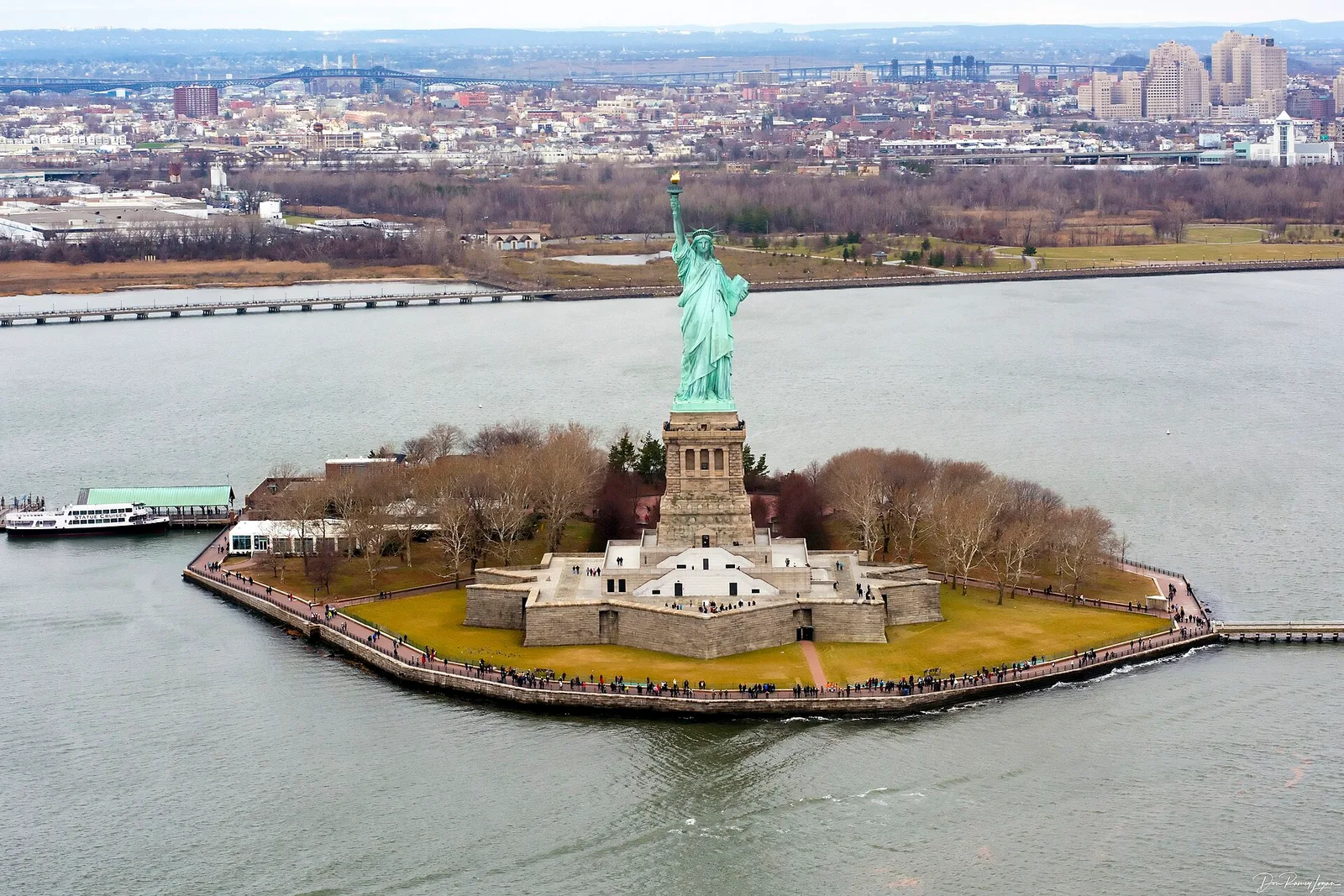
Visiting Liberty Island lets you see the Statue of Liberty in its own setting and explore the island’s museum. The National Park Service clearly separates general admission from pedestal and crown access. Viewing the statue from a boat passing nearby is not equivalent to landing, so decide which experience you want before making a reservation.
Use the authorised operator linked by NPS: Statue City Cruises. Pedestal and crown visits require specific advance tickets. The time on a ticket indicates when to join the security queue, not a guaranteed ferry departure. Allow time for screening and check baggage conditions. If you only want the exterior perspective, there is no need to pay for an additional experience that does not interest you.

11. Ellis Island: give the museum its own time
Ellis Island houses the National Museum of Immigration and forms part of the official ferry itinerary alongside Liberty Island. It offers a different focus: time to explore immigration history rather than concentrate on the exterior monument. NPS includes both museums in general admission, but possessing a ticket does not automatically leave enough time to appreciate both.
If you want to visit the two islands in one day, follow the official advice to choose an early departure and check the return service. Decide how much museum time to preserve before spending the whole day on Liberty Island. Avoid a tightly timed reservation immediately afterwards, since screening, boarding and travel require flexibility. With children, choose a few stories or themes rather than attempting every display.
12. The 9/11 Memorial: a place for remembrance
The 9/11 Memorial occupies part of the former World Trade Center site. Its twin pools and names inscribed in bronze encourage a quieter visit than an observation deck or shopping avenue. The institution provides a panel-based name locator, which can help if you want to dedicate your time to remembering a particular person.
Distinguish the memorial space from the museum beneath it. Discuss with your companions whether they want to explore the exhibitions and how much practical and emotional time to allow. Respect those remembering relatives or colleagues, and avoid treating the site merely as a photographic backdrop. Official interpretation also explains the Survivor Tree and other elements that can guide a thoughtful visit.
13. The Met: choose a route through the collections
The Metropolitan Museum of Art supports a day built around very different objects, cultures and artistic interests. For this itinerary, choose The Met Fifth Avenue rather than confusing it with The Met Cloisters, a separate location. Select a few interests and consult the map before entering. A deliberate route is more rewarding than wandering without direction while trying to cover everything.
Check which admission category applies to you. Pay-what-you-wish eligibility depends on residency or student requirements and is not available to every visitor. Combine the museum with part of Central Park if you want an outdoor break, while preserving time for admission and your chosen galleries. Check current exhibitions and access; a familiar artwork or photographed room may be unavailable during your trip.
14. MoMA: a cultural stop in Midtown
Manhattan’s Museum of Modern Art has its main entrance on West 53rd Street near Sixth Avenue. It is a useful choice for bringing modern art into a Midtown day. The institution also has MoMA PS1 in Queens, so confirm the location when checking admission or opening information. A shared name does not mean a shared building or itinerary.
Look at the programme before choosing your priorities, rather than pursuing only a list of famous works. Select a theme, medium or exhibition and give yourself time to look closely. The museum publishes visitor and accessibility guidance worth checking for your group. Afterwards, continue towards Rockefeller Center if you have energy, without immediately committing to another large museum.
15. American Museum of Natural History: explore by theme
The American Museum of Natural History brings together scientific experiences that can be explored according to your interests. Its website distinguishes included exhibitions from separately ticketed experiences and provides a map and temporary hall-closure notices. The Rose Center for Earth and Space belongs to the complex, a useful reference if astronomy is a priority for your group.
Start with two or three themes and let the map shape a manageable route. For a family visit, agree on breaks and one main activity before adding extras. Check which experiences require a particular session and which admission option applies; not everything advertised necessarily shares the same access. The setting beside Central Park’s western side offers an outdoor finish if conditions and energy permit.
A route to get you started
- Midtown day: combine Grand Central, Bryant Park and Times Square. Add MoMA or an observation deck according to your interests; you do not need both to make a satisfying day. Fit any theatre performance around its exact venue address and leave room for a meal.
- Museum and park day: choose The Met or the natural history museum, then explore a section of Central Park connected with its entrance. To appreciate both museums, put them on different days instead of reducing the park to a hurried transfer between galleries.
- Lower Manhattan and Brooklyn day: give the 9/11 Memorial proper time, then cross the bridge towards Brooklyn Bridge Park if you have energy. Keep another generously timed day for Liberty Island and Ellis Island. The High Line fits into a separate exploration of the West Side.
Good to know
How many days do I need for these fifteen places?
Think in terms of several days and choose priorities. Museums, the islands and observation decks can take significant parts of a day. Three days support a selective introduction; enjoying the full list at a comfortable pace takes longer and depends on your interests.
Is it worth paying for two observation decks?
Only if you particularly enjoy comparing perspectives. For a first visit, choosing between the Empire State Building and Top of the Rock is often enough. Check what each ticket includes and consider using the remaining budget for theatre, museums or a longer stay.
How should I organise a short first trip to New York?
Group Midtown into one day, choose a museum beside Central Park, and give Lower Manhattan and Brooklyn another outing. If the islands are a priority, provide their own time and remove something else. Avoid booking several museums and observation decks on the same day: admission and visiting time leave less room for walking.
A rewarding first visit does not require exhausting Manhattan. Alternate an important reservation with walks and pauses, separate the islands from museum days, and use Brooklyn to broaden your perspective. With coherent routes and room to change your mind, these fifteen places become a flexible foundation for discovering New York.
Sources consulted
- Central Park Conservancy: map and visitor planning —
- Times Square Alliance: district guide —
- Empire State Building: official visitor guide —
- Rockefeller Center: Top of the Rock —
- Grand Central Terminal: visits and transport —
- Bryant Park: activities and visitor information —
- The High Line: official visitor information —
- NYC Department of Transportation: Brooklyn Bridge —
- Brooklyn Bridge Park: official park guide —
- National Park Service: Statue of Liberty and Ellis Island visits —
- 9/11 Memorial & Museum: the Memorial —
- The Metropolitan Museum of Art: plan your visit —
- Museum of Modern Art: locations and admission —
- American Museum of Natural History: plan your visit —