

Taipei lets you combine contemporary architecture, a working temple and a major art collection without turning the trip into an endless list. This guide selects Taipei 101, Longshan Temple and the National Palace Museum. Each contributes a different perspective and deserves its own time: the city from above, everyday religious practice and the historical context of objects preserved across generations.
We suggest three days to spread out journeys and adapt to the weather. October does not guarantee clear skies, so the observation deck day should take actual visibility into account. This is not a search popularity ranking. It is a first cultural itinerary with a photograph of each place and practical distinctions between tickets, buildings and transport routes.
Before you pack
- Suggested time
- Three days, adjusted to your pace
- Places in this route
- Three selected places
- Destination
- Taipei
Taipei 101: decide whether to see the tower or go up
Taipei 101 is a visual reference in Xinyi and a useful way to orient yourself within the city skyline. The building’s official website separates the shopping mall from the observatory and shows different floors within its visitor offer. That distinction matters: arriving at the shops does not mean you have found the correct observation deck entrance, and one admission does not automatically cover every level of the tower.
Before purchasing, select the experience and read which floor, time and conditions are included. If your priority is to observe the architecture from outside, an exterior visit can be worthwhile without making the ascent compulsory. If you want the panorama, check the forecast and likely visibility close to your date. Cloud or rain can restrict the horizon even when the observatory remains open.
Allow time to find your way through the complex, pass checks and wait for lifts. Use the current official directions for the admission desk rather than depending entirely on an old video. A late booking can constrain the rest of the day if you calculate the activity as only the lift journey and time at the viewpoint.
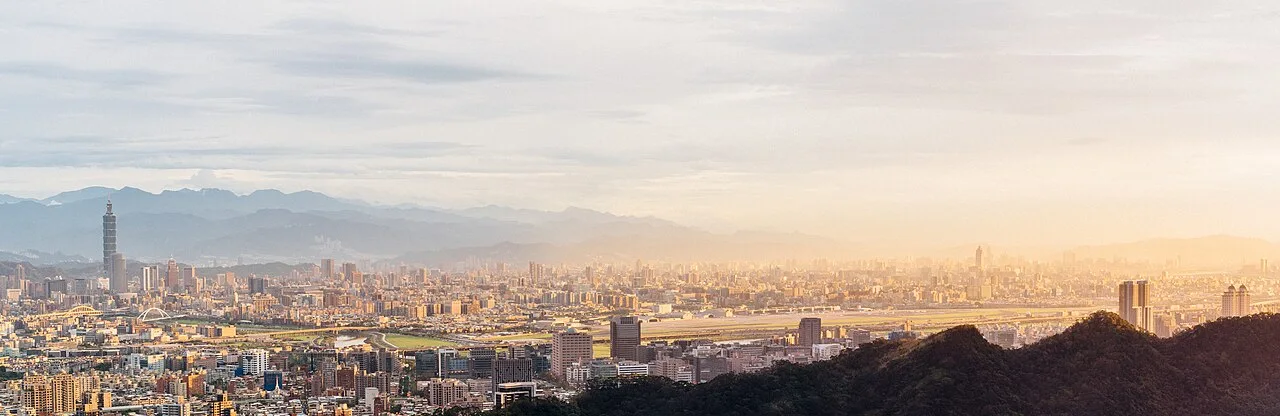
Look at the relationship between buildings, avenues and surrounding terrain as well as taking photographs. Identifying directions and distances makes the city easier to understand. The image in this guide shows Taipei 101 within the urban landscape; it does not promise the same light or clarity during your own stay.

Longshan Temple: observe respectfully in a living religious space
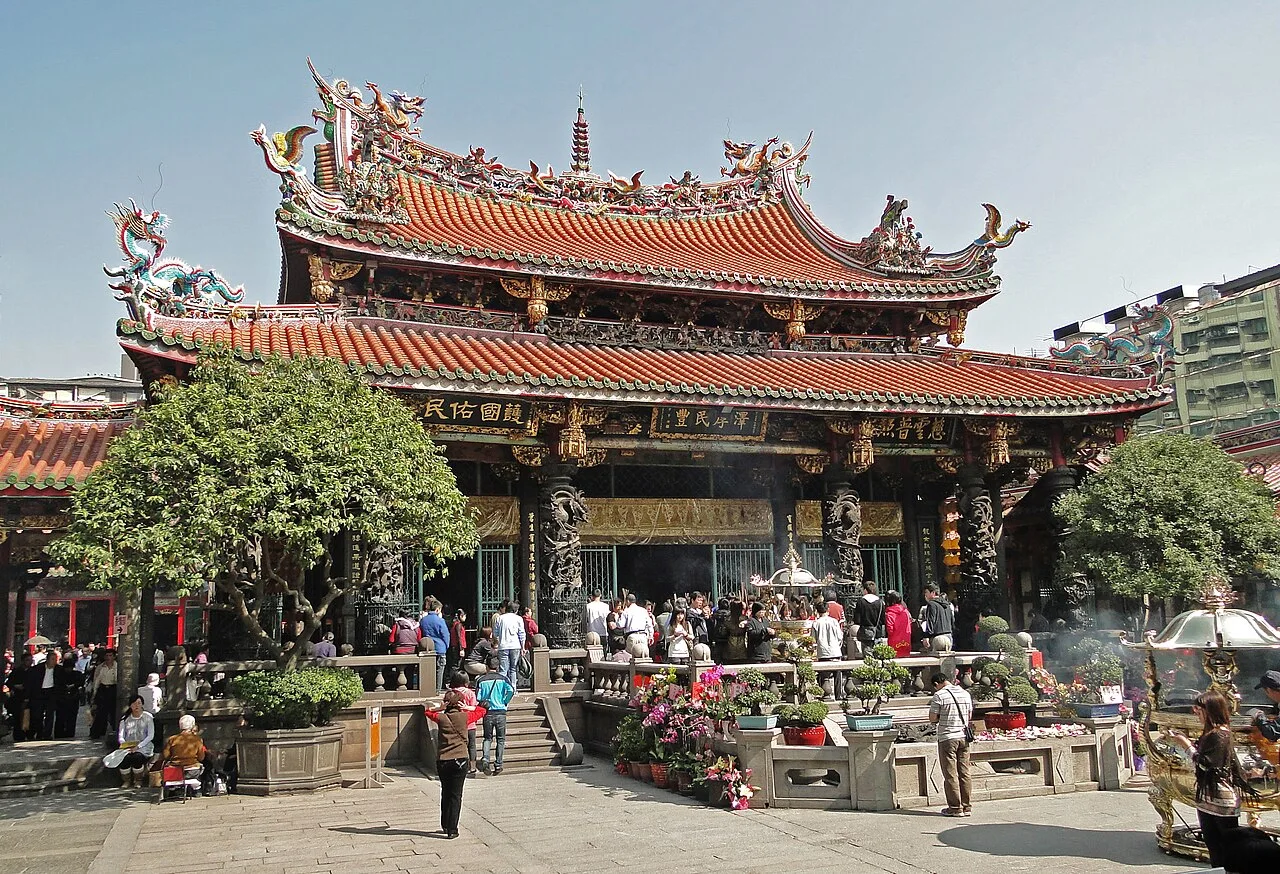
Longshan Temple, also written Lungshan, is in Wanhua. Taipei’s tourism office describes architecture combining a traditional courtyard arrangement with palace elements, alongside imagery associated with different religious traditions. The visual richness allows you to examine roofs, figures and materials without needing to understand every symbol immediately.
A good visit starts by recognising that this is an active religious space. Keep circulation routes clear, avoid interrupting people at prayer and follow the temple’s instructions. You do not have to participate in a ceremony to appreciate the place. Ask before photographing individuals; worship should not be treated as a performance available for any visitor’s chosen composition.
One useful approach is to understand the arrangement of the courtyards first and then concentrate on a group of details. The municipal information mentions dragons, phoenixes and other auspicious figures decorating the roofs. Notice their combinations and how the building changes as you approach, without touching decorative elements or entering reserved areas.
Confirm opening arrangements before travelling and save the temple’s location, not just the position of the transport station carrying its name. A nearby stop does not remove the final walk. In this itinerary, Longshan anchors a slower day between the observation deck and museum, with enough time for attentive observation and breaks outside the spaces used for worship.

National Palace Museum: choose priorities within a vast collection
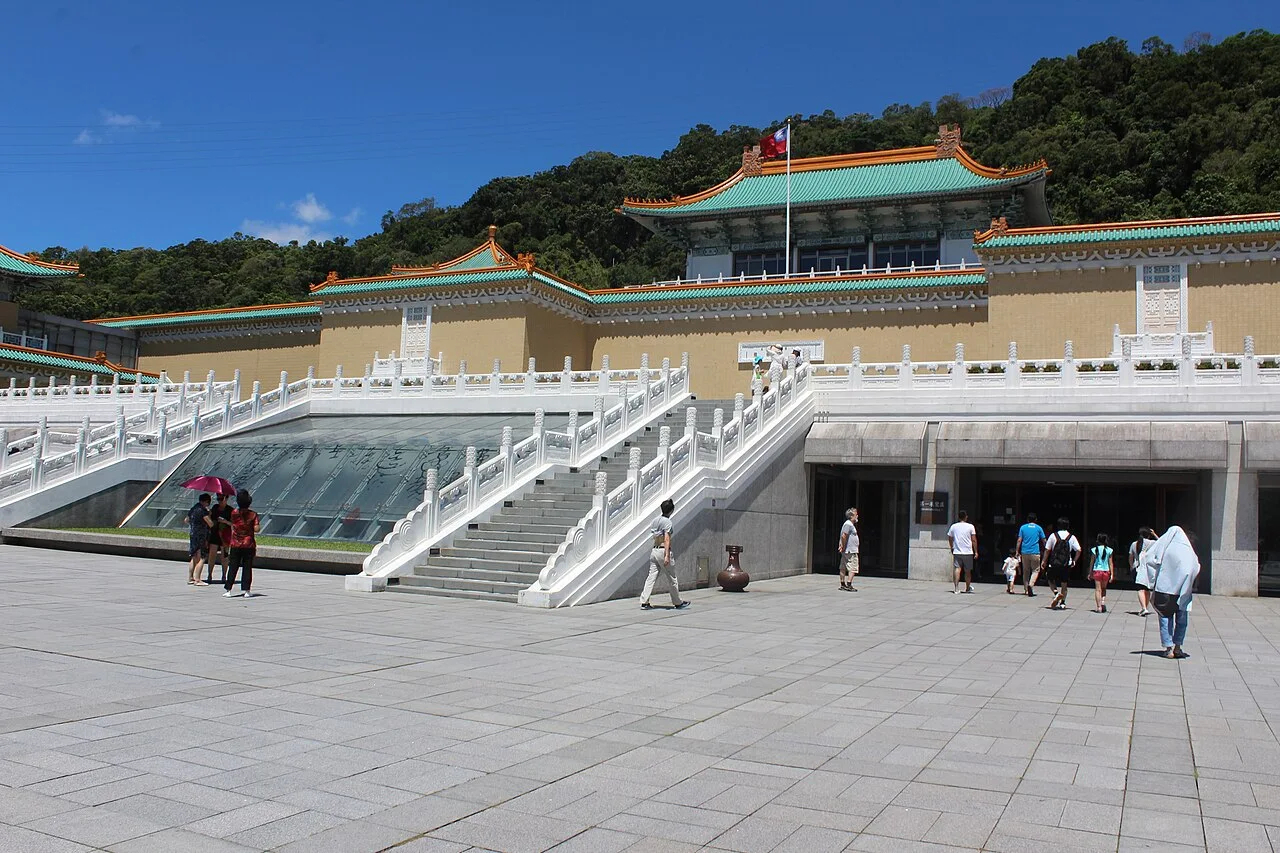
Taipei’s National Palace Museum holds an extensive collection of Chinese historical and artistic objects. The municipal tourism office explains its connection with imperial collections and describes a building inspired by northern Chinese palace architecture. Do not confuse it with a visit to the imperial palace in Beijing: the recommended location here is the museum in Taipei’s Shilin district.
The collection’s scale makes choosing priorities sensible. Before entering, check the available exhibitions and decide which materials or periods interest you, such as worked stone, ceramics or painting depending on the current displays. We do not promise that a celebrated object will be exhibited on a particular date. Rotation, loans and conservation can change what visitors see.
Allow time to read labels and compare objects instead of moving past every case without stopping. The tourism information mentions resources in several languages, but confirm the format and availability you need. A focused visit to selected rooms can be more rewarding than trying to complete the whole building after an already crowded morning elsewhere.
Plan the specific journey to the museum and check opening arrangements for your chosen day. It is not part of the same compact walking circuit as Taipei 101 or Longshan. If accessibility matters, the municipal listing identifies adapted facilities; verify current details for your intended route. Afterwards, retain a buffer for the return journey and avoid arranging an important connection immediately after your estimated exit time.
How to arrange three days in Taipei
Divide the visits according to their location and purpose. The observatory is especially sensitive to visibility, the temple requires consideration for religious activity, and the museum needs a substantial block of time plus a planned transfer. This structure lets you exchange days when conditions change, provided you respect existing reservations. Do not assume all three venues open in the same way on every day of the week.
For transport, use the official journey planner and check the final section of each trip. Save place names as they appear on your booking and, if useful, a screenshot of the destination on a map. Sufficient phone battery and an address available offline reduce the need for an improvised search outside a station.
Separate observation deck admission, museum admission, transport and meals in your budget. There is no need to add a paid activity to every day. In October, carry a rain layer and adjust outdoor walking to the short term forecast. A cloudy day may suit the museum better than a panoramic ascent, but check that any change is compatible with opening arrangements and the conditions of your tickets.
A route to get you started
- Day one: use Taipei 101 as a reference for understanding the city. If visiting the observatory, follow the current entrance directions on your booking and allow for circulation inside the complex. If visibility is poor and your ticket permits changes, consider exchanging this day with the museum visit.
- Day two: visit Longshan with time to examine courtyards and decoration without interrupting religious activity. Keep the rest of the day relatively light. The purpose is to understand a place in everyday use, not to add ceremonies or photographs of worshippers to a commercial checklist.
- Day three: devote a substantial period to the National Palace Museum. Select galleries according to the available exhibitions and organise the return journey in advance. Leave room for a meal and rest before any long transfer or onward connection.
Good to know
Does one Taipei 101 ticket cover every visitor floor?
Do not assume that it does. The official website distinguishes floors and experiences. Read the specific product, admission time and entrance instructions. The mall and observatory have different functions and conditions even though they belong to the same complex.
Are Longshan and Lungshan different temples?
In this guide both names refer to the same Wanhua temple. The variation comes from rendering the name in the Latin alphabet. Confirm the location to avoid confusing it with other temples that may have a similar name.
Can I be certain of seeing a famous Palace Museum object?
Not without checking its current display status. A work may rotate, be on loan or undergo conservation. If it is your main reason for visiting, investigate before booking and choose other interests so that the wider collection remains rewarding.
Should I allow two or three days for these places?
Three days spread out transfers and allow the observation deck to respond to weather. With two days you will need to shorten the museum visit or combine activities. Count usable hours and avoid removing every break merely to retain the full list.
Taipei 101, Longshan and the National Palace Museum provide a first visit through architecture, religious practice and art. Choose admissions precisely, check visibility for the observatory and give the museum real time. Each place becomes more rewarding when you understand its contribution instead of rushing towards the next stop.