
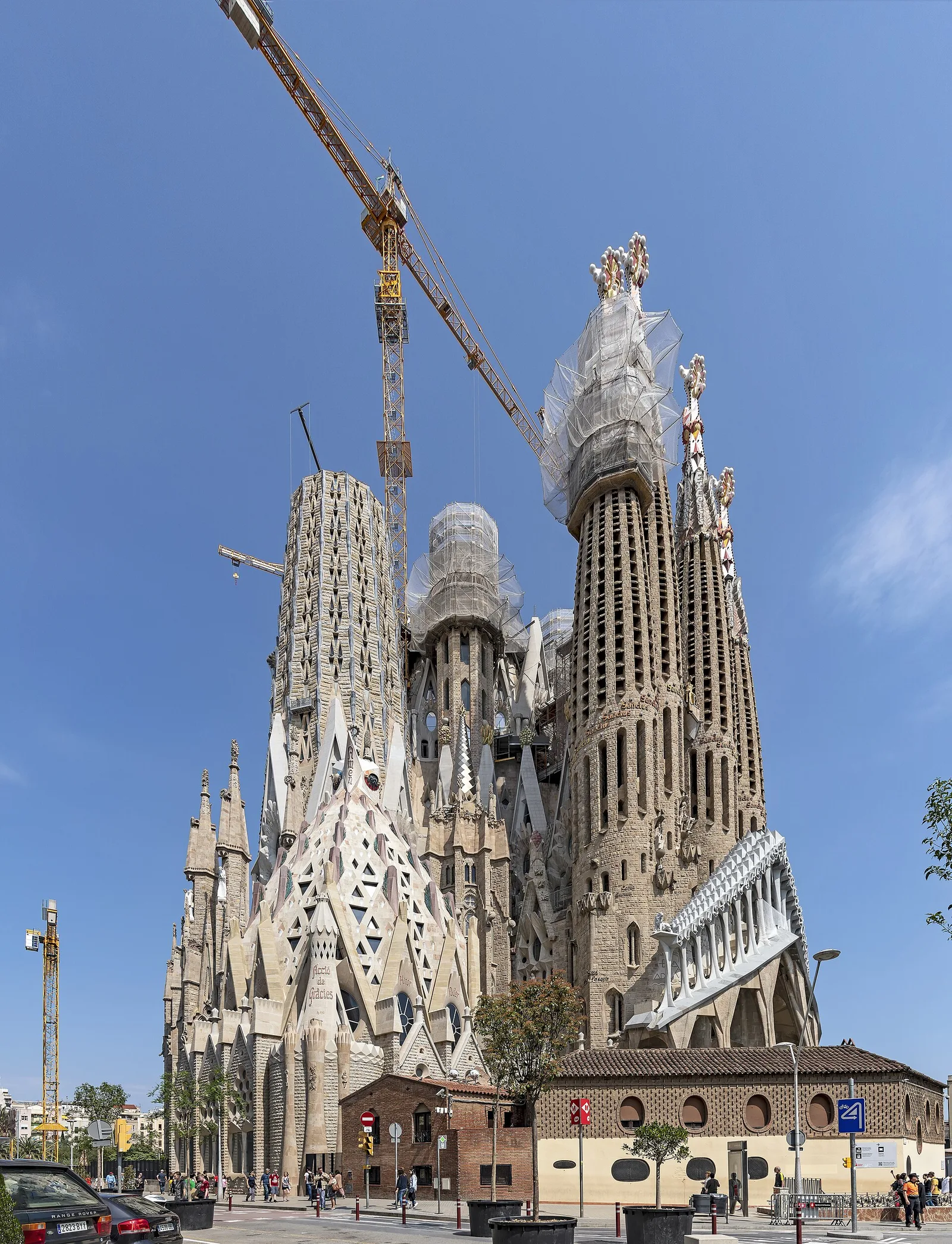

Barcelona invites changes of scale: the detail of a facade, a museum gallery, a park and the sea on the horizon. These ten places suggest a varied first visit, combining architecture by Gaudí and other designers with religious heritage and spaces to rest. Choose the interiors that interest you most and leave room between reservations.
Not every stop requires the same effort or offers the same experience. Seeing a building from the street, exploring inside and attending an activity are separate options. Use the official links at the end of this guide to organise your visit and check the specific admission product before buying; prices and hours need confirming for your date.
Before you pack
- Focus
- Architecture, art and public space on a first visit.
- Suggested pace
- One or two main bookings per day, with time between them.
- Flexible planning
- Alternate interiors with parks or the coast according to weather and energy.
1. Sagrada Família
The Sagrada Família offers an introduction to Gaudí through religious architecture that remains a place of worship. Distinguish appreciating the exterior from visiting the basilica: walking around and observing its forms does not replace the interior experience, but it may be a reasonable choice for the time you have available.
Use the official arrival information and check what admission includes before booking. Do not assume every special area belongs to the same ticket. The website also distinguishes sightseeing from religious celebrations; respecting that distinction helps you plan a suitable experience and understand the building’s continuing purpose.
2. Park Güell
Park Güell combines architectural heritage with a green space that has natural value. The municipal website presents both Gaudí’s work and the park’s biodiversity. Looking carefully lets you move beyond familiar images and notice how built forms and landscape relate to each other. Choose a route that fits your energy and interests.
Check the map, entrances and official works notices before setting out: maintenance can alter the available route. Choose the entrance that best fits your arrival and leave time to find your bearings. After walking through the park, a break without another immediate reservation gives you room to enjoy the surroundings at a more comfortable pace.
3. Casa Batlló
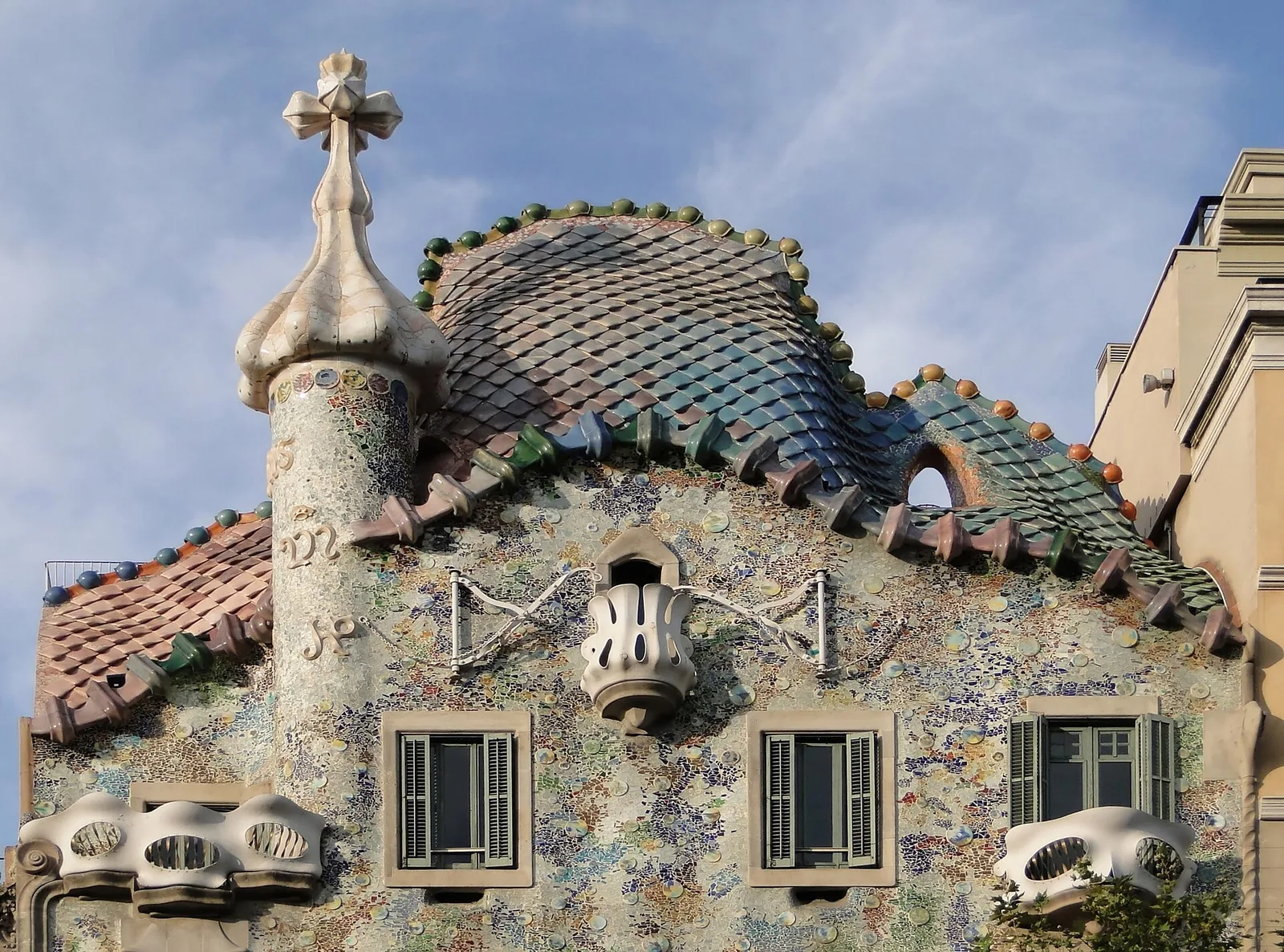
Casa Batlló invites you to look at architecture as a composition of colour, surfaces and forms. The facade in the photograph reveals part of Gaudí’s approach, although observing it from the street and exploring the building are different experiences. Before choosing admission, decide whether the architectural space or a particular activity matters most to you.
Use the official website to compare options and confirm the entrance. If you prefer the exterior, pause without obstructing pedestrians and examine details at different heights. When combining several houses or monuments in one day, allow enough time to rest; comparing buildings works better when you do not arrive exhausted at the second.

4. La Pedrera–Casa Milà
La Pedrera, also known as Casa Milà, offers another approach to Gaudí. Its website emphasises the relationship between curves, light and nature and identifies its World Heritage status. Pairing it with Casa Batlló may help you compare architectural solutions, although visiting both is not necessary to appreciate that each building has its own identity.
Before buying, check which spaces and activities each option includes. The institution offers different experiences, so one admission product is not automatically equivalent to another. Consult accessibility and arrival information, choosing according to your interests, available time and mobility needs rather than the title of the ticket alone.
5. Barcelona Cathedral
Barcelona Cathedral reveals a history of construction in stages. Its official account dates the beginning of the Gothic building to 1298 and the completion of the cloister to 1448, while noting much later work on the present facade. Recognising these layers avoids imagining the whole complex as a single project completed at one moment.
Include the cathedral within a walk around its historic surroundings, distinguishing tourist visits from religious services. Check the institution’s entry and dress requirements before going inside. Outside, find a place to look without obstructing others; spending time with a facade usually reveals more than taking a hurried photograph.
6. Palau de la Música Catalana
The Palau de la Música Catalana broadens the architectural visit beyond Gaudí. Lluís Domènech i Montaner built it between 1905 and 1908 as the headquarters of the Orfeó Català in the Sant Pere quarter. Architecture, sculpture, stained glass and music meet here, making the building more than a simple container for concerts.
Choose an architectural visit or a performance according to what you want to experience. They are different products, and one ticket should not be assumed to allow unrestricted exploration of every space. Notice the hall’s light and decoration wherever your visit permits; the official account explains the role of its central skylight.
7. Museu Picasso
The Museu Picasso lets you devote part of the trip to looking closely at artworks. Its collection includes painting, drawing, ceramics and other techniques, with themes such as Barcelona landscapes, family and friends. That variety offers ways to choose a thread through the museum instead of trying to cover everything in a single visit.
The official address is Carrer de Montcada, 15–23. Check the plan and admission arrangements before arriving, particularly if a specific exhibition is your priority. Comparing two works carefully can be more rewarding than rushing through every room; allow time afterwards to remember which details or questions stayed with you.
8. Museu Nacional d’Art de Catalunya
The Museu Nacional d’Art de Catalunya gives you reasons to examine both artworks and architecture. The institution highlights Romanesque art, modernism and the Palau Nacional, built for the 1929 International Exposition. Select an area of the collection that interests you and use the museum’s resources to place individual works in context.
Its Montjuïc setting suggests a day with a different rhythm from the historic centre. Check arrival and accessibility options before choosing your route. The institution also promotes viewpoints, but verify their particular availability; a panoramic view complements the visit rather than being a promise independent of current access arrangements.
9. Parc de la Ciutadella
Parc de la Ciutadella introduces a green pause into a selection otherwise dominated by buildings and museums. The city council places it within its parks network and highlights a knowledge and urban development project around it. For a visitor, it can be somewhere to change pace and observe how public space is used.
Consult the municipal map to choose an entrance and route that fit your next stop. You need not cross the entire park or add an organised activity; a short walk and a rest also belong in a trip. Respect shared spaces and adjust your visit to any signs concerning works or restricted areas.
10. The beaches and seafront
The seafront completes the visit with an open perspective towards the sea. Before choosing a beach, consult municipal information describing locations, facilities and accessibility options. A coastal walk and a day of swimming are different plans, so decide which experience you want and what conditions you need before setting out.
Check the forecast, local directions and seasonal availability of services. Flags and on-site notices should guide any decision to enter the water. If you prefer walking, bring what the forecast calls for and leave time to return; enjoying the coast does not require swimming, particularly when conditions make another plan more appropriate.
A route to get you started
- First day: make the Sagrada Família your main visit and decide whether to add another Gaudí building. Allow time for travel and do not confuse proximity on a map with a comfortable connection between reservations.
- Second day: choose the Cathedral and historic surroundings, with the Museu Picasso or Palau de la Música as an interior visit. Select according to your interest in art, architecture or music, preserving breaks for meals.
- Third day: devote one block to Park Güell or the museum on Montjuïc and another to resting in a park or beside the sea. These are alternatives to adapt to your accommodation, the weather and what you have already seen.
Good to know
Do I need to book every Gaudí building?
No. Choose the places that interest you most and distinguish looking at an exterior from visiting inside. If you decide to enter, check official availability and conditions before fixing other activities close to that booking.
How should I choose the best season for this route?
First consider your priorities: museums and buildings can fill days with uncomfortable weather, while parks and the coast depend more on outdoor conditions. Check access and service calendars for your dates, especially if swimming is a priority.
Is this route suitable for reduced mobility?
The selection can be adapted, but spaces and admission products do not all offer the same conditions. Consult each institution’s accessibility information and arrival transport before booking, choosing routes that fit the particular needs of your group.
The best combination of these ten places depends on your interests. A Gaudí building, a thoughtfully chosen museum, architecture in the centre and a pause outside can create a balanced visit. Use official sources to refine bookings and access, leaving room to change plans when a conversation, a facade or a walk deserves more time.
Sources consulted
- Sagrada Família — official visitor information —
- Barcelona City Council — Park Güell —
- Casa Batlló — official visitor information —
- La Pedrera — Casa Milà —
- Barcelona Cathedral — history —
- Palau de la Música Catalana — history and architecture —
- Museu Picasso — the collection —
- Museu Nacional d’Art de Catalunya — reasons to visit —
- Barcelona City Council — parks and gardens —
- Barcelona City Council — bathing and beaches —